
Protein: The Nutritional Trend of 2026
Welcome to The Nutrition Lab, our weekly Tuesday series breaking down recent nutrition research into practical takeaways. This week: what does protein actually do to your gut?
In 2026, protein is at the center of virtually every nutrition conversation. A survey of 5,000 Americans found that 57% plan to intentionally prioritize protein this year. Protein supplement sales grew 13% in unit terms year over year, reaching $8.6 billion in revenue in 2025. The message is clear: protein is the macro of the decade.
But in the collective enthusiasm for protein, one dimension is frequently overlooked: its impact on the gut microbiome. A study published in Scientific Reports in 2026 is starting to answer that question with more precision than what we had before.
What the Scientific Reports Study Found
The study examined the impact of dietary protein quantity on the non-dysbiotic human microbiome (meaning a baseline healthy gut) using a controlled feeding protocol over several weeks. Participants consumed varying amounts of protein, and researchers analyzed changes in their microbiome composition.
The main conclusion: dietary protein quantity significantly modifies microbial composition and metabolic activity in the gut. Not a total surprise, since we already knew unabsorbed protein in the small intestine ends up in the colon serving as substrate for gut bacteria. What the study clarifies is the scale and direction of those changes in a healthy microbiome.
Specifically, high protein intake, particularly from animal sources, tends to favor certain proteolytic bacteria (those that break down protein) at the expense of saccharolytic bacteria (those that ferment fiber). Saccharolytic bacteria are generally associated with beneficial gut health effects and the production of butyrate, a short-chain fatty acid essential for intestinal cell health.
What This Means for Athletes and Active People
If you train regularly and aim to optimize recovery and performance, protein remains non-negotiable. Current recommendations for active people sit around 1.6-2.2 grams per kilogram of body weight per day. Those figures are validated for muscle preservation and development.
What this new research suggests is that you need to think about what accompanies those proteins. Gut health and athletic performance aren't separate domains: a healthy gut improves nutrient absorption, supports immune function, and can even influence recovery via gut-brain pathways.
Practically: if you're consuming a lot of protein (which is likely if you train seriously), offset the potential unfavorable impact on saccharolytic bacteria by including enough fermentable fiber in your diet. Legumes, root vegetables, whole grains, and fruits are your allies in that balance.
Animal vs. Plant Protein: Does Your Microbiome Notice the Difference?
One of the questions this research opens up is the source of protein. Emerging data suggests plant proteins, like legumes, soy, and grains, have a different microbiome impact profile compared to animal proteins like red meat or whey.
Plant proteins often come packaged with fiber and natural prebiotics, creating a different effect on bacterial communities. That doesn't mean you need to go vegetarian for a healthy gut. But it does highlight the value of diversifying protein sources: pairing quality animal proteins with regular plant protein sources allows you to combine the benefits of both and maintain higher microbial diversity.
The Nutrition Lab Practical Takeaway
This week's practical recommendation is simple: if you're increasing protein, increase fiber too. A rough rule of thumb: for every 10 gram increase in dietary protein, aim to add 2-3 grams of additional fiber. It's not a scientifically established formula, but it reflects the general idea of maintaining balance between the two functional macronutrients that structure gut health.
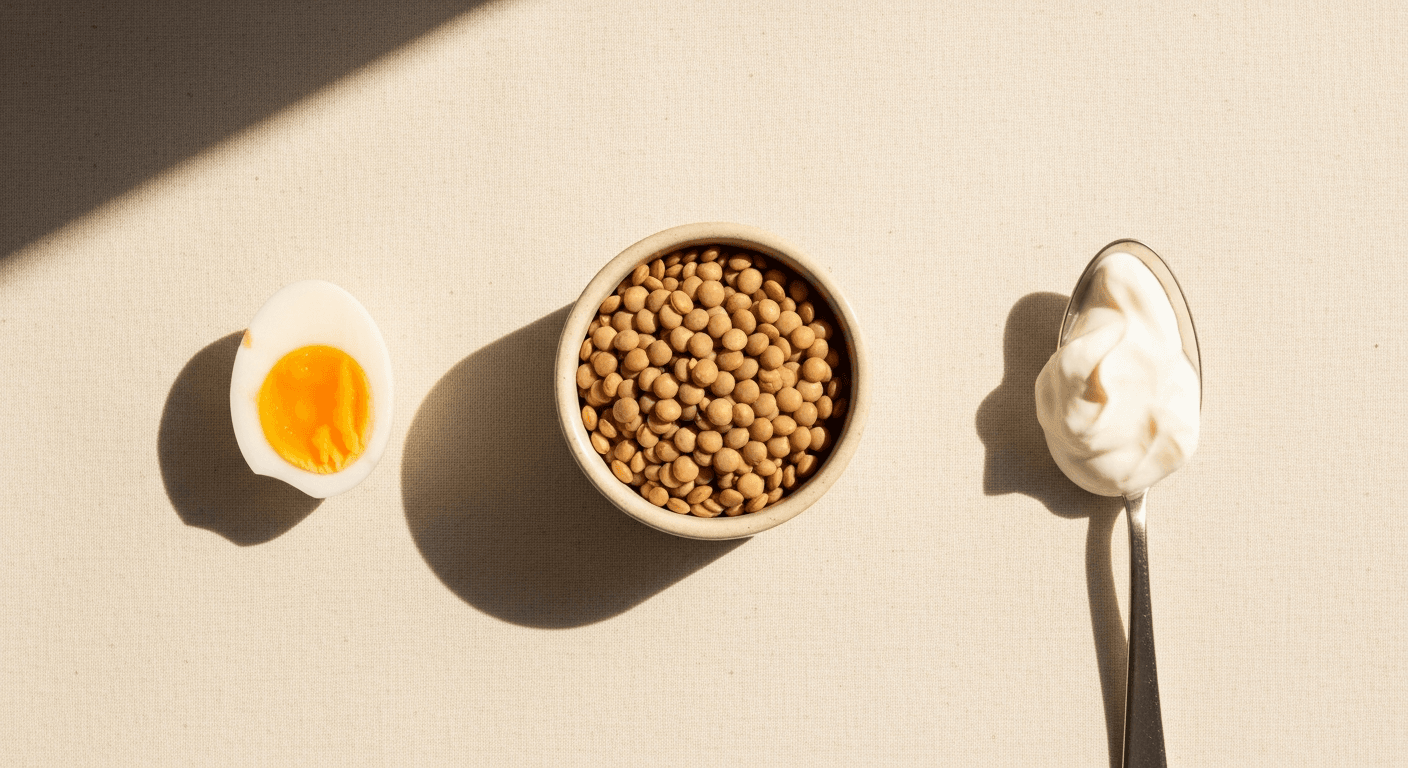
For sources: cooked lentils (9g protein + 8g fiber per 100g), quinoa (4g protein + 2.8g fiber per 100g), and black beans (9g protein + 7g fiber) are perfect allies for hitting both targets simultaneously. Incorporate them regularly alongside your animal protein sources, not as a replacement.