
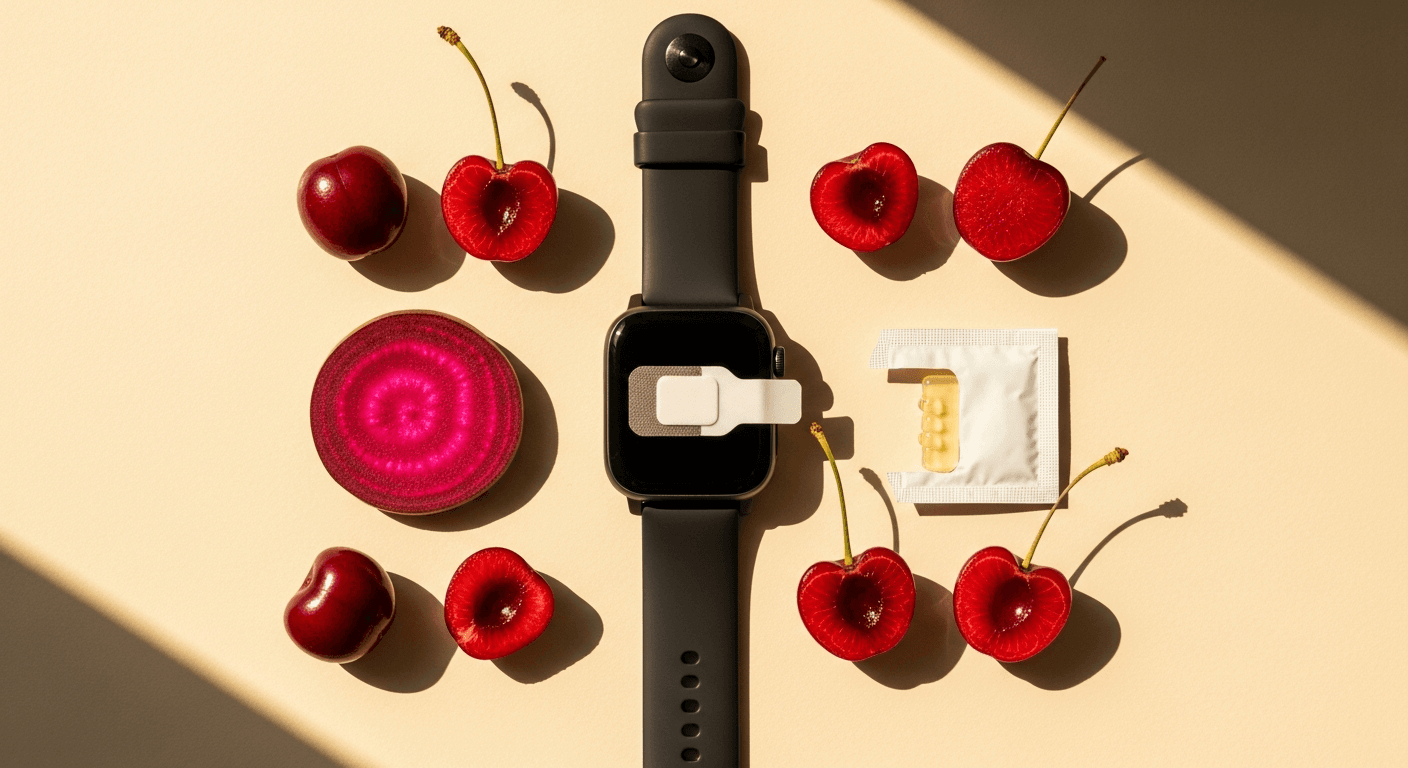
Protein shakes and creatine aren't going anywhere. But if that's still the center of your nutrition strategy in 2026, you're leaving performance on the table. The athletes making real gains right now are thinking about when they eat, what's actually in their products, and what their body data is telling them. Here's what's genuinely shifting.
Chrono-Nutrition Has Left the Lab
Circadian biology has been a research focus for years. In 2026, it's finally showing up in real athlete protocols. The core idea behind chrono-nutrition is straightforward: your body processes nutrients differently depending on the time of day, and aligning your intake with your circadian rhythm can meaningfully affect performance and body composition.
Research consistently shows that insulin sensitivity peaks in the morning and early afternoon. Eating the bulk of your carbohydrates earlier in the day, particularly around training windows that sit before 3 p.m., produces better glycogen storage and lower fat accumulation compared to evening-heavy eating patterns. For athletes training in the morning or midday, this isn't a minor tweak. It's a structural shift in how you organize your fueling.
Evening training complicates this, but the field has answers. A protein-dominant meal post-workout at 8 p.m. with moderate carbohydrates supports muscle protein synthesis without significantly disrupting sleep quality. The key is not skipping the post-workout window because it's late. Nutrient timing still matters. The clock just informs the composition.
Practical chrono-nutrition also means front-loading calories on rest days and shifting distribution on hard training days. It's not about eating less. It's about eating in sync with what your physiology is actually ready to handle at different points in a 24-hour cycle.
Your Wearable Knows More Than Your Supplement Label Does
The personalized nutrition conversation has been running for a decade. What's different in 2026 is that the data infrastructure to act on it is genuinely accessible. Continuous glucose monitors, HRV trackers, and next-generation fitness wearables are giving everyday athletes biomarker feedback that was previously limited to elite sports science labs.
The shift this creates is significant. Instead of following a generic supplement protocol, you can now build a stack that responds to what your body is actually showing. High training load weeks with suppressed HRV scores, for example, are prompting athletes to increase magnesium and adaptogens. Glucose spike patterns after specific meals are informing carbohydrate choices around workouts. Recovery scores are dictating whether a sodium and electrolyte focus or a protein prioritization approach makes more sense on a given day.
Research models analyzing blood biomarker data alongside training variables. tools like MIT's PhenoMol Model, which redefines how we understand recovery, are showing that individual variation in recovery markers is far larger than previously assumed. Two athletes doing identical training blocks may need substantially different nutritional interventions to hit the same recovery outcome.
The practical upshot: if you're spending $60 to $100 a month on supplements without tracking any biomarkers, you're essentially guessing. The athletes getting ahead in 2026 are using their wearable data as the first input, not the supplement marketing copy.
Clean Labels Are Winning the Supplement Aisle
Consumer ingredient literacy has hit an inflection point. The sports supplement market, which was built on proprietary blends and indecipherable label text, is facing real pressure from buyers who are reading the fine print. Sales data from major US sports nutrition retailers shows that whole-food and minimally processed product categories are outgrowing traditional ultra-processed supplement formats for the third consecutive year.
This isn't just a wellness trend bleeding into sport. There's a performance argument behind it. The real impact of ultra-processed food on muscle and strength is increasingly well-documented, and it's not a favorable picture. Chronic consumption of highly processed foods, even those marketed as sports products, is associated with systemic inflammation markers that directly interfere with recovery and adaptation.
What's taking their place? Products built around whole food concentrates, minimally processed protein sources like grass-fed whey, egg white, or hemp, and functional ingredients with transparent dosing. The bar for "clean" has risen. Athletes aren't just avoiding artificial sweeteners. They're scrutinizing emulsifiers, flow agents, and filler carbohydrates that pad out inferior products.
This shift is also informing how people think about protein sourcing more broadly. The conversation is no longer just about hitting a daily gram target. It's about the quality and bioavailability of the protein you're actually consuming. For women specifically, this conversation is overdue. Understanding protein needs for women who train goes well beyond the oversimplified advice that has dominated fitness media for years.
Recovery Nutrition Is No Longer an Afterthought
For most of fitness history, recovery nutrition was treated as the minor footnote after the real work of pre-workout fueling. In 2026, that hierarchy has flipped among serious amateur athletes. The performance ceiling for most recreational and competitive amateurs isn't their training volume. It's how efficiently they recover between sessions.
The practical impact of this shift is visible in what athletes are prioritizing. Post-workout protein timing is getting as much attention as pre-workout carbohydrate loading. Anti-inflammatory whole foods, tart cherry, turmeric, and omega-3 rich sources, are being scheduled into post-training meals rather than treated as optional extras. Sleep nutrition, specifically the role of glycine, magnesium, and tryptophan-rich foods in supporting sleep quality, is moving from fringe to standard protocol.
Collagen has also had a meaningful moment in this space, though the evidence warrants careful reading. The truth about collagen and muscle recovery is more nuanced than the supplement marketing suggests. The research supports specific applications, particularly connective tissue repair and joint support around high-impact training, but collagen is not a substitute for complete protein sources and its role in muscle protein synthesis is limited.
Recovery nutrition also intersects directly with sleep quality. You can have the most dialed-in post-workout meal plan available, but if your sleep is compromised, the adaptation signal is going to be blunted. This is where holistic thinking matters. Athletes tracking recovery scores on their wearables and seeing persistent deficits despite solid nutrition need to look at sleep architecture, not just macros.
The post-marathon athlete demographic is a useful example here. Post-marathon recovery timelines are significantly longer than most recreational runners expect, and the nutritional demands of that window, particularly for glycogen repletion, immune support, and muscle repair across weeks rather than days, are rarely addressed with the same precision as race-day fueling.
The Supplement That's Actually Earning Its Place in 2026
With so much noise in the supplement space, it's worth naming what's actually holding up under scrutiny this year. Creatine monohydrate remains the most evidence-backed performance supplement available, and its profile has only strengthened with emerging research into cognitive benefits. That's not new. What is newer is the growing evidence base around certain micronutrients.
Vitamin B3 derivatives, specifically nicotinamide riboside and related compounds, have attracted serious research attention around immune function and cellular recovery. What the new research on Vitamin B3 and NK cells means for athletes points toward potential applications in supporting immune resilience during heavy training blocks, which is a real and underaddressed problem for high-volume athletes.
Electrolyte precision has also moved beyond the basic sodium-potassium conversation. Sweat rate testing, now accessible through some advanced wearables, is showing significant individual variation in sodium loss during exercise. One-size-fits-all electrolyte tablets are giving way to customized formulas, sometimes at a premium, with serious athletes spending $30 to $80 per month on personalized electrolyte stacks versus $10 on generic products.
What This Means for How You Actually Eat
The through-line across all four shifts is the same. Generic protocols are giving way to responsive, data-informed, quality-focused approaches. That doesn't mean you need a $400 continuous glucose monitor and a sports dietitian on retainer to eat well for performance. It means the principles guiding your choices need to be grounded in your actual biology, not someone else's supplement marketing.
Start with food quality and timing. Build from there using whatever data you have access to. Be skeptical of products with opaque labeling. And treat recovery nutrition with the same seriousness you bring to pre-training fueling. That combination, not a more expensive stack, is where the real performance edge is sitting in 2026.