
Protein supplements have looked roughly the same for decades. Dense, chewy bars. Thick, opaque shakes. The category was built around maximizing macronutrients per serving, and texture was mostly an afterthought. That logic is shifting. A new generation of formats is arriving on shelves, and the driving force isn't just novelty. It's the reality that a large share of consumers simply don't enjoy eating what they're supposed to eat.
If you've ever forced down a chalky bar mid-afternoon or gagged through a gummy shake, you already understand the problem the industry is trying to solve.
What "Format Innovation" Actually Means in 2026
Format innovation in protein supplements isn't about adding exotic ingredients or tweaking amino acid profiles. It's about rethinking the physical experience of consuming a product. How it feels in your mouth, how easy it is to mix, whether it sits heavy in your stomach, and whether you'll actually want to eat it again tomorrow.
Two formats are currently getting the most attention: aerated protein bars and clear ready-to-mix proteins. Both represent a meaningful departure from conventional products, and both are gaining commercial traction for distinct but overlapping reasons.
This shift matters more than it might appear. Supplement adherence is a real problem. If a product is nutritionally sound but you find it unpleasant, you'll use it inconsistently or abandon it entirely. Palatability isn't a marketing vanity metric. It directly determines whether the nutrition you're paying for actually reaches your body on a consistent basis.
The AirBar Concept: Protein You Can Actually Enjoy
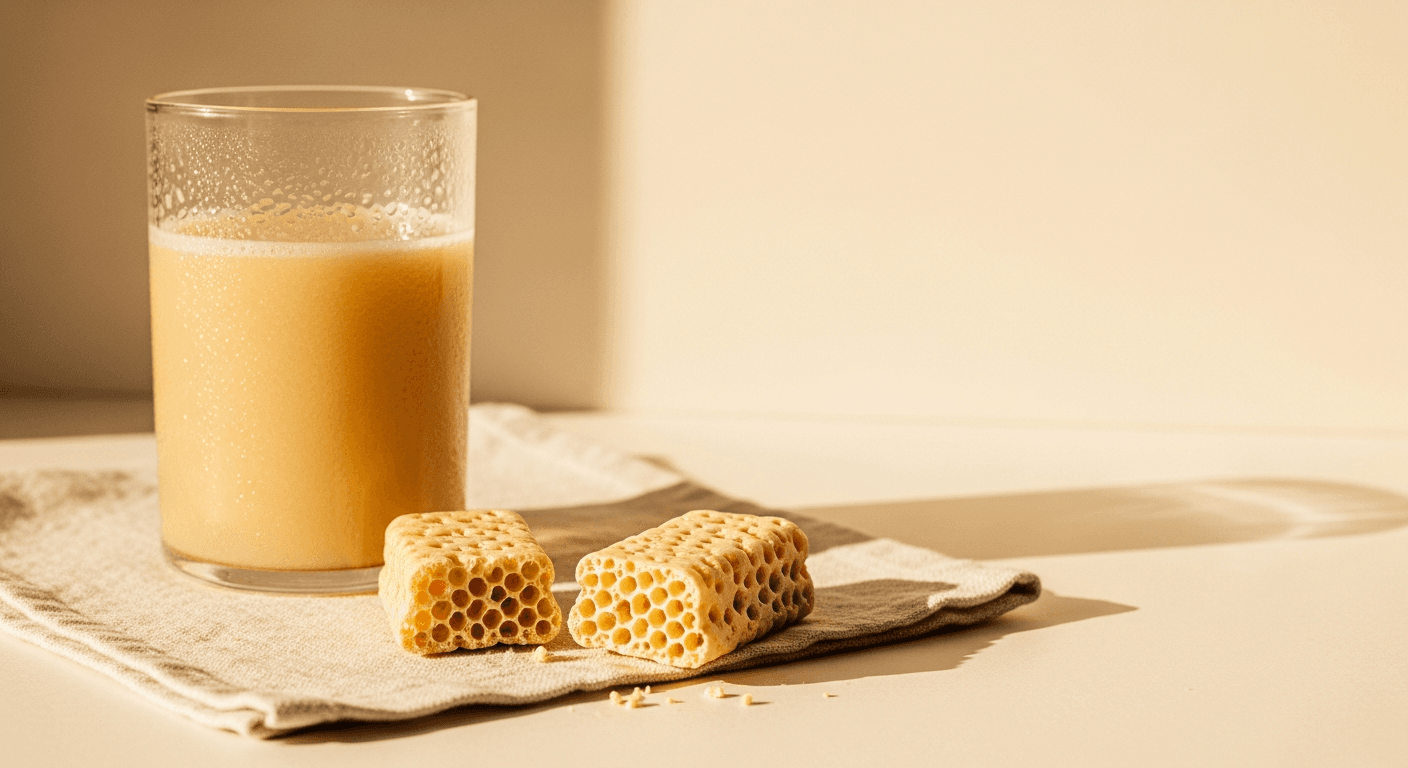
At Vitafoods Europe 2026, Arla Foods Ingredients debuted AirBar, a prototype aerated protein bar designed to challenge the density that defines most products in the category. The concept is built around whey protein that's been processed to create a lighter, airier texture. Think less of a traditional bar and more of something closer to a protein-infused meringue or mousse-style snack.
The target audience is explicit: consumers who find conventional protein bars too dense, too sweet, or too chewy to consume regularly. That's a bigger population than the industry has historically acknowledged. Research consistently shows that texture is one of the top reasons people discontinue protein supplement use, sitting alongside taste and convenience as the primary dropout factors.
Arla's positioning with AirBar reflects a broader understanding that the protein bar market has largely plateaued in its traditional form. Growth in the coming years is more likely to come from reaching consumers who previously opted out than from capturing more market share among existing loyal users.
The nutritional architecture of aerated bars does require some consideration. Introducing air into a bar reduces density, which means you need to think about the protein-per-gram ratio rather than just the protein-per-bar number. A well-formulated aerated bar can still deliver 15 to 20 grams of protein in a serving. It simply achieves this in a package that weighs less and occupies more volume. That's not a nutritional downgrade. It's a reformulation of the delivery vehicle.
Clear Proteins: The Shake Reinvented
On the liquid side, clear ready-to-mix proteins are experiencing strong momentum. These products, typically hydrolyzed whey or whey isolate-based, mix into water to produce a transparent or lightly colored drink that tastes more like a flavored water or sports drink than a traditional shake.
The appeal is straightforward. You're getting a meaningful protein dose, often 20 to 25 grams per serving, without the thickness, the creaminess, or the dairy-forward flavor profile that defines conventional shakes. For consumers who struggle with nausea, fullness sensitivity, or simply dislike milk-based textures, clear proteins remove those barriers entirely.
One specific user group worth paying attention to is people using GLP-1 receptor agonist medications like semaglutide or tirzepatide. These drugs significantly suppress appetite and frequently cause heightened sensitivity to textures that feel heavy or rich. Meeting daily protein targets, which matter significantly given the muscle loss risk associated with rapid weight reduction, becomes considerably harder when dense shakes are off the table. Clear proteins offer a viable path to adequate intake without triggering the aversion response many GLP-1 users describe.
Understanding why the new 2025-2030 guidelines target 1.2 to 1.6 grams of protein per kilogram of body weight makes the stakes here clearer. Meeting those targets consistently requires practical, tolerable delivery formats, not just theoretical macronutrient planning.
Do These Products Actually Deliver Nutritionally?
The reasonable question is whether format innovation comes at a nutritional cost. The short answer is: it doesn't have to, but you need to read labels carefully.
Aerated bars vary widely in their protein density. Some products in this emerging category use the lighter format as a vehicle for premium protein delivery. Others use it to reduce ingredient costs while maintaining a price point that suggests comparable nutrition. Look for products where protein content per serving is clearly stated, and where the protein source is a high-quality whey isolate or concentrate rather than a cheaper collagen-dominant blend.
Clear proteins carry their own labeling complexity. Because they're often based on hydrolyzed whey, they tend to be more rapidly absorbed than intact whey protein. That's actually a potential advantage for post-workout use, where faster amino acid availability has measurable benefits. The research on protein timing and its relationship to muscle protein synthesis supports a preference for rapidly digested sources in the recovery window.
What clear proteins typically lack is fiber and fat, two components that contribute to satiety and digestive support in conventional bars and shakes. If you're using a clear protein as a meal-adjacent supplement rather than a complete meal replacement, that's not a problem. If you expect it to substitute for a full meal, you'll want to pair it with whole food sources of fiber and healthy fats.
Why Palatability Has Become a Competitive Priority
The protein supplement market in the US alone is valued at over $8 billion and growing. But penetration among the broader health-conscious adult population remains lower than the category's size might suggest. A significant portion of people who intend to use protein supplements regularly simply don't maintain the habit, and texture and taste are central to why.
Brands are responding by treating format as a primary axis of differentiation rather than a secondary consideration. This isn't just about attracting new customers. It's about retaining existing ones. Subscription churn in the supplement category is notoriously high, and poor palatability is among the most commonly cited reasons for cancellation.
The competitive logic now looks something like this: macronutrient profiles across premium protein products have largely converged. Ingredient quality floors have risen across the industry. The battleground has shifted to experience. Which product do you actually want to use every day? Which one fits your lifestyle, your stomach, and your preferences without requiring discipline to consume?
This connects to a broader trend visible across the nutrition space. As the top nutrition lessons from early 2026 show, consistency over perfection is increasingly recognized as the dominant driver of real-world outcomes. A nutritionally optimal product you skip most days is outperformed by a slightly less optimal product you use reliably.
What to Consider Before Switching Formats
If you're thinking about incorporating aerated bars or clear proteins into your routine, here are the practical factors worth weighing:
- Protein source and quality. Look for whey isolate, whey hydrolysate, or micellar casein as primary ingredients. Avoid products where collagen or gelatin is listed high on the ingredient panel if muscle protein synthesis is your goal. Collagen is an incomplete protein and lacks the leucine content needed to meaningfully trigger anabolic signaling.
- Protein per serving versus protein per calorie. Aerated products may look lower in protein at first glance because they're lighter. Calculate protein density relative to calorie content to make fair comparisons.
- Your use case. Clear proteins are well-suited to post-workout recovery, hot weather consumption, and users with appetite suppression. Aerated bars are better positioned as between-meal snacks or pre-workout fuel. Neither format is optimally designed to replace a whole-food meal entirely.
- Gut tolerance. Hydrolyzed whey in clear proteins can cause digestive discomfort in some users, particularly at higher doses. If you're sensitive to whey, consider a plant-based clear protein formulation, which is a smaller but growing segment of this category. The connection between gut health and athletic performance is well-supported, and digestive comfort should factor into any supplement decision.
- Cost per gram of protein. Premium formats typically carry a price premium. Clear proteins in the US generally retail between $40 and $60 for a 20-serving container. Aerated bars in early market releases are priced similarly to or slightly above conventional protein bars, in the $3 to $4 per bar range. Calculate what you're paying per gram of quality protein before committing.
The Direction of Travel
Format innovation in protein supplements isn't a passing trend. It reflects a maturation of the category toward serving a broader, more diverse consumer base. The original protein supplement market was built around athletes and bodybuilders who prioritized function above everything else. That consumer still exists, but the addressable market has expanded enormously to include casual gym-goers, aging adults focused on muscle preservation, GLP-1 users managing body composition, and people who simply want to eat better without the unpleasantness that has historically come attached to "health food."
Aerated bars and clear proteins are early expressions of where this is heading. Expect more category experimentation in the next two to three years, including protein-enriched hydration products, texture-modified formats for older adults, and hybrid products that blur the line between functional food and supplement entirely.
The nutritional fundamentals haven't changed. You still need adequate protein distributed across your day, from quality sources, in amounts calibrated to your body weight and activity level. What's changing is that the industry is finally taking seriously the idea that how a product tastes and feels is part of whether it works at all.