
Something shifted at Vitafoods Europe 2026. The conversation around GLP-1 medications moved past side effect management and landed squarely in formulation territory. What used to be a medical question is now a product development question. And the industry is responding with formats that didn't exist two years ago.
If you've been watching the sports nutrition space, you already know that GLP-1 receptor agonists like semaglutide have created a new kind of consumer: someone who eats significantly less, feels full faster, and often struggles with nausea or texture sensitivity. That's a nutritional challenge. Meeting protein targets when your appetite is suppressed is genuinely hard, and standard high-protein formats weren't designed for it.
That's exactly the gap that brands are now racing to fill.
What Arla Foods Ingredients Brought to the Floor
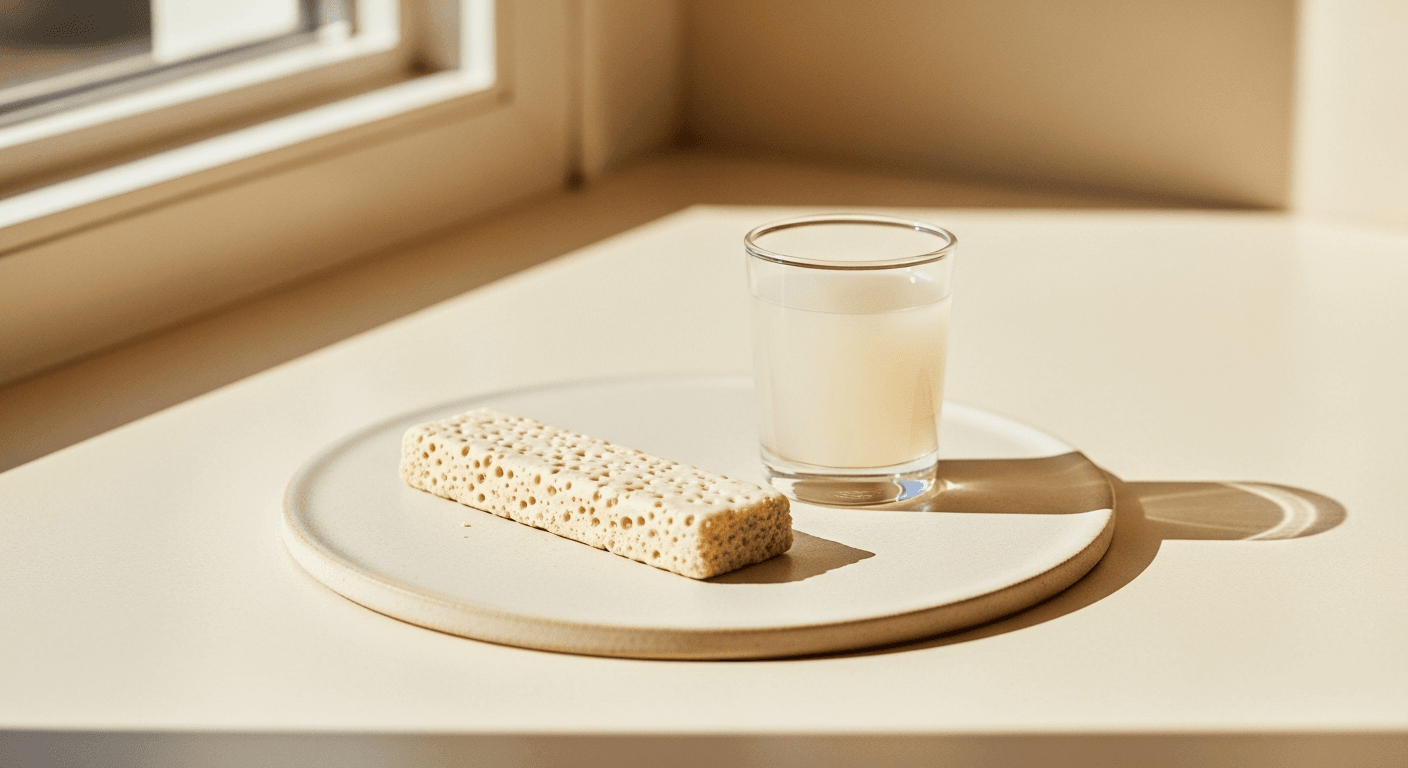
Arla Foods Ingredients made one of the more talked-about showings at Vitafoods Europe 2026, presenting a range of concept products built specifically around the GLP-1 nutrition use case. The flagship concept was AirBar, a lightweight aerated protein bar that delivers a high protein content in a format that's noticeably less dense and easier to consume than conventional bars.
The aeration process changes the eating experience in ways that matter for this audience. The texture is softer, less chewy, and less physically demanding to get through. For someone whose appetite is already suppressed or who experiences early satiety on a GLP-1 medication, that distinction is meaningful. A bar that feels lighter going down is more likely to actually get eaten.
This isn't a minor tweak to an existing product. It reflects a deeper understanding that GLP-1 users don't just need protein. They need protein that's delivered in a form their bodies and psychology will accept on a reduced-appetite day.
Clear Protein: The Format Shift You Haven't Seen Coming
The other concept generating attention was a clear ready-to-mix protein solution. Think of it as the antithesis of a thick, creamy shake. It's light, refreshing, almost juice-like in profile, and designed to be palatable even when your stomach is rebelling against the idea of eating.
For context, traditional whey protein shakes sit somewhere between 25 and 30 grams of protein per serving, but they're also rich, heavy, and often dairy-forward in flavor. For a GLP-1 user experiencing nausea or texture sensitivity, getting through one of those shakes can feel like a chore. A clear, lighter alternative that still delivers a meaningful protein hit sidesteps that friction entirely.
Clear protein formats have been available in Europe longer than they've had traction in the US market, but the GLP-1 wave is accelerating interest on both sides. When there's a large and fast-growing population of consumers who specifically need an alternative to traditional shakes, product developers pay attention.
This connects to a broader rethinking of what protein supplementation can look like. As protein timing research continues to evolve, the ability to hit daily targets across multiple smaller, tolerable doses is increasingly recognized as more important than any single large serving.
Why This Category Is Growing So Fast
The scale of the GLP-1 market makes the business case obvious. Estimates suggest that by 2030, tens of millions of people globally will be on some form of GLP-1 medication. That's a consumer base with a specific, documented nutritional problem: insufficient protein intake due to reduced appetite and food volume.
Clinical data consistently shows that people on GLP-1 medications lose both fat and lean muscle mass. The muscle loss component is the part the nutrition industry is most focused on. If you're losing weight but degrading your muscle tissue in the process, you're not achieving a healthy body composition outcome. You're just getting smaller.
Adequate protein intake is the primary nutritional lever for preserving lean mass during caloric restriction. This is well-established in sports nutrition research, and the updated 2025-2030 dietary protein guidelines targeting 1.2 to 1.6 grams per kilogram of body weight reflect a broader shift toward higher protein recommendations, particularly for people in a caloric deficit or engaged in resistance training.
The problem is that hitting 1.2 to 1.6 grams per kilogram when you're eating 1,200 to 1,400 calories a day requires serious dietary precision. Every eating occasion has to count. That's why purpose-built GLP-1 nutrition formats aren't a niche curiosity. They're a structural solution to a structural problem.
Palatability, Digestive Comfort, and the New Product Brief
What's interesting about the Vitafoods concepts isn't just the protein density. It's that they're trying to solve three things at once: protein delivery, palatability, and digestive comfort. Most existing high-protein products optimize for one or two of those. The GLP-1 user needs all three simultaneously.
Digestive comfort matters more than it used to. GLP-1 medications slow gastric emptying, which changes how the gut processes food and supplements. Products that cause bloating or GI distress in the general population can be significantly more problematic for someone already dealing with medication-related digestive effects. Formulators have to account for that.
This overlaps with growing research on the relationship between gut function and overall health outcomes. The evidence on gut health and athletic performance has expanded considerably, and it's informing how ingredient scientists think about protein format, fiber inclusion, and digestive enzyme activity in functional food products.
Palatability is equally non-negotiable. A product that's nutritionally optimal but unpleasant to eat will not get consumed consistently. The GLP-1 consumer doesn't have the appetite buffer that allows someone to choke down a mediocre protein bar. If it doesn't taste good and feel easy to eat, it gets skipped. And skipping it defeats the entire purpose.
What This Signals for Sports Nutrition More Broadly
It's worth stepping back and recognizing what this product category actually represents. Sports nutrition has historically been built around maximizing performance for people who are training hard and eating a lot. The GLP-1 consumer inverts that model entirely. This is someone eating very little, possibly not training intensively, and needing to preserve metabolic health rather than build athletic capacity.
That's a different design brief. And the fact that major ingredient suppliers like Arla are dedicating significant R&D and show floor real estate to it signals that this isn't a temporary trend. It's a reconfiguration of who the nutrition consumer is and what they need.
The innovations coming out of GLP-1 nutrition will almost certainly migrate into adjacent categories. Aerated high-protein bars with better texture are useful for anyone who finds conventional bars hard to eat. Clear protein formats that are lighter and more refreshing have broad appeal beyond the GLP-1 user base. What starts as a solution for a specific medical context tends to become standard practice.
If you've been following the key nutrition developments of 2026, this trajectory is consistent. The industry is moving toward functional specificity. Products designed for a defined physiological context, with formulations that reflect actual clinical understanding, not just marketing language.
The Questions Still Worth Asking
Not everything about this category is settled. A few things are worth watching as the market matures.
- Protein source selection: Whey remains the benchmark for leucine content and muscle protein synthesis stimulation, but GLP-1 users with dairy sensitivity or those on plant-based diets need alternatives that perform comparably. Formulation science here is still catching up.
- Serving size calibration: If appetite is suppressed, even a lighter bar may be difficult to finish. Products may need to come in smaller, more frequent portions rather than a single standard serving.
- Long-term compliance data: We don't yet have strong longitudinal data on whether GLP-1 users who supplement with purpose-built protein products actually preserve more lean mass than those who don't. That research is coming, and it will shape the category significantly.
- Price accessibility: Specialized functional formats tend to carry premium pricing. If GLP-1 nutrition products land at $4 to $6 per bar or serving, they're accessible to some consumers but not all. Scalability and cost reduction will determine how wide the actual reach is.
The Vitafoods 2026 floor showed an industry that's thinking seriously about these problems. The concepts are smart, the direction is right, and the consumer need is real. What happens next depends on whether the formulation quality holds up at scale and whether the clinical evidence catches up with the commercial momentum.
For anyone tracking where sports and functional nutrition is heading over the next three to five years, GLP-1 complementary products are one of the clearest signals available. The category is no longer speculative. It's being built right now.