
Garmin Q1 2026: What 42% Wearables Growth Signals for Fitness Operators and Brand Strategists
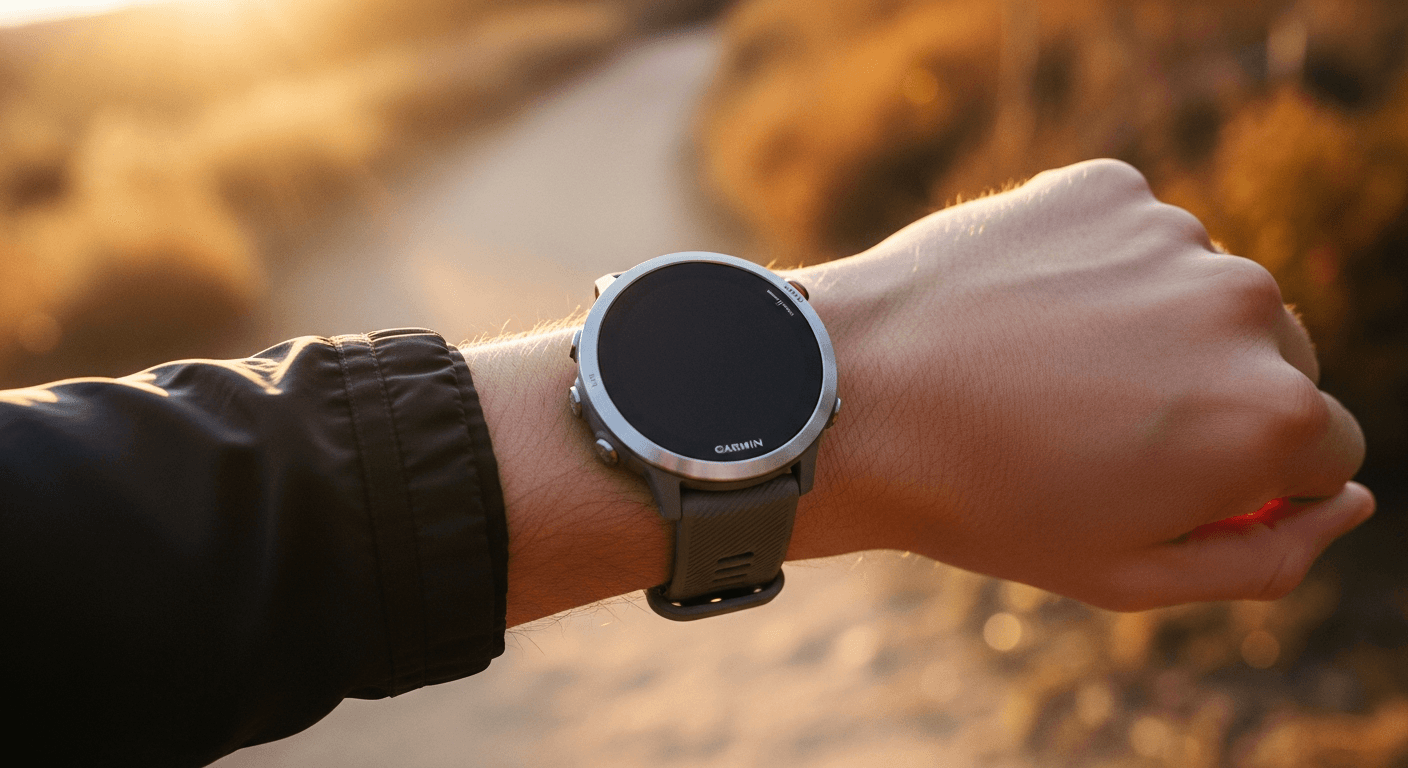
Garmin's fitness and wearables segment posted 42% revenue growth in Q1 2026, a record for the division and a figure that landed well above the company's overall growth rate. That single number tells you more about where premium health hardware is heading than most annual forecasts do. For fitness operators and brand strategists, it's not a product story. It's a structural one.
The broader consumer electronics market has been sluggish. Hardware categories from laptops to smartphones have struggled to generate excitement. Wearables built around health and performance data are moving in the opposite direction, and Garmin's Q1 result is the clearest real-time confirmation of that divergence.
The Capital Pattern Behind the Number
Garmin's result doesn't exist in isolation. It's one data point inside a much larger pattern of capital concentration in biometric hardware and integrated wellness ecosystems.
The EGYM-Playlist merger, backed by $785 million in fresh equity, combined connected gym hardware with AI-driven coaching infrastructure. WHOOP closed a $575 million raise to fund international expansion and deepen its clinical health data capabilities. These aren't product bets. They're ecosystem bets, built on the assumption that wearable data becomes the connective layer between training, recovery, coaching, and care.
Garmin's Q1 numbers validate that thesis at scale. When you see $785M going into gym-side hardware ecosystems and $575M into a wrist-worn biometric platform in the same cycle that Garmin posts 42% segment growth, you're looking at coordinated market confirmation, not coincidence.
The same dynamic is reshaping adjacent verticals. As covered in the $430B supplement market forecast, capital is concentrating around brands that can attach data and personalization to physical products. Wearables are the hardware version of that same shift.
Hyper-Personalization Is Accelerating Faster Than Forecast
The hyper-personalized fitness market is projected to reach $31.1 billion, driven by AI integration and the mainstreaming of clinical health data in consumer contexts. Garmin's Q1 result suggests that trajectory is accelerating ahead of most published forecasts.
The signal isn't just revenue. It's category legitimacy. Garmin's fitness devices now monitor continuous heart rate, blood oxygen saturation, sleep architecture, training load, HRV, and in some models, skin temperature trends. That's clinical-adjacent data delivered through a product category that was, five years ago, primarily a GPS watch with step counting.
The user arriving at your facility or opening your app today is increasingly data-literate in ways that weren't common even two years ago. They understand what their resting heart rate trends mean. They've read their sleep score. They know their training readiness. Research into whether there's a ceiling to how much exercise actually helps reflects the kind of nuanced performance thinking that used to belong to elite athletes. It's now mainstream consumer behavior, driven in part by the feedback loops wearables create.
That shift changes what fitness brands need to offer. Generic programming is no longer sufficient when the member's wrist already knows their recovery status.
Members Are Arriving With Their Own Data Infrastructure
This is the operational reality that fitness operators need to internalize from Garmin's Q1 result. The member isn't a blank slate. They're arriving with weeks or months of biometric history, a preferred data platform, and in many cases, a preference for how that data informs their training.
For gym operators, that raises the strategic stakes on software and coaching integrations significantly. A facility that can receive, interpret, and respond to member data creates a meaningfully different value proposition than one that can't. The question isn't whether your members are using wearables. Garmin's growth rate tells you they are. The question is whether your operation has built the infrastructure to make that data actionable inside your walls.
Franchise operators moving at scale are already responding to this. Aligned Fitness's rollup to 55 studios in the Pilates space reflects a model where the member experience is standardized enough to layer data and coaching integrations across locations. That's not coincidental. It's a defensible structure in a market where individual studio operators are increasingly outgunned on technology.
Coaching software is the next pressure point. The market is projected to reach $13 billion by 2035, and the operators and coaches who build integrations with wearable platforms now are building a data moat that will be difficult to replicate later. Choosing the right coaching software platform is no longer a back-office decision. It's a front-line competitive one.
The Competitive Pressure Is Coming From Above
Garmin's growth is happening in a market where competitive pressure is intensifying fast. Apple Watch remains the volume leader in premium wearables globally. Oura is now the official wearable of the U.S. Open and the USTA, a positioning move that anchors it firmly in the performance and aspirational sport space. WHOOP has built a subscription model around data and recovery coaching that has penetrated professional sport locker rooms and is now moving downstream to general consumers.
What all three of these platforms share is a strategic direction: they're moving up the value chain into coaching and content layers that were previously owned by operators and trainers.
WHOOP's coaching features now deliver personalized training recommendations based on HRV, sleep, and strain data. Apple Fitness Plus offers structured programming directly inside the Watch ecosystem. Oura's partnerships position it as a performance authority, not just a tracking device. Each of these moves pulls value away from the gym floor and the coaching relationship and concentrates it inside the hardware platform.
That's the competitive threat that Garmin's 42% growth makes urgent. When the wearable itself starts delivering the coaching, the operator's differentiation has to come from something the device can't replicate: human context, community, in-person correction, and accountability.
Indoor cycling platforms are navigating a version of this same pressure. The Zwift acquisition of ROUVY is partly a response to a market where hardware-first platforms are trying to own the full training experience. Consolidation happens when standalone content and coaching layers become harder to defend against integrated ecosystems.
What Fitness Brands Should Take From This Data
Garmin's Q1 result isn't a reason to panic. It's a reason to plan with more precision than most operators currently use. Here's what the data is actually telling you:
- Wearables are a primary revenue driver in the fitness economy, not an accessory category. The capital flowing into this space, validated by Garmin's segment record, confirms that biometric hardware is now infrastructure, not peripheral.
- Your members' data expectations are outpacing most facility offerings. The gap between what a Garmin Fenix or an Oura Ring delivers in data granularity and what most gym software can receive and act on is wide. Closing that gap is a near-term competitive priority.
- Coaching integrations are your defensible layer. The wearable can collect data. It can even interpret it with AI. What it can't do is put a qualified coach in front of the member who understands their history, their psychology, and their specific movement patterns. That's still human infrastructure, and it's where your brand earns loyalty.
- Programming needs to evolve toward responsiveness. Static weekly programming doesn't account for the biometric reality your members are tracking daily. Adaptive programming, even in simplified form, starts to match the feedback loop members already have from their devices.
The broader shift in how people think about their own performance is already visible in how they engage with training content. The demand for nuanced, data-informed guidance on adding workout variety without undermining progress reflects a population that is thinking more carefully about training optimization. Wearables are accelerating that thinking. Fitness brands that meet members at that level of sophistication will be better positioned than those that don't.
The Structural Shift Is Already Underway
A 42% segment growth figure from Garmin in a single quarter is not a seasonal anomaly. It's a confirmation that premium health hardware has reached a scale and a product maturity where growth compounds. The devices are better, the data is more clinically meaningful, and the consumer behavior around monitoring and optimization is now self-reinforcing.
For operators, the strategic window to build wearable-integrated experiences is narrowing. The platforms themselves are getting smarter and more self-sufficient. The coaching and content layers that wearable companies are building will continue to improve. The competitive moat for fitness brands isn't going to come from being skeptical of this shift. It comes from moving faster and more deliberately inside it than your competitors are.
Garmin just told you how fast the market is moving. The operational question now is what you're building in response.