
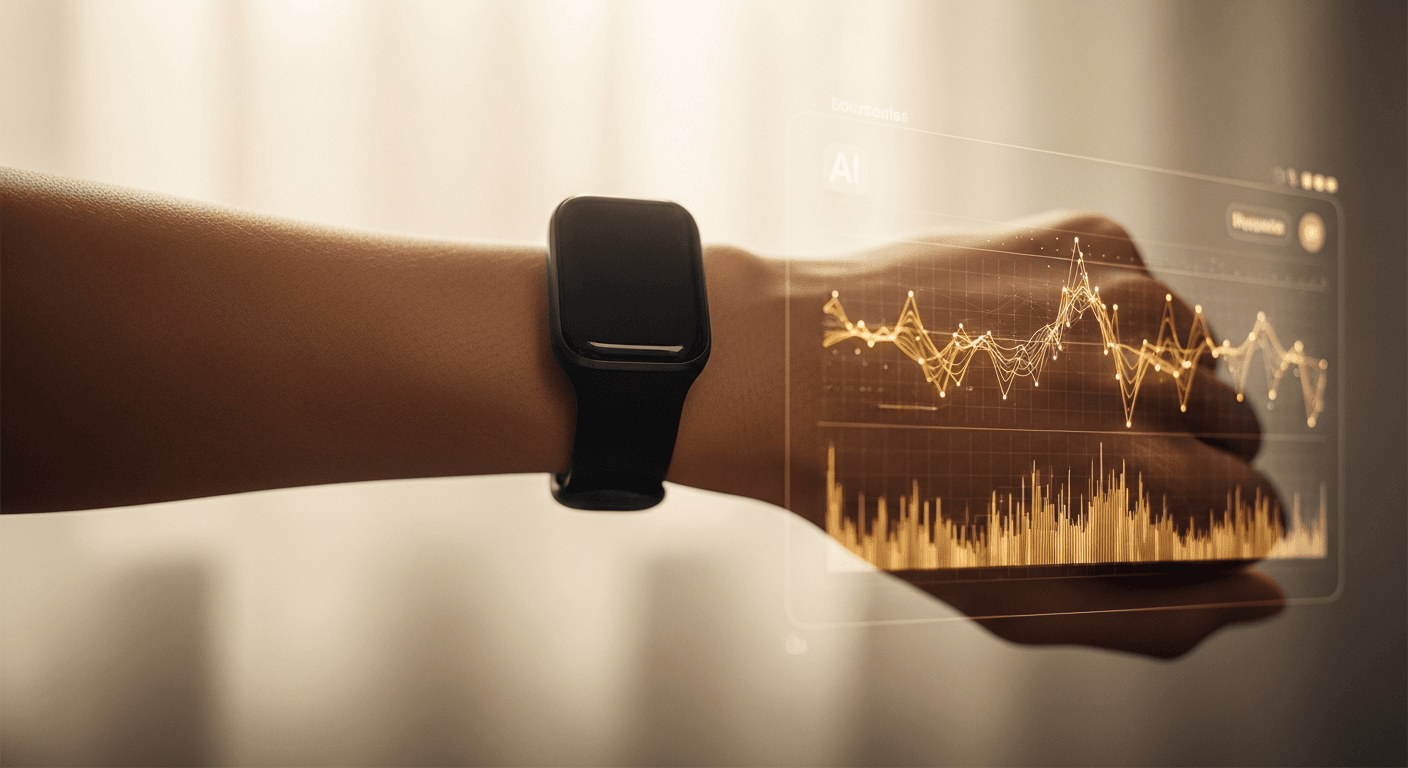
The fitness industry is undergoing a structural shift, and the numbers backing it are no longer speculative. A new market forecast projects the hyper-personalized fitness sector will reach $31.1 billion by the end of the decade, driven by the convergence of AI-generated programming, biometric wearables, and clinical health data. For fitness brands, this isn't a trend to monitor. It's a structural realignment to navigate now.
What's making this moment distinct isn't any single technology. It's the collision of three previously separate layers: consumer hardware, data infrastructure, and clinical-grade health intelligence. When those layers integrate, personalization stops being a feature and starts being a platform.
The Merger Signal Every Brand Should Read
The $785 million EGYM-Playlist merger is the clearest signal yet of where institutional capital is placing its bets. EGYM brings connected gym equipment and AI-driven training adaptation. Playlist brings content, community, and member engagement infrastructure. Together, they don't just create a larger company. They create a vertically integrated ecosystem where hardware, software, and experience reinforce each other.
This is not an isolated move. It reflects a clear investor thesis: point-solution fitness products, however well-executed, are increasingly vulnerable. What commands premium valuation is the ability to retain members across the full arc of their fitness journey, adapting to their data in real time and generating compounding behavioral insight over months and years.
You can see the same logic playing out in indoor cycling consolidation. Zwift's acquisition of ROUVY follows the same pattern: absorb a complementary platform, deepen the data layer, and lock in users who would otherwise migrate between apps. Standalone products compete on features. Ecosystems compete on switching costs.
WHOOP, Garmin, and the Infrastructure Layer
WHOOP's $575 million funding round didn't just confirm investor appetite for wearables. It confirmed that the data infrastructure layer beneath the hardware is where brand equity is actually being built. WHOOP doesn't sell a device. It sells a continuous physiological monitoring system with a coaching intelligence layer on top. The hardware is the entry point. The data relationship is the product.
Garmin's 42% year-over-year wearables growth in Q1 2026 reinforces the same point from a different angle. Garmin competes on precision and breadth of biometric capture, from heart rate variability to body battery scoring to sleep staging. Its growth reflects a user base that has moved beyond step counting and wants actionable physiological context for every training decision.
For fitness brands watching from the outside, the implication is uncomfortable but clear. If you don't have access to your members' or clients' data, you're operating blind in a market where the leading players are building their entire competitive advantage around data depth and continuity.
Personalization Is Now an Infrastructure Problem
For most fitness brands, personalization has historically been a marketing claim. Adaptive programming, tailored recommendations, individualized coaching. These phrases appear in brand decks and landing pages, but the underlying delivery mechanism is often a human trainer following intuition or a generic algorithm with minimal feedback loops.
That gap is now commercially exposed. As consumers interact with platforms that genuinely adapt to their biometric data, sleep patterns, recovery scores, and training history, the expectation baseline shifts. A brand offering static programming with a "personalized" label will increasingly face credibility pressure from users who know what real personalization feels like.
The strategic requirement this creates is not just about technology procurement. It's about rearchitecting how your brand captures, stores, and activates member data. That means investment in data pipelines capable of ingesting wearable outputs, coaching APIs that can translate biometric signals into actionable program adjustments, and interoperability standards that allow your platform to connect with devices your members already use.
This is also where coaching businesses face both opportunity and disruption. The coaching software market is projected to hit $13 billion by 2035, and the platforms capturing that growth are the ones that make personalization operationally scalable, not just philosophically aspirational.
The Athleisure Parallel and What It Tells You
The $31.1 billion hyper-personalized fitness projection doesn't exist in isolation. The broader athleisure market is tracking toward $1,157 billion by 2035 at a 9.37% compound annual growth rate. That number matters not because athleisure and fitness tech are the same category, but because they share a demand driver: consumers are integrating health and performance identity into their daily lives in ways that cut across product categories.
When someone buys performance apparel, books a recovery session, tracks their HRV before a workout, and adjusts their nutrition based on a sleep score, they're operating inside a personal health ecosystem. Brands that only occupy one node of that ecosystem are easier to replace than brands that connect multiple nodes with coherent, personalized intelligence.
This cross-category integration is also reshaping what premium means. Premium used to mean high-quality materials or expert instruction. Increasingly, it means relevance. A fitness product that knows you, adapts to you, and improves its recommendations over time is premium in a way that no static product, however well-crafted, can replicate.
The supplement industry is navigating this same transition. The $430 billion supplement market forecast through 2035 increasingly reflects brands moving toward personalized formulation and data-informed product recommendations, rather than mass-market positioning.
What This Means for Gym Operators and Franchise Brands
For gym operators, the personalization shift raises an urgent question: what role does a physical facility play in a market where the most valuable fitness experiences are increasingly data-mediated?
The answer isn't that physical fitness is declining. Foot traffic data consistently shows that in-person training remains a core consumer preference. But the operators growing fastest are those connecting the physical experience to a data layer that extends beyond the gym floor. A member who sees their in-gym workout reflected in their recovery data, tracked against their progress history, and used to adapt next week's program is more engaged and less likely to cancel than one receiving no data continuity at all.
Franchise models are beginning to internalize this. Aligned Fitness's 55-studio Pilates rollup demonstrates that scaling a boutique fitness brand now requires more than real estate and brand consistency. It requires the operational infrastructure to deliver personalized member experiences at scale, which is a data and systems problem as much as a staffing one.
The brands that treat personalization as a technology upgrade to bolt onto existing operations will fall behind. The brands building personalization into their core operating model, from intake assessments to programming logic to retention triggers, are the ones positioned to capture margin as the market matures.
The Winner-Takes-Most Dynamic Ahead
Markets built on data infrastructure tend to follow winner-takes-most dynamics rather than winner-takes-all, but the difference is smaller than it sounds. The leading platforms accumulate data advantages that compound over time, creating barriers that late movers struggle to overcome with capital alone.
WHOOP's funding round, the EGYM-Playlist merger, Garmin's growth trajectory. These are early positioning moves in a race where the prize is becoming the default personalization layer for fitness consumers. The brands and platforms that establish that position first will be extraordinarily difficult to displace.
For everyone else, the window for building genuine data infrastructure is open now, but it won't stay open indefinitely. As consolidation accelerates, the cost of integration with dominant platforms will rise, and the leverage of independent data assets will shrink.
It's worth noting that personalization pressure isn't only coming from the technology side. Consumer awareness of their own health data is rising sharply. Users who track their training load and its diminishing returns over time are asking increasingly sophisticated questions about whether their fitness brand is actually using what it knows about them. That expectation gap, between what brands claim and what they deliver, is where loyalty erodes fastest.
The Strategic Imperative Is Already Here
The $31.1 billion projection isn't a destination. It's a description of where investment is already flowing, what consumers are already expecting, and what infrastructure is already being built by the fastest-moving players in the market.
If you're running a fitness brand, a coaching business, or a gym operation in 2026, the question isn't whether hyper-personalization will affect your category. It already is. The question is whether your current infrastructure, data architecture, and product strategy are positioned to compete in the market that's taking shape, or the one that existed five years ago.
The brands making the right moves now are the ones that will define what premium fitness means for the next decade.