
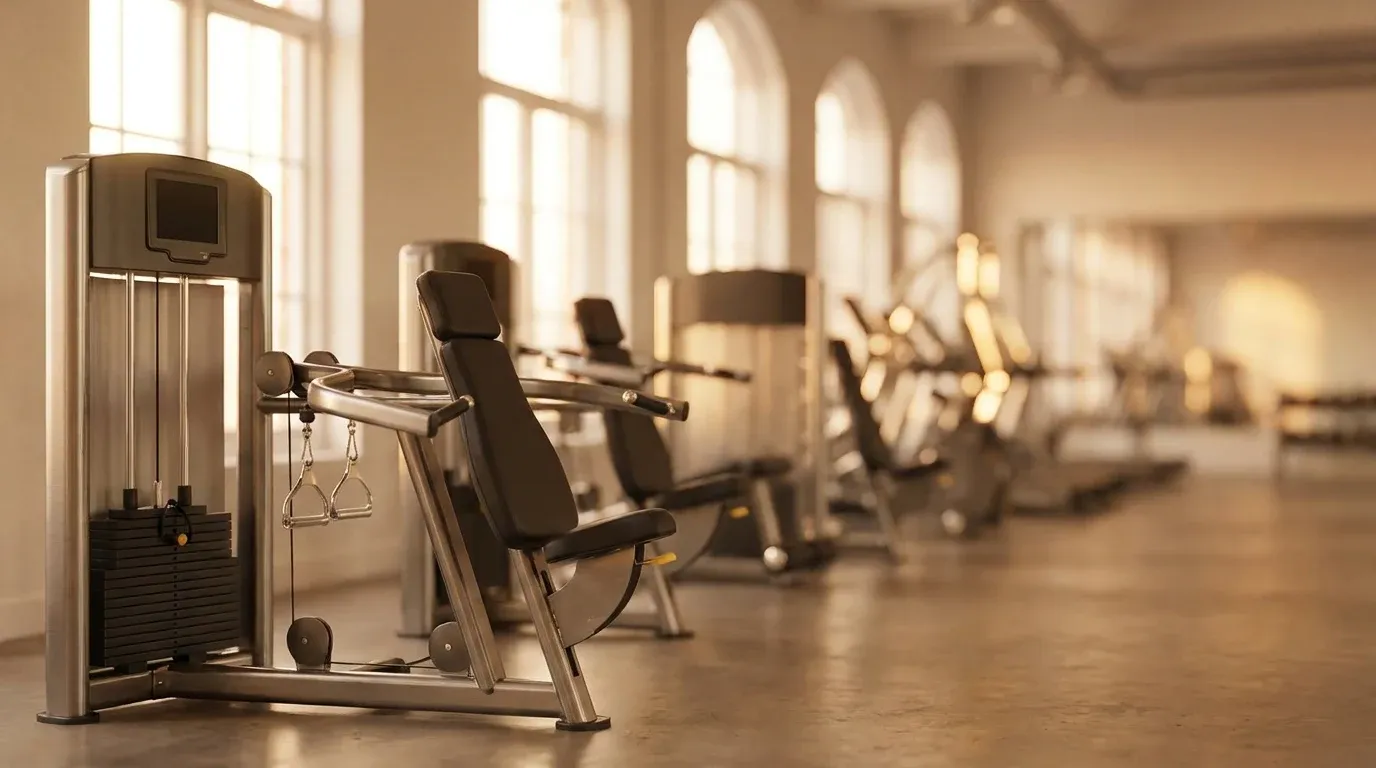
The global strength training equipment market is on track to reach $24 billion by 2035, growing at a 5.1% compound annual growth rate. That number is significant on its own. What matters more for gym operators is what's driving it. Smart, connected equipment is the primary growth engine, and facilities that treat their strength floor as a static capital asset are already falling behind.
If you run an independent gym, a mid-market club, or a regional fitness chain, the decisions you make on equipment in the next 12 to 24 months will shape your competitive position well into the next decade. That's not a forecast worth ignoring.
Why This Market Is Growing Faster Than the Iron
Strength training has had a sustained cultural moment. Participation rates across the US, UK, Canada, and Australia have risen steadily through the post-pandemic period, driven by mainstream awareness of muscle mass as a longevity marker, a growing GLP-1 user base looking to preserve lean tissue, and younger demographics who arrived at fitness through resistance training rather than cardio.
The demographic tailwinds are real. Older adults are training for functional strength longer than any previous generation. The emergence of competitive longevity culture, as covered in The Super Age Games Just Made Longevity a Sport, signals that strength training is no longer a niche discipline. It's a core pillar of the fitness industry's future.
But the market's 5.1% CAGR isn't just reflecting more people lifting. It's reflecting a fundamental shift in what equipment is expected to do. Smart fitness integration, including real-time load tracking, app connectivity, biometric feedback, and AI-guided programming, is converting the strength floor from a depreciating capital expenditure into an active data and engagement platform.
Connected Equipment Is Changing the Business Model
Legacy strength equipment does one thing: it resists. A plate-loaded rack doesn't know who's using it, how many reps they completed, or whether their load progression is on track. It generates zero data, enables zero personalization, and creates zero reason for a member to feel that your facility specifically is contributing to their progress.
Connected equipment changes that equation entirely. Machines with integrated load cells, Bluetooth-linked app ecosystems, and cloud-synced training histories allow operators to deliver something legacy iron never could: continuity of programming. A member who trains at your facility on Tuesday and reviews their session data on Thursday morning before returning on Saturday is engaged in a feedback loop that doesn't exist in a traditional gym environment.
This is precisely the problem identified in Why Most People Still Miss Their Strength Goals. Without structured progression and accountability tools, even motivated members plateau and disengage. Connected equipment addresses the dropout risk directly, turning hardware into retention infrastructure.
Platforms like iFIT are already demonstrating how AI coaching layers can extend this further. As analyzed in iFIT's Tailor Launch: What AI Coaching Means for Brands, AI-driven personalization is becoming a differentiator not just for home fitness but for commercial facilities that integrate the same logic into their floor experience. The question for operators isn't whether this technology will become standard. It's whether you'll be an early adopter or a reluctant follower.
The Gap Between Connected and Legacy Facilities Is Widening
Here's the competitive reality that mid-market operators need to understand clearly: the member most likely to churn is not the casual visitor. It's the data-conscious, goal-oriented member in the 28 to 45 age bracket who tracks their training, monitors their recovery, and expects their gym to meet them where they are digitally.
This member already uses a wearable. They already log workouts in an app. When they walk into a facility with a connected strength floor, their existing data ecosystem extends into their gym session. When they walk into a facility with unconnected equipment, they're forced to manually log every set, losing continuity with the platforms they already rely on.
That friction is a churn risk. It's not dramatic. Members don't usually leave citing "poor equipment connectivity." But the underlying dissatisfaction compounds over months, and when a competing facility with a smarter floor opens nearby, the switching cost drops sharply.
This gap is especially visible in the club consolidation trends reshaping the market. As covered in The $135B Fitness Club Market: Where Independents Win or Lose, independent operators face growing pressure from well-capitalized chains investing heavily in technology and member experience. Standing still is a strategic choice, and not a defensible one.
Capital Planning Cycles Make This Decision Urgent
Most independent and mid-market gym operators run capital planning cycles of five to seven years. That means equipment purchased or committed in 2025 will likely remain on the floor through 2030 and in many cases through 2031 or 2032. The decisions you make now are not just about meeting today's member expectations. They're about where your facility stands competitively at the midpoint of the next decade.
Consider the trajectory. By 2030, it's reasonable to expect that connected strength equipment will be the default offering at premium fitness chains across North America, the UK, and Australia. Operators still running legacy iron at that point won't just appear behind the curve. They'll be structurally unable to offer the data continuity and AI-assisted programming that members will expect as a baseline.
The renovation playbook matters here. YouFit's $10 million club renovation, detailed in YouFit's $10M Club Renovation: The Operator Playbook, illustrates how a phased, strategically sequenced upgrade approach can modernize a facility without disrupting operations or overwhelming capital budgets in a single year. The lesson is that large-scale upgrades are achievable when planned across multiple cycles rather than treated as single-event expenditures.
What a Smart Strength Floor Actually Requires
Upgrading to a connected strength floor isn't simply a matter of swapping out machines. It requires a layered approach to technology, infrastructure, and staff readiness. Here's where most operators need to focus:
- Equipment selection with open API compatibility. Not all connected equipment plays well with third-party apps or facility management systems. Prioritize machines that allow data export and integrate with platforms your members already use.
- Network infrastructure. Reliable, high-density Wi-Fi and Bluetooth coverage across the strength floor is a prerequisite. Many older facilities are underpowered here and will need infrastructure investment before equipment upgrades deliver their full value.
- Staff training on data utilization. Connected equipment generates data, but that data only improves retention if coaches and floor staff know how to interpret it and act on it. This is a training and culture investment, not just a technology one.
- Member onboarding for digital features. The best-connected floor in the market underperforms if members never activate their profiles or link their apps. Build onboarding workflows that drive adoption within the first 30 days of membership.
- Programming integration. Equipment data becomes most valuable when it feeds into structured programming. Whether you use in-house coaches or third-party AI platforms, the goal is to close the loop between what members do on the floor and what guidance they receive next.
The last point connects directly to a broader principle about effective training. As outlined in Why Your Training Needs to Keep Evolving, progressive overload and structured adaptation are the core mechanisms behind real fitness outcomes. Connected equipment makes those mechanisms visible, trackable, and actionable at scale across your entire membership base.
The GLP-1 Factor and What It Means for Your Floor
There's a secondary market driver worth flagging for operators. GLP-1 medication adoption is accelerating across the US and other English-speaking markets, and the clinical consensus is clear: users on these medications need resistance training to protect lean muscle mass during weight loss.
This is creating a new segment of motivated, medically directed gym members who arrive with specific programming needs and a strong incentive to train consistently. A connected strength floor that tracks load progression and muscle group volume is exactly the kind of environment this segment needs. Facilities that can serve GLP-1 users effectively, through smart equipment combined with informed coaching, are positioning for a demographic that's growing fast and spending intentionally on health.
The intersection of GLP-1 usage and structured strength training is covered in depth in GLP-1 and Lifting: How to Protect Your Muscle. For operators, the takeaway is straightforward: your equipment strategy and your ability to serve this member cohort are connected decisions.
The Window for Strategic Advantage Is Now
The $24 billion market projection isn't a headline to file away. It's a signal about where investment is flowing, what members will increasingly expect, and which facilities will have the infrastructure to deliver on those expectations.
Operators who move on connected strength upgrades within the next 12 to 24 months gain a multi-year positioning advantage over competitors locked into legacy equipment cycles. Those who wait until connected floors are standard will be investing to catch up rather than to lead.
Your capital planning cycle determines your competitive reality. The math is straightforward. Decisions made now carry through to 2031 and beyond. The strength equipment market is growing, it's getting smarter, and the facilities that build for that future today are the ones that will own the decade.