
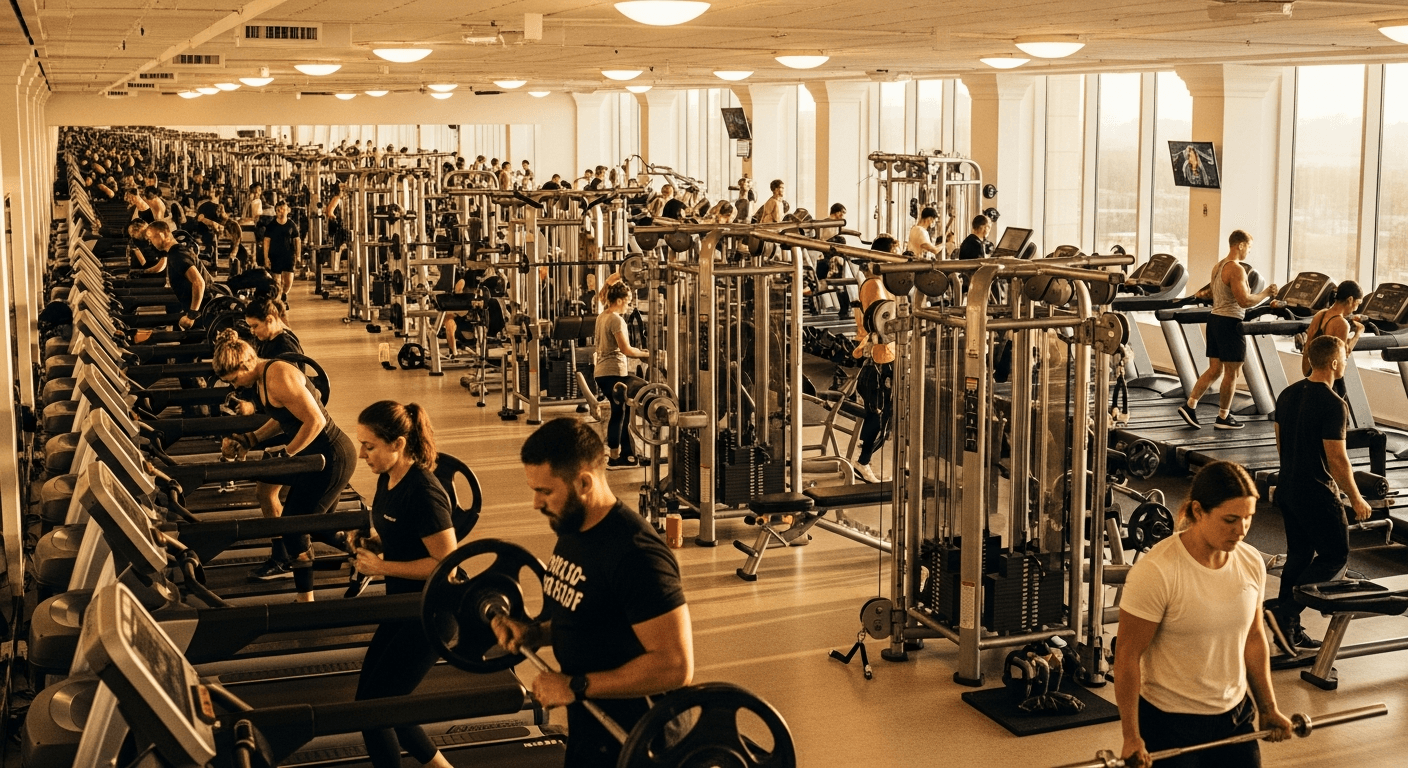
Total US consumer fitness spending is projected to reach $60 billion in 2026. This figure — from IHRSA and Global Wellness Institute projections — covers gym memberships, personal training, digital subscriptions, specialty fitness apparel, and equipment. It's a milestone that confirms fitness has shifted from discretionary spending to essential health investment.
Breakdown by Category
- Gym memberships: $38.7 billion — the largest category, driven by membership growth and HVLP chain expansion
- Personal training: $15.6 billion — growing 4.2% annually, supported by digital integration
- Digital fitness subscriptions: $4.2 billion — the fastest-growing segment (near-zero in 2019)
- Home equipment: $1.5 billion — down from the COVID-19 peak but stabilized above pre-pandemic levels
The Perception Shift
In 2019, 58% of American adults considered their fitness spending "essential." By 2026, that number is 71%. This shift is mainly attributed to the public health mainstreaming of mental health: exercise is no longer perceived as an option for weight loss, but as a necessity for psychological balance.
This has direct implications for fitness spending's resilience in economic slowdowns: members resist budget cuts more when they view their membership as healthcare, not luxury. Recent policy changes reinforce this — HSA-eligible gym memberships now allow Americans to spend up to $500 per year in pre-tax dollars on fitness.
Gym Membership Penetration
23% of US adults hold an active gym membership in 2026. This rate is slightly higher than prior years but remains well below theoretical potential — meaning organic market growth still has significant headroom.
IHRSA projections put this at 26% by 2030, driven by expansion into secondary markets and improving value propositions from HVLP offerings. Chains like EoS Fitness are aggressively acquiring locations to capture this growth before it matures.
What This Means for Operators
$60 billion is a reference market. For gym owners, franchisees, and independent operators, the message is clear: the market isn't saturated. Potential demand is there. The question isn't whether people want to exercise — it's how to reach them and keep them.