
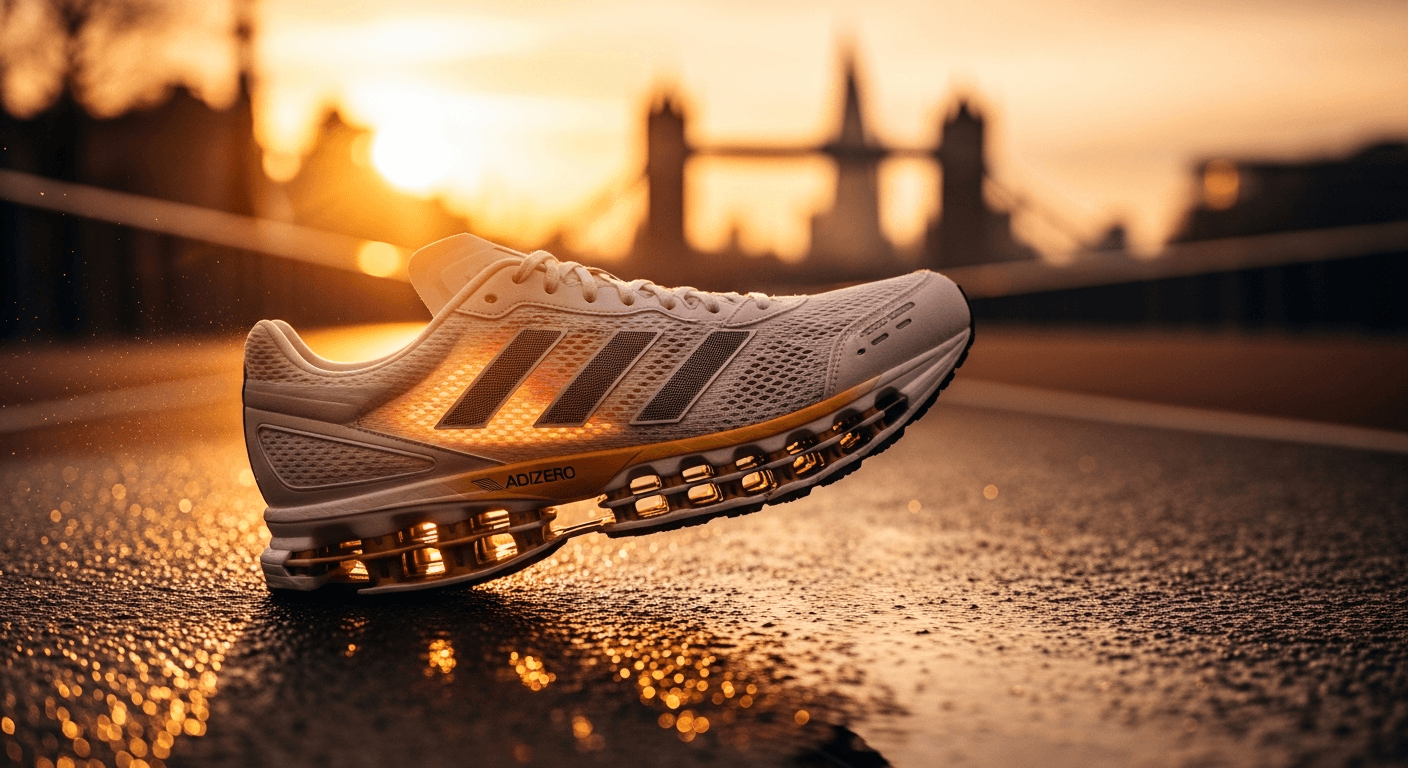
On a cool April morning in London, Sabastian Sawe crossed the finish line in 1:59:30, becoming the first human being to complete an official marathon in under two hours. The record is staggering on its own terms. But for Adidas, it may be the most commercially significant 119 minutes and 30 seconds in the brand's history.
This wasn't a controlled time trial. It wasn't a marketing event with pace cars and laser lights. It was a World Athletics-sanctioned race, on one of the world's most watched courses, broadcast to a global audience. And Sawe did it in Adidas kit, on Adidas shoes. That distinction changes everything.
What the Record Actually Represents
To understand the weight of this moment, you need to place it in context. Eliud Kipchoge's 1:59:40 in Vienna in 2019 was extraordinary, but it didn't count. It was a staged event, disqualified from the record books for its use of rotating pacers and a course designed purely for speed. That achievement reshaped public perception of human limits, but it handed Nike a cultural trophy that came with an asterisk.
Sawe's 1:59:30 carries no asterisk. It's official, it's verified, and it will stand in the history books alongside every name that came before him. You can trace the full lineage of record holders in the Marathon World Record History: Every Record From 1908 to Sawe's 1:59:30. The progression is remarkable. What Sawe did in London didn't just nudge the record forward. It broke through the symbolic wall that even Kipchoge's unofficial run had only grazed.
For a complete breakdown of how Sawe executed the race, from his pacing splits to the role of shoe technology, see How Sawe Ran 1:59:30: The Pacing, Shoe Tech, and Race Strategy Behind the Record.
Adidas vs. Nike: The Shoe Wars Just Escalated
The elite marathon footwear market has been Nike's territory for the better part of a decade. The Vaporfly, introduced in 2016, redrew the competitive landscape almost overnight. Independent biomechanics research has consistently shown that carbon-plated shoes with highly responsive foam reduce the metabolic cost of running by roughly 4 percent compared to traditional racing flats. Nike moved first, and the brand spent years owning that conversation.
Adidas answered with the Adizero Adios Pro series. The shoes earned credibility through podium finishes, but credibility and cultural dominance are different things. What Adidas has lacked, until now, is a single, unmistakable moment that the brand can attach its identity to. Nike had Kipchoge and Breaking2. Adidas now has Sawe and 1:59:30.
On Running, the Swiss brand backed by Roger Federer, has also been climbing fast in the elite space. Its Cloudboom Strike LS has attracted serious athletes and podium placings at major races. The three-way competition between Nike, Adidas, and On has compressed the performance gap between brands significantly. Sawe's record doesn't close that gap by itself. But it gives Adidas a narrative that neither rival can take away.
It's worth noting that Sawe wasn't alone in making history. London 2026 produced two sub-2-hour finishes, with Yomif Kejelcha also breaking the barrier. That depth of performance sends a signal: this wasn't a one-off. The conditions, the course, and the technology aligned to produce something historic. Adidas was at the center of it.
The Breaking2 Comparison Is Fair, and Adidas Wins It
Nike's Breaking2 project in 2017 was a masterclass in brand storytelling. The event cost an estimated $30 million or more to produce, generated billions of media impressions, and positioned Nike as the brand that believed in human limits before anyone else did. It worked, even though Kipchoge missed the target by 26 seconds.
Adidas didn't spend $30 million on a controlled event. It sponsored an athlete who showed up to one of the world's oldest and most prestigious marathons and ran faster than any human being ever has. The authenticity of that narrative is worth more than any produced event could manufacture. You can't script 1:59:30 on the streets of London. It either happens or it doesn't.
From a marketing standpoint, Adidas now has footage it will use for years. It has a story that writes itself. And it has proof of performance in the most credible laboratory available: a major city road race, open competition, official timing.
What This Means for the Shoes You'll Actually Buy
Here's where the record stops being abstract and starts affecting your training. Elite race technology doesn't stay in the elite category. The carbon-plate and ZoomX foam combination that defined Nike's Vaporfly first appeared in a limited race edition before becoming the Vaporfly 4% and, eventually, a shoe available to any runner willing to spend around $250. The trajectory from prototype to retail shelf took roughly 18 months.
Adidas has followed a similar pattern with the Adizero line. The foam compounds and plate geometries tested at the elite level have progressively filtered into more accessible models. Sawe's record-breaking shoe will almost certainly accelerate that process. When a shoe wins the world record, the brand has both the incentive and the consumer demand to scale the technology fast.
For everyday runners, this matters. Not because you'll run a sub-2 marathon, but because the performance gains that make elite athletes marginally faster make mid-pack runners meaningfully more comfortable over long distances. A 4 percent reduction in energy cost across a 4-hour marathon effort is not trivial. It's the difference between finishing strong and struggling through the final 10 kilometers.
If you're planning your own marathon cycle around this technology, it's also worth thinking carefully about what surrounds your training. Shoe choice is one variable. Fuel and timing are others. Research into how to sync your diet with your training schedule shows that the nutritional decisions you make across a training block have a compounding effect on race-day performance that footwear alone can't compensate for.
The Broader Signal for Running Culture
Sawe's record lands at a specific moment in running's cultural arc. Participation in major marathons has been climbing steadily since 2022. The London ballot receives well over 500,000 applications for around 50,000 spots. Chicago and New York see similar oversubscription. Running is not a niche sport anymore. It's a mainstream global movement, and brands know it.
When a world record falls in that environment, the commercial ripple is enormous. Retail analysts have consistently found that elite performance events drive measurable spikes in consumer shoe sales within weeks of the event. After Kipchoge's Berlin record in 2018, Nike reported a significant uptick in Vaporfly unit sales in the following quarter. Adidas will be watching its own data closely right now.
The women's side of the London story is equally significant for the brand ecosystem. Tigist Assefa's performance in London added another layer to what was already one of the most consequential mornings in marathon history. Both records on the same course, the same day, signal something larger: the sport is in a technological and physiological breakthrough phase that brands are scrambling to align themselves with.
For a full picture of how the day unfolded across the field, the London Marathon 2026 results and full standings show the depth of performance that made this one of the fastest fields ever assembled.
What Comes Next for Adidas
Adidas will spend the next 12 to 18 months extracting maximum value from this moment. Expect a new colorway or named edition of the record-breaking shoe within months. Expect increased signing activity as the brand looks to build depth in its elite athlete roster. And expect the technology housed in Sawe's shoe to start appearing in consumer-accessible models before the next major marathon season.
The harder challenge for Adidas is sustaining the narrative. Nike has spent years building a running identity that goes beyond individual shoes or athletes. It's a brand story about belief and limits. Adidas now has the defining chapter it needed. The question is whether the brand has the patience and the strategy to turn one record into a lasting platform.
Based on what happened in London, it has the right starting point. A world record, officially ratified, in front of the world. That's not something you manufacture. That's something you earn.