
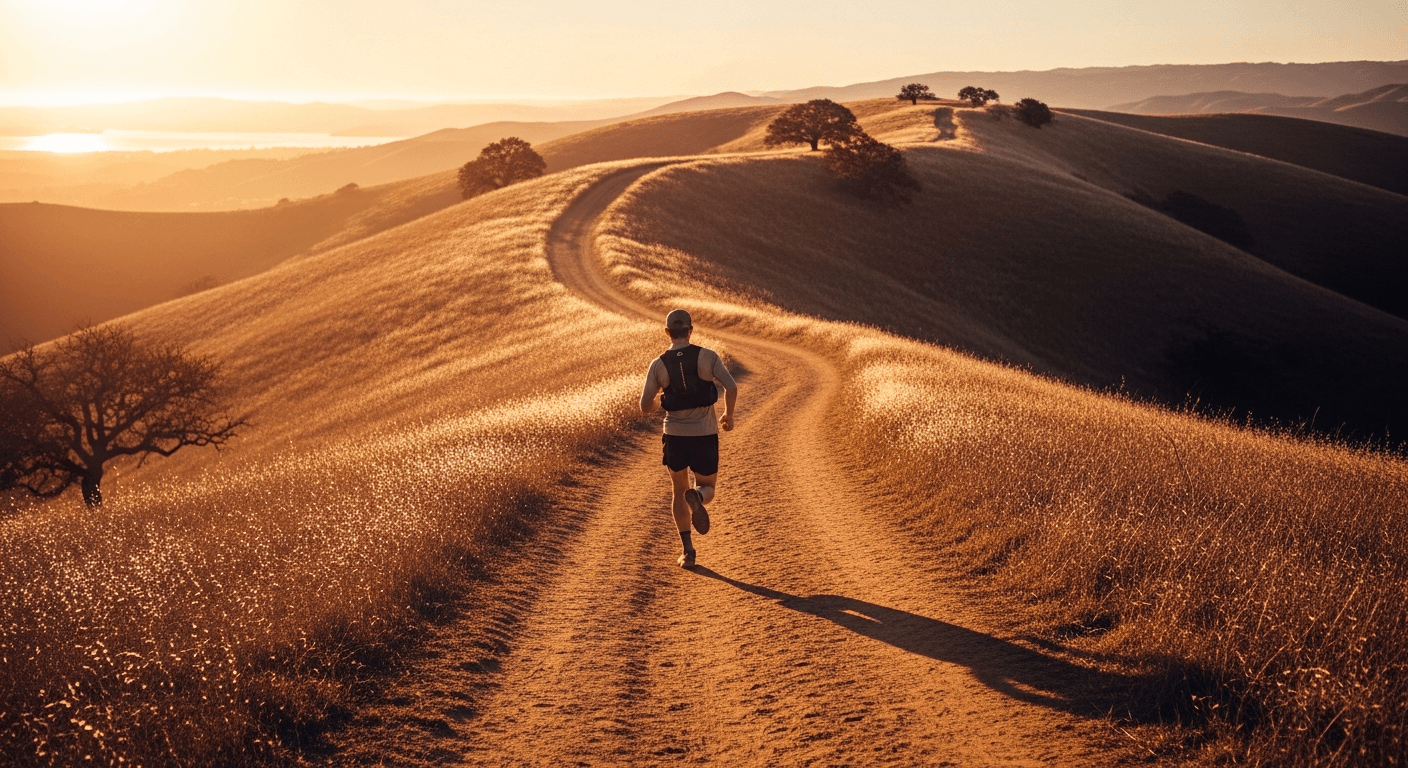
A brand-new 100-mile ultramarathon is coming to the San Francisco Bay Area, and it's arriving with something most debut races don't have: a full livestream broadcast from day one. The Bay Area 100 is positioning itself as a serious entry on the ultra calendar before a single runner has crossed its finish line. That combination of prestige ambition and digital accessibility is worth paying attention to.
Whether you're a seasoned ultra runner eyeing your next buckle or a recreational runner who's curious about the distance, here's everything you need to know about why this race matters and what to watch for.
What Is the Bay Area 100?
The Bay Area 100 is an inaugural 100-mile ultramarathon set in the San Francisco Bay Area region, one of the most recognizable metro landscapes in the world. The course is designed to take runners through the area's mix of coastal ridgelines, rolling hills, and open space preserves. Think dramatic elevation profiles, technical trail sections, and views that will either motivate you or distract you at the worst possible moment.
As with all 100-mile events, the race demands a serious commitment. Runners can expect cumulative elevation gain in the tens of thousands of feet, aid stations spaced across remote segments, and the kind of time on feet that tests even experienced ultra athletes. Training for an event like this takes months of structured build-up, and your nutrition strategy matters as much as your mileage log. If you're thinking about how to fuel that kind of effort, the science around protein for muscle building and endurance recovery is a solid place to start.
Why a Livestream Changes Everything
Most inaugural ultras announce themselves quietly. A new website, a social media post, and a registration link. The Bay Area 100 is doing something different by committing to a full livestream broadcast for its first edition. That's a meaningful signal about the race's ambitions and its audience.
Livestreaming a 100-mile race is logistically complex. The course stretches across dozens of miles of terrain, runners move through the night, and the lead pack and mid-pack field are often hours apart. Broadcast-quality coverage at that scale requires real infrastructure and investment. The fact that the race organizers are committing to it before the first edition even runs tells you this isn't a low-key local event trying to grow slowly. It's launching with profile in mind.
For the global running community, that's genuinely useful. Watching live coverage of a race before you commit to entering it gives you a concrete sense of the course, the conditions, and the competitor field. You can see how aid stations are managed, how the trail holds up in different light conditions, and whether the race operations feel polished or chaotic. It's one of the best research tools available to a runner considering a future entry.
The Rise of Urban and Peri-Urban Ultras
The Bay Area 100 is launching into a running landscape that's shifting in real time. For decades, the 100-mile distance was synonymous with remote mountain venues. Hardrock 100 in the San Juan Mountains. Western States through the Sierra Nevada. UTMB in the Alps. These races built the culture and the mythology of the distance. They're still the gold standard.
But a growing number of race directors are asking a different question. What if you could deliver a legitimate 100-mile experience within reach of a major metropolitan area? Not a compromise event, but a genuinely challenging course that happens to be accessible without a $600 flight and a five-hour drive from the nearest airport.
That question is reshaping the ultra calendar. Events like the Zugspitz Ultra Trail by UTMB show how races can sit near populated regions while still offering serious mountain terrain. The Bay Area, with its proximity to the Marin Headlands, the East Bay hills, and the Peninsula's open space network, is genuinely well-suited for this format. You don't have to go far to find technical, remote-feeling trail within an hour of millions of people.
This matters for participation. The 100-mile distance has historically required significant time and financial investment just to get to the start line. Reducing those logistical barriers means more runners can attempt the distance, and that's a good thing for the sport.
Who Should Be Watching This Race
If you're currently training for a 50K or a 50-miler and wondering whether the 100-mile distance is somewhere in your future, the Bay Area 100 livestream is worth scheduling into your calendar. Watching an elite and age-group field move through a 100-mile course in real time is one of the most effective ways to demystify the distance.
You'll see how the front runners look at mile 70. You'll see how crew and pacer strategies play out at night. You'll notice which runners are still eating at mile 80 and which ones are suffering for it. That kind of observational learning is hard to replicate from race reports alone.
The gear picture is also worth studying. Trail shoe technology in 2026 has advanced significantly, and watching what serious competitors choose for a Bay Area course will give you useful data if you're building out your own kit list.
Beyond gear and tactics, watching a local ultra can be a powerful motivator. The Bay Area has one of the most active running communities in the United States, and seeing your home trails covered in race conditions has a way of making the distance feel less abstract.
How to Prepare If You're Considering Future Editions
If the Bay Area 100 is on your radar as a future entry, the time to start thinking seriously about preparation is now, not when registration opens. A 100-mile finish requires at minimum 12 to 18 months of consistent, structured training for most runners coming from the marathon or 50K level.
That training needs to be smart, not just high-volume. The summer months are a particularly important window for building your aerobic base without burning out. Running in the summer heat comes with its own physiological demands, and managing intensity across hot training blocks is a skill that pays dividends on race day.
Nutrition is the other variable that catches unprepared ultra runners out. At 100 miles, you're looking at 20 to 30 hours on feet for most finishers. That means you need a fueling strategy that works at low intensities, tolerates fatigue, and doesn't collapse when your appetite disappears at mile 60. Building good fueling habits in training is non-negotiable at this distance.
Supplement use is also common in ultra training, but it carries risks that deserve serious attention. Understanding supplement contamination risks is particularly relevant for competitive runners who may be subject to anti-doping protocols or who simply want confidence in what they're putting in their bodies during heavy training blocks.
What the Bay Area 100 Signals for the Sport
The launch of a livestreamed inaugural 100-miler in a major metro area isn't just a local story. It's a reflection of where ultra running is heading as a sport. Participation in events of 50 miles or more has grown consistently over the past decade across North America, with new races filling in geographic gaps that previously required long-distance travel to access.
That growth is pushing race organizers to professionalize faster. Better broadcast coverage, cleaner course marking, more transparent race management, and stronger athlete support are all becoming table stakes rather than differentiators. The Bay Area 100's livestream commitment puts it immediately in conversation with more established events on those terms.
It also signals something about the athletes themselves. Ultra runners are increasingly connected, media-literate, and selective about where they invest their time, money, and training years. A race that shows its work before the first edition runs is making a bet that transparency builds trust. That's a reasonable bet.
For the Bay Area running community and for the global audience that will be watching online, the Bay Area 100 represents a genuinely interesting addition to the sport. The course looks demanding, the production ambitions are clear, and the distance never gets easier. Keep this one on your calendar.