
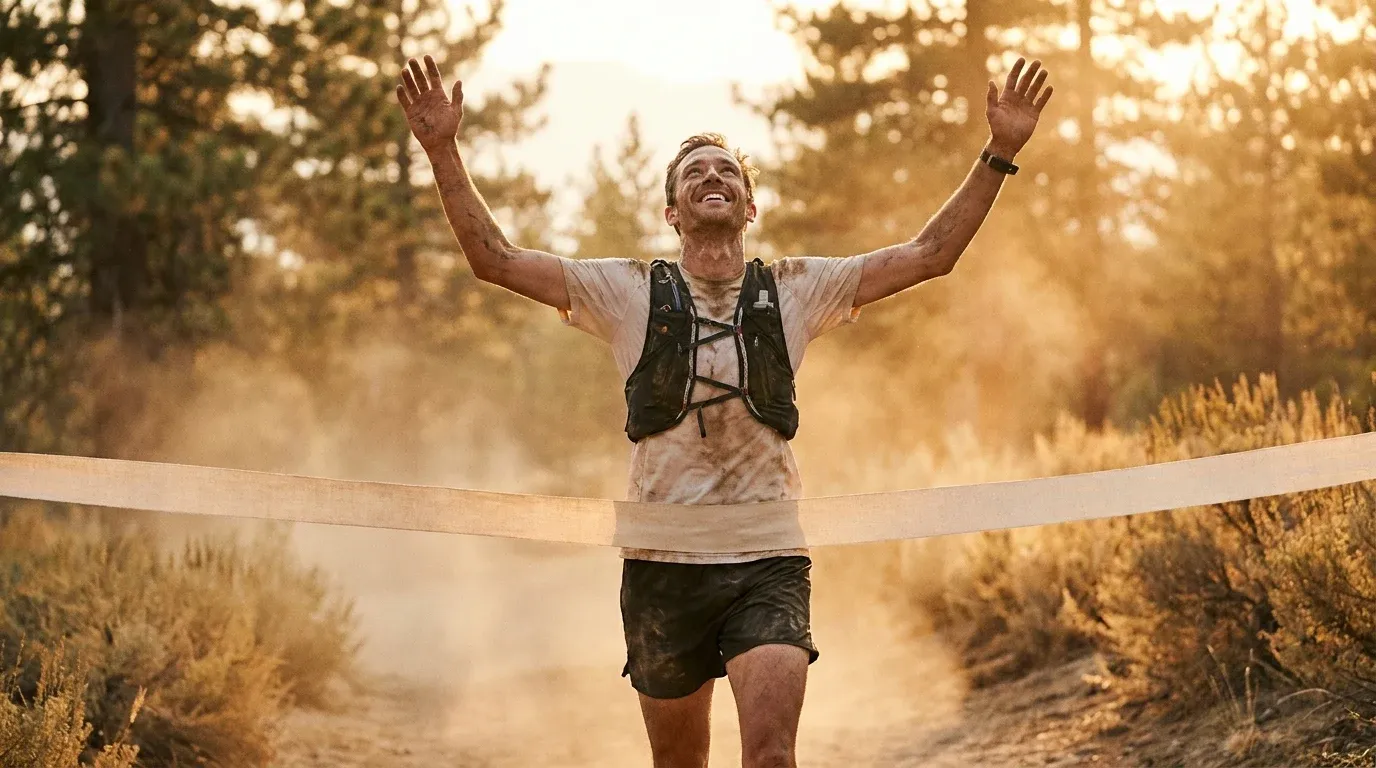
The results are in. Vincent Bouillard and Jenn Lichter crossed the finish line at Auburn's Placer High School track to claim the 2026 Western States 100 titles, wrapping up one of the most closely watched editions of the race in recent memory. The 100-mile course through California's Sierra Nevada delivered everything the sport promises: brutal climbs, punishing canyons, and a finish that required something beyond physical preparation.
As we noted in our Western States 100 2026 race day preview, the elite fields this year carried unusual depth on both sides. The men's race, in particular, featured several athletes capable of winning. That made Bouillard's result all the more striking.
Bouillard Takes the Men's Title
Vincent Bouillard came into the 2026 edition as a known quantity in European ultrarunning, but Western States operates on its own terms. The American ultra circuit rewards specific skills: heat management, downhill running economy, and the ability to absorb 18,000 feet of cumulative gain and nearly 23,000 feet of descent across a single day.
Bouillard handled all of it. He ran conservatively through the early high-country miles, staying within himself through the technical terrain above the snowline. By the time the course dropped into the canyons, where temperatures routinely push past 100°F in late June, he had positioned himself well inside the top five without burning significant reserves.
The decisive move came in the stretch between Foresthill and the river crossing at Rucky Chucky. This section is where Western States gets decided most years. Bouillard opened a gap that he managed carefully through the final 20 miles, arriving at the track with enough left to finish strong. His execution on race day reflected a disciplined approach to pacing that held up under real competitive pressure.
The men's field this year included a high-profile storyline: Jim Walmsley's return to the race. Walmsley, who has won Western States multiple times and set the course record, was among the most discussed athletes heading into Saturday. His presence added an extra layer of tension to the first half of the race. Bouillard's ability to win in that context makes the result more significant, not less.
Lichter Dominates the Women's Race
Jenn Lichter's performance was, by several measures, the cleaner of the two wins. She moved to the front of the women's field earlier than expected and maintained a consistent effort through the full distance. Over 100 miles, consistency is often undervalued. Athletes who go out hard and fight for position early tend to pay for it in the final 30 miles. Lichter didn't make that mistake.
She ran a controlled first half, stayed disciplined through the Canyons section, and began pushing the pace on the descent toward the American River. By the time she reached the later aid stations, her margin was established. The final stretch into Auburn was, for her, a confirmation rather than a battle.
What Lichter demonstrated across the 2026 course is the same quality that separates the best ultra performers from the rest: the ability to run within a plan and adjust without panic when conditions shift. Western States is an unpredictable race. The weather, the snow levels, the heat in the canyons, and the accumulated fatigue all interact in ways that are hard to fully simulate in training. Her composure throughout the day stood out.
What the Course Demanded This Year
The 2026 edition presented a course that skewed harder than recent years. Snowpack in the Sierra Nevada was above average heading into race weekend, which added technical complexity to the high-country miles and altered crew and pacer logistics for many athletes. Aid station access at some early checkpoints was limited compared to lower-snow years.
Heat in the canyons reached expected levels, with temperatures in the mid-to-upper 90s Fahrenheit during the afternoon hours. For athletes hitting that section in the heat of the day, hydration management was critical. Research on sodium loading and electrolyte timing has become increasingly sophisticated in ultrarunning circles, and the athletes at the front of both races clearly had their protocols dialed in. If you're curious how elite runners approach fueling under those conditions, the evolving science around creatine plus hydration combinations offers a useful lens on where sports nutrition is heading.
Muscle preservation across 100 miles is another area where preparation makes a visible difference in the final 20 miles. Athletes who arrive at Foresthill with their legs still functional tend to be the ones who finish well. The difference often comes down to training load management and targeted supplementation during the build phase.
The Field That Surrounded Them
Neither Bouillard nor Lichter won in a vacuum. The depth of the 2026 field made this a legitimately competitive race throughout. On the men's side, multiple athletes with strong 100-mile credentials were in contention through the middle sections of the course. Several of the sport's most experienced competitors were in the field, which raised the ceiling on what a winning performance needed to look like.
On the women's side, Lichter faced a field that included athletes with previous Western States experience and strong recent results on other major 100-mile courses. The win wasn't handed to her by attrition. She earned it by running better than everyone else across the full distance.
For a fuller picture of everything that happened in the sport around race weekend, the ultra running weekly news roundup for June 2026 covers the broader context, including results from other concurrent events and news from across the discipline.
What These Wins Mean Going Forward
For Bouillard, a Western States title changes the conversation around his career. The race carries a specific weight in ultrarunning. Winning at Auburn means something that results at other events, even major ones, don't fully replicate. He now has a result that will follow his name wherever he races next, and it puts him in a different category of athlete heading into the second half of 2026.
For Lichter, the win validates a trajectory that her recent performances suggested was building toward a major result. A clean, dominant Western States is the kind of race that builds a reputation. Depending on her race calendar for the remainder of the year, she'll move into future events with the kind of credibility that only a win at this level produces.
Both athletes will now face elevated expectations at whatever they enter next. That's a good problem to have, but it's a real one. Recovery from a 100-mile effort takes weeks, and the physical demands of Western States are considerable. Inflammation management, sleep quality, and nutritional support in the weeks following a race of this length matter more than most athletes publicly discuss. The research on omega-3s and recovery, for instance, has grown more nuanced. The 2026 evidence on fish, omega-3s, and inflammation is worth reviewing if you're thinking seriously about post-race recovery protocols.
Western States in the Broader Running Landscape
Western States doesn't exist in isolation. The race sits at the top of a discipline that has grown considerably over the past decade, and the results here influence where athletes focus their energy, how sponsors allocate attention, and which names become reference points for the next generation of ultra runners.
The sport is also part of a wider running world that's navigating its own set of stories this year. From format changes at major marathons to athlete health news, the calendar has been full. What the research says about your heart after a marathon is one thread worth following if you're thinking about the physiological costs of endurance sport at any distance.
For now, the 2026 Western States 100 belongs to Vincent Bouillard and Jenn Lichter. They came to Auburn, ran 100 miles through the Sierra Nevada, and finished first. That's the story, and it's a good one.