
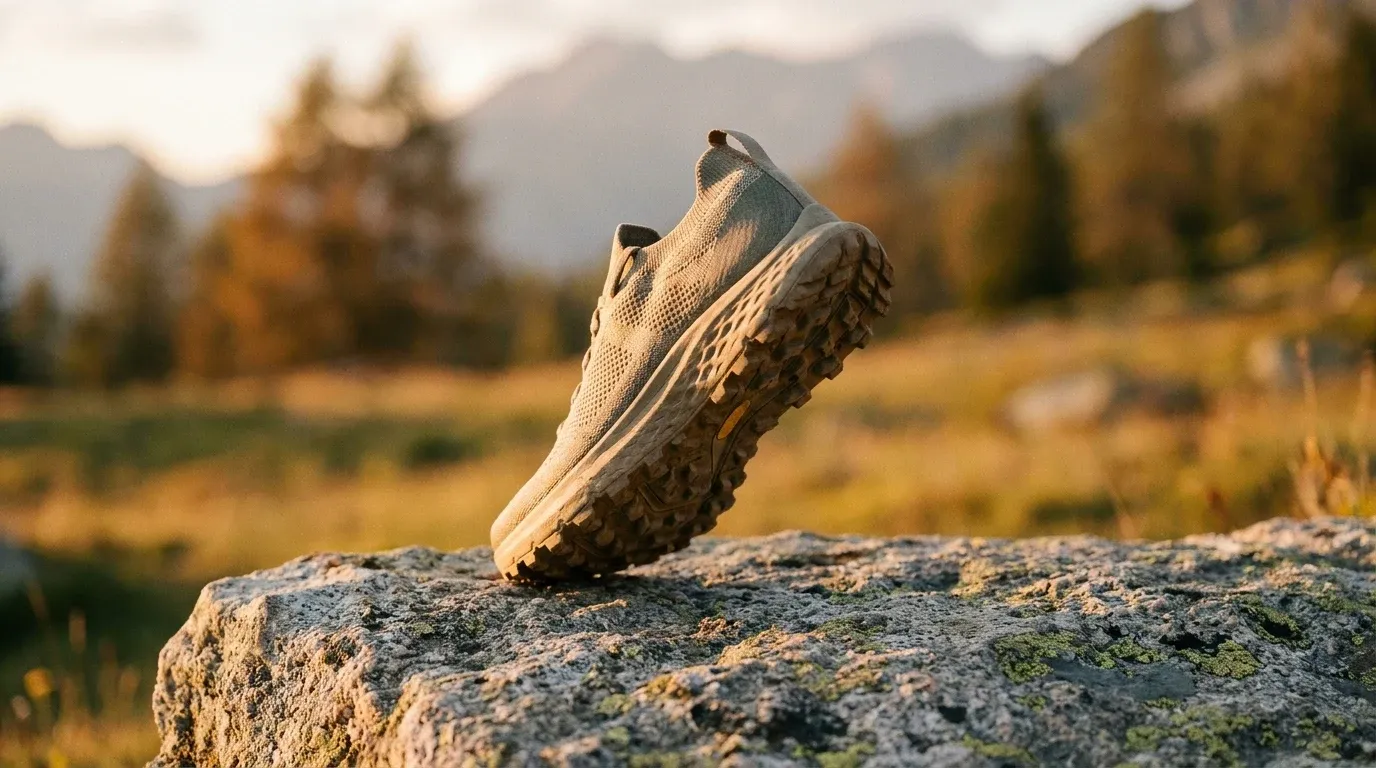
Not every brand collaboration earns serious attention in the trail running world. Most are marketing exercises dressed up in limited-edition colorways. The Black Diamond x Norda 000 is different, and the early reviews coming out of trail-focused media in the last 48 hours suggest this one actually has technical substance behind the name recognition.
Here's what you need to know before deciding whether this shoe belongs on your feet or just on your radar.
Two Brands, One Clear Direction
Norda has built its reputation quickly by doing something genuinely unusual in footwear: making high-performance trail shoes from bio-based materials without compromising on speed or durability. Their flagship 001 and 002 models proved that Dyneema uppers and bio-based Algae Foam midsoles could hold up against conventional synthetic construction. That's not a small claim in a category where runners push gear to its limits.
Black Diamond brings something different to the table. Founded in 1989 and rooted in alpine climbing, ice tool design, and technical mountaineering equipment, the brand understands load-bearing, abrasion, and terrain in ways that most running companies don't. Their background is in gear that doesn't fail when conditions get serious.
The Norda 000 is where those two philosophies converge. It's positioned at the premium end of the trail shoe market, sitting in the $320 to $350 range, which places it above most competition from Salomon, HOKA, and Altra. That price point is a statement, and the design has to justify it.
What the Norda 000 Actually Delivers on Terrain
Early reviews from trail-focused media are highlighting four performance categories that matter most to serious runners: grip, weight, stack height, and durability. Let's break each one down based on what's been reported.
Grip: The outsole uses a Vibram Litebase compound with a lug pattern that borrows influence from Black Diamond's approach to traction on variable alpine surfaces. Initial testers on wet rock and loose scree are describing it as confident without being aggressive. That's a meaningful distinction. Overly aggressive lugs slow you down on hardpack and wear faster. The 000 appears to split that difference effectively.
Weight: The shoe comes in at approximately 8.3 oz (235g) in a men's size 9. That's competitive for a shoe with this level of construction. Norda's use of Dyneema fiber in the upper keeps weight low without sacrificing the structural integrity you need when the trail gets technical. For runners doing longer alpine efforts or fast-packing routes where foot fatigue compounds over hours, that weight profile matters.
Stack height: The 000 runs with a 26mm heel and 22mm forefoot stack, giving you a 4mm drop. That's relatively low compared to the maximal stack trend that has dominated trail running for the past several years. If you've been running in something like a HOKA Speedgoat (with its 32mm heel stack), the 000 will feel notably closer to the ground. That's not a flaw. It's a design choice that prioritizes proprioception and technical footfeel over cushioning-led comfort.
Durability: This is where the collaboration's logic becomes clearest. Dyneema is pound-for-pound one of the strongest synthetic fibers available, with significantly higher abrasion resistance than standard mesh. Early testers have logged 30 to 50 miles in pre-production samples, and the upper shows minimal breakdown. Long-term wear data will take months to accumulate, but the material science here is well-established and Norda's existing lineup has a strong track record.
Who This Shoe Is Actually Built For
The Norda 000 isn't a shoe for everyone, and the brand isn't trying to pretend otherwise. Understanding who it's built for will save you money and frustration if you're on the wrong end of the fit profile.
This shoe is designed for runners who spend time on technical mixed terrain. Think rocky singletrack, alpine routes, ridgeline traverses, and surfaces where foot placement is deliberate rather than automatic. If your trail running is primarily fire roads, groomed paths, or soft forest floors where cushioning is the priority, the 000's lower stack and precision fit may feel unnecessarily demanding.
The fit itself runs narrow in the toe box compared to brands like Altra or Topo. Runners with wider feet should size up or try before committing. The Dyneema upper doesn't stretch or break in the same way traditional mesh does, which means the fit you get on day one is largely the fit you'll have on day 100. That's either a selling point or a dealbreaker depending on your foot shape.
For runners competing in events at the more demanding end of the spectrum, like the kind of preparation covered in guides such as Marathon des Sables 2027: Is the Ultimate Desert Race for You?, a shoe with this level of durability and terrain-specific grip is worth serious consideration as part of a gear rotation.
The Premium Price Question
At $320 to $350, the Norda 000 costs roughly $100 to $150 more than most mainstream trail shoes. That's a real gap, and it deserves a straight answer on whether it's justified.
The case for paying it comes down to two things: material quality and longevity. Dyneema uppers don't degrade the way traditional mesh does under UV exposure, sweat, and abrasion. A shoe that lasts 600 miles in good structural condition is a better value than a $200 shoe that starts breaking down at 400. Runners who track their mileage carefully and replace footwear on a specific schedule will find the math works out closer than the sticker price suggests.
The case against is simpler. If you're not running on genuinely technical terrain with regularity, you're paying for engineering that your routes won't demand. A well-reviewed shoe like the Salomon Sense Ride or Brooks Cascadia delivers strong performance for everyday trail runners at a significantly lower cost. The 000 is a precision tool, not a general-purpose option.
It's also worth noting that if you're planning to ramp up training volume in the coming months, your gear needs to keep pace with your body. Trail shoes take the most punishment during build phases, which makes timing a purchase like this worth thinking through. Planning your fall marathon training pacing strategy around when you introduce new footwear is a practical consideration, not an afterthought.
Sustainability as a Performance Argument
Norda's commitment to bio-based materials isn't purely an environmental positioning strategy. It has real functional implications. The algae-based foam used in the midsole has been shown in Norda's existing lineup to maintain rebound consistency over a longer period than standard EVA compounds, which compress and lose responsiveness with use.
For trail runners who care about where their gear comes from, the 000 also avoids several of the petroleum-based materials that dominate the category. That's a legitimate differentiator in a market where most brands are still working on sustainability at the margins while keeping core constructions unchanged.
The collab with Black Diamond doesn't compromise this approach. The alpine hardware brand has been vocal about responsible material sourcing in its climbing and skiing lines, making the partnership coherent rather than contradictory.
How It Fits Into a Broader Training Picture
A shoe this technically specific works best when your overall training approach supports it. Running in a lower-stack, ground-feel-forward shoe like the 000 puts more demand on your lower leg and foot musculature than a maximal cushion option. If you're transitioning from a high-stack shoe, building in strength work is genuinely useful.
The trail running community is increasingly aware of how supplemental strength training supports longevity in the sport. Research on the weekly volume of strength work that supports long-term athletic health points toward a consistent but manageable dose being more effective than occasional high-volume sessions. That applies directly to the foot and ankle resilience you'll want when running technical terrain in a shoe like the 000.
It's also worth keeping in mind that shoes don't offset fitness losses. If you're coming back from a break or injury, understanding how quickly fitness declines during time off helps you set realistic expectations for how the shoe performs as you rebuild mileage. No amount of premium construction replaces the base fitness you need to run technical trails safely.
The Bottom Line
The Black Diamond x Norda 000 is a technically serious trail shoe that earns its position at the premium end of the market. The grip is capable without being overbuilt, the weight is competitive, the durability credentials are strong, and the bio-based construction gives it a material profile that stands apart from the mainstream.
It's not for every runner. The narrow fit, lower stack, and higher price tag make it a deliberate choice that suits a specific type of trail running. But if you're regularly on rocky, variable terrain and you want a shoe built with genuine technical intent rather than brand collaboration optics, the 000 is worth putting on your shortlist.
The trail scene is also generating strong momentum around events and community right now. If you're curious about where that conversation is heading at the competitive level, Craig Thornley and Sally McRae's keynote at the US Trail Running Conference is shaping up to be one of the more substantive discussions of the year.
For the Norda 000, the hype is grounded. That's rarer than it sounds.