
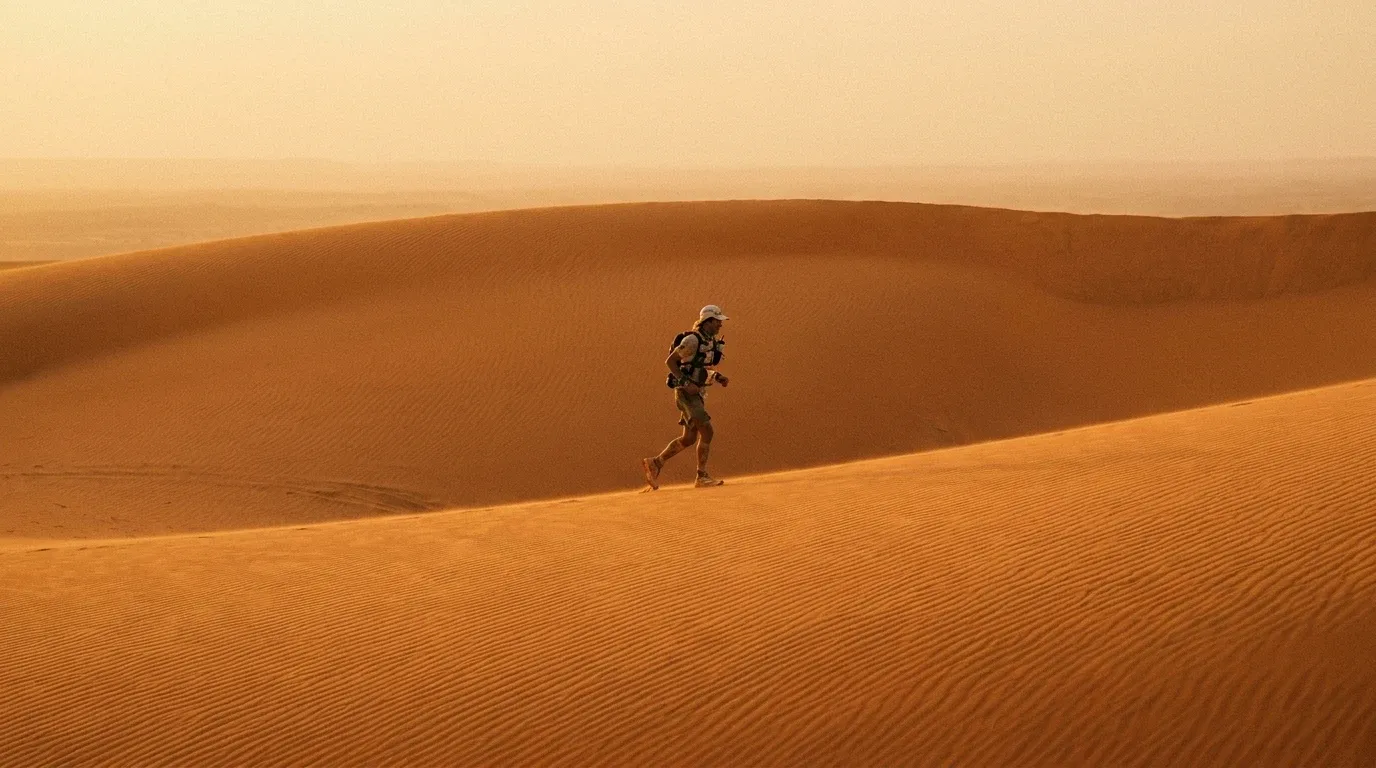
Two Marathon des Sables endurance events in Morocco are now confirmed on the 2027 calendar, following an announcement on September 8, 2026. If you're an ultra runner with a bucket-list mentality and a tolerance for suffering, that news is worth paying attention to. Early registration windows for races like this close faster than most people expect, and the preparation timeline is long enough that starting now isn't early. It's necessary.
Here's what you need to know before you commit.
What the Marathon des Sables Actually Is
The Marathon des Sables, or MdS, is a six-stage, 250-kilometer race across the Moroccan Sahara. It's widely considered the world's toughest footrace, a claim backed by four decades of finishers, a brutal attrition rate, and conditions that have ended careers and shaped legends in equal measure.
The race is self-supported, meaning you carry everything you need to survive: food, gear, sleeping equipment, and safety supplies. Organizers provide water at checkpoints and shared tent shelters at night, but your pack is your lifeline. A typical mandatory kit weighs between 8 and 15 kilograms depending on your food strategy and gear choices.
Temperatures during the race regularly exceed 40°C (104°F) in the daytime. The terrain shifts between sand dunes, rocky plateaus, dry riverbeds, and salt flats. One stage, typically around 80 to 90 kilometers, runs through the night and tests your ability to keep moving when every instinct tells you to stop.
Entry fees sit around $3,600 to $4,400 depending on your country of registration and the specific edition you choose. Factor in flights, pre-race desert camps, gear, and coaching, and the total investment for a first-time finisher typically lands between $8,000 and $12,000.
Two 2027 Editions: What It Means for Planning
Having two confirmed editions on the 2027 calendar gives runners genuine flexibility, something the MdS has rarely offered in the past. Whether the editions are staggered by season or structured as separate race windows, two slots means two chances to time your peak training block correctly.
That matters because desert racing doesn't fit neatly into standard annual training cycles. If you're currently building toward a fall ultra, you can use that block as a base and then pivot toward desert-specific prep without compressing your timeline. For a practical framework on structuring your current training, Fall Race Season: How to Structure Your Training Week Now breaks down how to layer intensity and volume without burning out before a spring target race.
Registration for MdS editions typically opens 12 to 18 months out and fills quickly. With two 2027 spots confirmed, it's worth watching the official MdS site closely and deciding which edition aligns with your schedule before spots close.
How Desert Racing Differs From a Standard Ultra
If you've run 100-milers, you know how to suffer. But the MdS demands a different kind of preparation. The three areas where most runners underestimate the gap are heat acclimatization, weighted pack running, and blister management.
Heat Acclimatization
Running in Saharan heat is not something your body handles on instinct. Systematic heat exposure over four to six weeks before the race produces measurable physiological adaptations: increased plasma volume, lower core temperature at a given effort, and improved sweat efficiency. Research consistently shows that runners who skip this step perform significantly worse and carry a higher risk of heat illness.
Practical options include hot-weather training camps in the American Southwest or similar climates, sauna protocols after runs (20 to 30 minutes at moderate temperatures), and building your long runs into the hottest part of the day months before the race.
Weighted Pack Running
Running with 10 kilograms on your back for six consecutive days is biomechanically different from road or trail running without a pack. Your gait changes, your foot strike changes, and your injury profile changes. Training with a weighted pack starting four to six months out is not optional. Begin with shorter distances and progressively increase load and mileage.
Your foot positioning and muscle recruitment patterns shift enough that some runners benefit from revisiting how altitude and environmental stress affect running economy as part of their broader preparation strategy.
Blister Management
Sand gets into everything. Foot care at the MdS is a tactical skill, not an afterthought. Runners who finish without debilitating blisters have typically spent months testing sock and shoe combinations with a loaded pack, applying preventive tape, and training their skin to handle prolonged friction and heat. Podiatry clinics specializing in ultra running exist in most major US and UK cities and are worth a visit before your training ramps up.
Nutrition and Recovery Over Six Stages
You carry your food. That means every calorie is a gram of pack weight you have to justify. Most experienced MdS runners target 2,000 to 2,500 calories per day from freeze-dried meals, calorie-dense snacks, and supplements, aiming to stay functional without carrying more than necessary.
Anti-inflammatory nutrition becomes relevant during a multi-stage race where recovery between stages is compressed. Some runners use compounds like quercetin for oxidative stress management during hard training blocks. If you're evaluating the evidence on that, Quercetin's Bioavailability Problem: Is It Finally Solved? covers the current state of absorption research, which matters if you're spending money on a supplement you expect to actually work.
Sodium and electrolyte management is critical in heat. Hyponatremia from over-drinking is a real risk. Work with a sports dietitian who has experience with ultra endurance events, not just road marathons, to build your race nutrition plan.
Who Is This Race Actually Built For?
The MdS is not a stretch goal for someone who just completed their first 50K. It's a serious step up, and the race organization, the terrain, and the medical infrastructure all reflect that. Here's an honest profile of who belongs on that start line.
- You've finished at least one 100-mile race, ideally with significant elevation and technical terrain. Multi-day stage race experience is an even stronger indicator of readiness.
- You can train consistently for 12 to 18 months without interruption from injury. Desert prep is long, and gaps compound.
- You've run in heat before, not just occasionally warm days, but structured heat exposure that's part of your training record.
- You're comfortable with discomfort as a daily baseline. The MdS is not a race you enjoy in the conventional sense. You endure it, and then you're proud of it.
- You have the financial and logistical support to commit to a year-plus preparation cycle that includes travel, gear, coaching, and potentially a heat camp.
If you're earlier in your ultra running journey and trying to figure out which races make sense as stepping stones, Fall Ultra Season 2026: How to Pick Your Race is a useful starting point for matching your experience level to the right challenge.
Building Your Preparation Timeline
A realistic MdS preparation timeline for someone already running 100-milers looks something like this:
- Months 12 to 9 before race day: Establish your base. Maintain weekly mileage of 60 to 80 miles with one back-to-back long run weekend per month. No pack required yet.
- Months 9 to 6: Introduce weighted pack runs once per week. Start at 6 kilograms and build toward your target race weight. Add a dedicated heat session weekly.
- Months 6 to 3: Complete a multi-day stage race simulation or organized desert training event if available. Finalize your gear list and test every item in race-like conditions. Increase heat exposure frequency.
- Months 3 to 1: Taper volume, maintain intensity. Prioritize sleep, foot care, and nutrition dialing. Attend a pre-race heat camp if your budget and schedule allow.
- Final four weeks: Reduce mileage significantly. Focus on mental preparation, logistics, and rest. Your fitness is already built. The goal now is to arrive healthy.
Coaching for MdS-specific preparation is available through several ultra running coaches in the US and UK who specialize in desert racing. Expect to pay between $250 and $600 per month for experienced remote coaching, with premium coaches who've personally completed the MdS often charging more.
The Decision Is Simpler Than It Sounds
The Marathon des Sables is a hard race. It's also a well-organized one with a 40-year track record and a community that takes preparation seriously. Two confirmed 2027 editions give you the rare luxury of choosing your timing, not just your ambition.
If you've been watching this race from the outside and wondering whether you're ready, the more useful question is whether you're willing to spend the next 12 to 18 months getting ready. The race doesn't ask if you're fast. It asks if you can keep moving. That's a different question, and for the right runner, it has a very clear answer.