
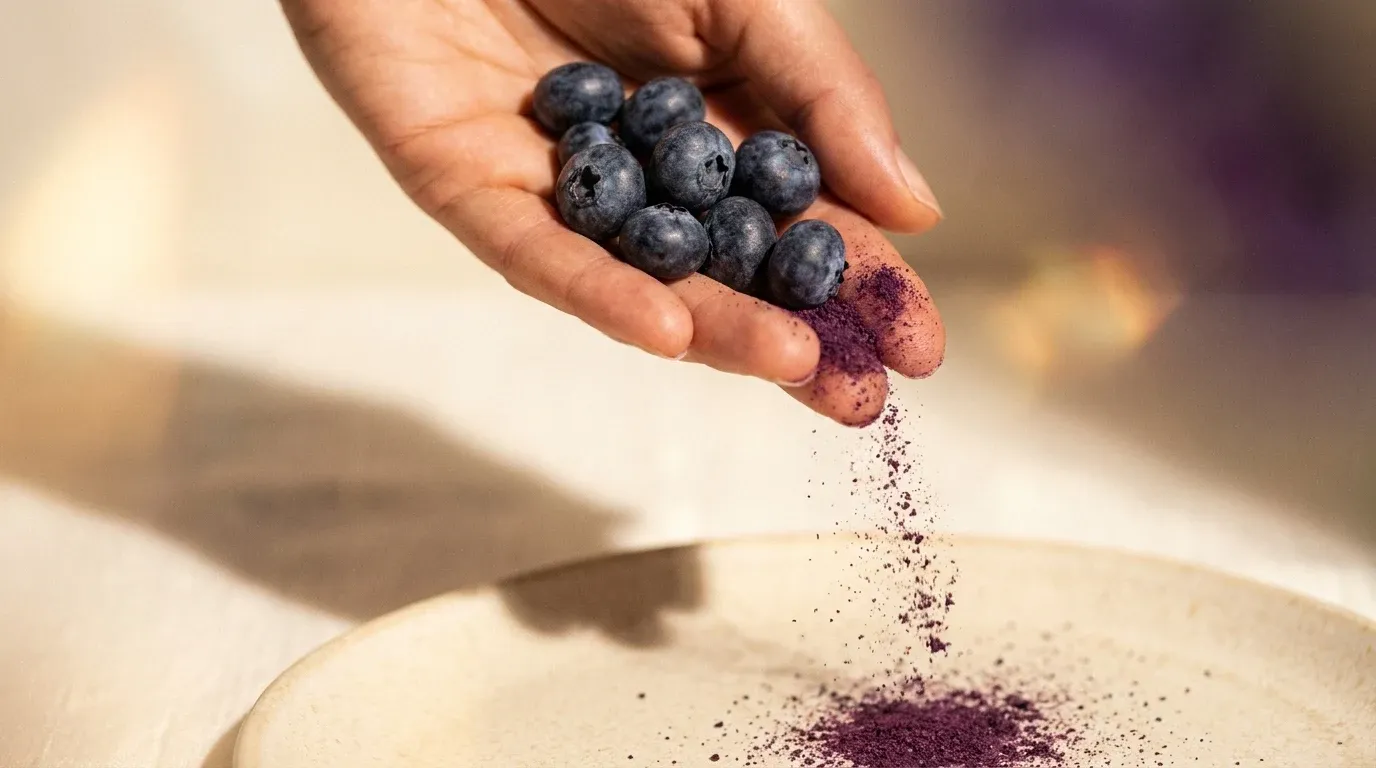
It sounds like the kind of headline a supplement brand would invent. But this one comes from a peer-reviewed study, and the result is hard to ignore: recreational trail runners who supplemented with freeze-dried blueberry powder completed a simulated 22.2km race about 7.5 minutes faster than those who didn't. No extra perceived effort. No additional physiological strain. Just blueberries.
Here's what the research actually shows, why the mechanism makes sense, and how you can put it to practical use before your next race.
What the Study Found
Researchers had recreational trail runners complete a simulated 22.2km time trial under two conditions: one group supplemented with freeze-dried blueberry powder, the other did not. The blueberry group finished significantly faster, with an average improvement of roughly 7.5 minutes over that distance.
That's not a marginal gain. For a recreational runner finishing a trail race in, say, 2.5 hours, shaving 7.5 minutes off represents roughly a 5% performance improvement. The kind of result most runners spend months of structured training trying to chase.
What made the finding more compelling was that the faster runners didn't feel like they were working harder. Ratings of perceived exertion and standard physiological markers of strain stayed comparable between groups. The blueberry group simply ran faster at the same internal cost.
The Recovery Signal That Made Researchers Pay Attention
The performance data alone would have been noteworthy. But the study included a post-race measurement that added another layer: jump height testing immediately after the race.
The blueberry group maintained better jump height post-race compared to the control group. Jump height is a reliable proxy for neuromuscular fatigue. When your legs are cooked, your ability to generate explosive force drops. The blueberry group's muscles were, by this measure, less damaged after running the same distance at a faster pace.
That points toward a recovery benefit on top of the performance gain. Not just a faster race, but a body that's in better shape when you cross the finish line. For athletes managing heavy training blocks or back-to-back race weekends, that distinction matters.
Why Blueberries? The Physiology Behind the Result
Blueberries are one of the most studied foods in sports nutrition, and the evidence base has been building for years. The working mechanism centers on anthocyanins, the polyphenolic compounds that give blueberries their deep blue-purple color.
Anthocyanins do several things that are relevant to endurance performance:
- Reduce exercise-induced oxidative stress. Hard running generates free radicals that damage muscle tissue. Anthocyanins act as antioxidants, blunting that cellular damage during and after effort.
- Lower systemic inflammation. Less inflammation means faster recovery between efforts and, potentially, reduced perception of fatigue mid-race.
- Improve blood flow and oxygen delivery. Some research suggests anthocyanins support nitric oxide production and vascular function, which can improve how efficiently oxygen reaches working muscles.
- Protect muscle integrity. The post-race jump data aligns with studies showing blueberry supplementation reduces markers of muscle damage after intense exercise.
The freeze-dried format matters here. Freeze-drying concentrates the anthocyanin content significantly compared to fresh fruit, which is why the study used powder rather than asking participants to eat a handful of berries before lacing up. The concentration is what drives the effect.
What This Means for Everyday Runners
Most performance nutrition research focuses on elite athletes in controlled lab conditions. This study is different because it used recreational runners on a simulated trail course. That's closer to the reality most of us are actually training for.
If you're preparing for a trail race, a half marathon, or any endurance event where sustained effort over time is the challenge, this research is directly applicable to you. You don't need to be running 100-mile weeks for the underlying physiology to work in your favor.
It's also worth putting this alongside other nutrition strategies you might already be using. Blueberry powder works through different pathways than, say, carbohydrate loading or caffeine. It's not replacing those approaches. It's potentially stacking with them. If you're already dialing in your race-day nutrition, adding a polyphenol-rich intervention like freeze-dried blueberries is a logical next step. For a deeper look at how your gut adapts to fueling during effort, Gut Training: The Missing Piece in Your Race Prep is worth your time.
No Doping Risk. No Exotic Sourcing. No Significant Cost.
One of the practical advantages that makes this finding unusually accessible is the substance itself. Blueberries are not on any banned substance list. They're not a grey-market compound. They don't require a prescription, a specialist, or a subscription to a proprietary supplement stack.
Freeze-dried blueberry powder is widely available online and in health food stores. A quality product typically runs between $15 and $35 for a month's supply, depending on brand and quantity. Fresh blueberries, which carry a lower anthocyanin concentration but are still meaningful, are available year-round in most markets for a few dollars a pack.
Compare that to the cost and complexity of some other legal performance interventions. Beta-alanine, beetroot extract, and various amino acid blends all carry legitimate research behind them, but the barrier to entry is higher and the evidence quality varies. Blueberries sit in a rare category: cheap, clean, and now backed by a genuinely striking performance study.
This puts it in similar territory to other whole-food interventions that are gaining traction in sports nutrition. For a useful comparison on how whole foods stack up against concentrated supplement extracts, Broccoli vs. Sulforaphane Supplements: What's Actually Better? covers the tradeoffs clearly.
How to Actually Use This
The study used a supplementation protocol, not a single pre-race dose. That means consistency matters more than timing alone. Here's a practical framework based on what the research supports:
- Start supplementing 7 to 14 days before your target race. Polyphenol effects tend to build over time rather than switching on acutely. Give the compounds time to accumulate and express their effects.
- Use freeze-dried powder for concentration. Look for products that list anthocyanin content specifically. If that information isn't on the label, the product may not be potent enough to replicate study conditions.
- Continue through race week. Don't stop the day before or taper the dose. Race week is when the anti-inflammatory and vascular benefits are most relevant.
- Pair it with your existing nutrition plan, not instead of it. Blueberry powder isn't a substitute for carbohydrate fueling, hydration strategy, or the recovery tools you're already using.
- Keep the dose consistent. Most studies use doses equivalent to roughly 1 to 2 cups of fresh blueberries daily. Check the conversion on your powder's label.
The Bigger Picture for Endurance Nutrition
Sports nutrition has spent decades focusing on macronutrients: carbohydrates for fuel, protein for recovery, fat for sustained energy. That framework is valid and well-supported. But the emerging research on polyphenols and plant compounds is starting to show that micronutrient quality and antioxidant density matter too, especially in high-volume training and racing contexts.
Blueberries are part of a broader pattern of findings suggesting that what you eat beyond your macros has real, measurable effects on performance. Diet quality over the long term also appears to affect healthspan and resilience in ways that compound over years of training. Living Longer Disease-Free: What Your Diet Actually Does puts that research in useful context.
The blueberry study won't be the last word on polyphenols and endurance. But it's a strong signal. A 7.5-minute improvement in a 22.2km race, with no added exertion and better post-race muscle function, is the kind of result that warrants real attention from anyone who takes their running seriously.
You don't need to overhaul your entire nutrition protocol. Start with the basics: consistent supplementation, adequate carbohydrates, smart fueling during longer efforts. Then consider where freeze-dried blueberry powder fits into that structure. The cost is low. The risk is zero. And right now, the upside looks genuinely significant.