
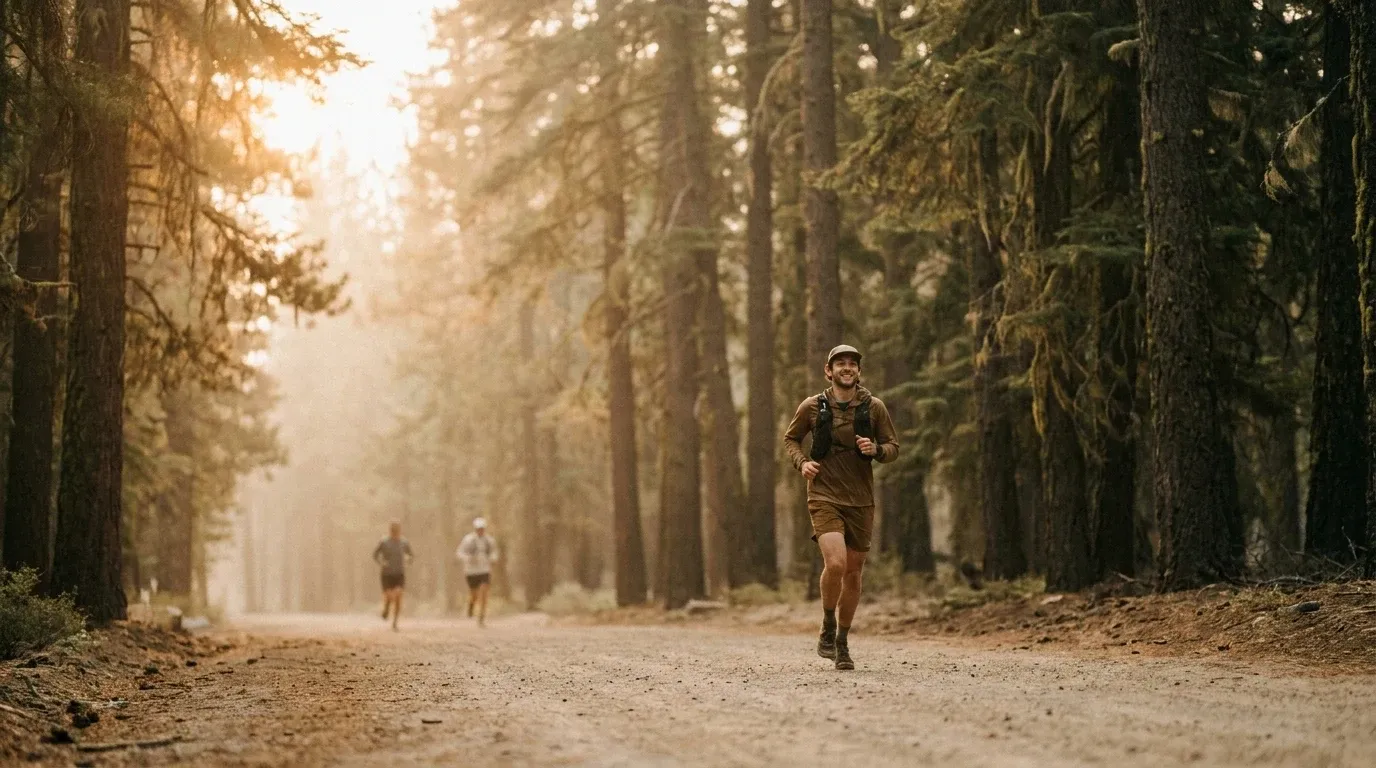
Trail running has a podium problem. Not in the sense that competition is bad, but in the sense that for years, the sport's loudest voices have belonged almost entirely to its fastest ones. The athletes who finish first get the sponsorships, the coverage, and the cultural gravity. Everyone else, which is most people, gets the trail and not much else.
Tom Hooper is part of a growing cohort pushing back on that dynamic. A British runner and community advocate whose work spans event organization, outreach, and accessibility efforts, Hooper has spent recent years building something harder to quantify than a finish time. He's been building belonging.
Why Recognition Is Coming Now
The timing isn't accidental. Trail running is experiencing a participation surge that's reshaping the sport from the ground up. As of 2026, an estimated 17 million people in the United States alone identify as trail runners, a figure that represents dramatic growth compared to just a decade ago. Globally, participation numbers follow a similar curve, with significant increases recorded across the UK, Australia, Canada, and beyond.
That volume of new runners creates a structural challenge. Race entry systems, trail access policies, and community infrastructure were largely built for a much smaller, more homogeneous group. Hooper's contribution is recognizing that gap early and working to fill it, not by expanding race capacity, but by rethinking who trail running is actually for.
His recognition within the community reflects a broader shift in how the sport is choosing to value its contributors. Winning races still matters. But increasingly, the people who are seen as moving trail running forward are the ones making it more accessible, more welcoming, and more durable for participants who will never cross a finish line in first place.
Community Over Competition: What That Actually Looks Like
Hooper's approach isn't abstract. It's grounded in practical work: organizing group runs that don't sort participants by pace, partnering with local organizations to bring trail access to urban communities, and advocating for beginner-friendly infrastructure at events that have historically catered only to experienced runners.
He's also been vocal about the mental health dimension of trail running. Research consistently shows that regular aerobic exercise, including running in natural environments, is associated with meaningful reductions in anxiety and depression. There's even evidence that physical fitness established early in life carries psychological benefits that extend into adulthood. One study found that being fit as a kid cuts adult depression risk by up to 20%, a finding that underscores why getting more people onto trails, at any age, matters beyond the physical.
When you design a running community around elite performance metrics, you implicitly exclude everyone who doesn't meet them. Hooper's model flips that. The race, if there is one, becomes secondary to the shared experience of being outside, moving, and connected to other people doing the same.
The Access Problem Trail Running Still Has
For all the growth the sport has seen, trail running still skews heavily toward certain demographics. Participation data shows it remains disproportionately white, male, and concentrated in areas with ready access to open land. Entry fees for competitive trail events can run from $80 to well over $300 for longer distances, pricing out a significant slice of would-be participants before they even lace up.
Trail access itself is uneven. Urban runners often face hours of travel to reach trail networks that suburban or rural runners have in their backyards. This isn't a new observation, but it's one the sport has been slow to act on structurally.
Hooper's work has included advocating for pop-up trail events in and around urban green spaces, lower-cost community run formats, and partnerships with local councils to open access to underused trail corridors. It's granular, unglamorous work. It doesn't generate highlight reels. But it's the kind of effort that determines whether trail running's participation boom is a genuine cultural shift or just a temporary spike among the already-converted.
The sport is also starting to reckon with inclusion at the competitive level. Trail running is creating its first para-athlete prize purse, a signal that even at the elite tier, the definition of who belongs is expanding. Hooper's community-level work and these structural competitive shifts are happening in parallel, and together they're changing the sport's center of gravity.
What the Trail Running Boom Actually Demands
When a sport grows this fast, it faces a choice. It can scale its existing model, more races, more elite coverage, more performance content, and hope that volume alone creates diversity. Or it can actively redesign its infrastructure to serve the people who are showing up for the first time.
The evidence from other endurance sports suggests that passive scaling doesn't work. Road running saw a massive participation boom in the 2010s that generated huge race fields but also persistent complaints about accessibility, cost, and the feeling that the sport had lost something communal in the pursuit of logistics at scale. Events like the Sydney Marathon 2027 ballot opening to enormous demand reflects just how hungry runners are for these experiences. But demand alone doesn't guarantee inclusion.
Trail running has the advantage of arriving at this moment with a community ethos already partially intact. The sport has always had a culture of mutual aid on the trail, of runners looking out for each other in remote terrain. The question is whether that ethos can be formalized and scaled without losing what makes it distinctive.
Hooper's argument, made through his actions rather than a manifesto, is that it can. But it requires people willing to do the community-building work even when it doesn't come with a podium finish or a sponsorship deal attached.
The Performance Side Still Matters
None of this is to say that competitive trail running should take a back seat. The sport's elite tier is producing remarkable athletes, generating international attention, and demonstrating what's physically possible in mountain and off-road environments. That visibility matters for participation, too. People who watch elite races often become trail runners themselves.
And for those who do want to perform at a higher level, the science of trail running performance is evolving fast. Nutrition research is changing how runners fuel for long efforts. For example, there's genuine emerging evidence on whether targeted nutritional choices can affect race performance. Research into whether blueberries can help you run faster is just one example of how seriously sports science is now engaging with trail-specific performance questions.
Recovery is another area getting more attention. Trail runners push through significant muscular and neurological load, and understanding recovery timelines after long events is increasingly important as more runners tackle back-to-back race seasons. Getting the recovery piece right isn't optional if you want to stay in the sport long-term.
The performance and community sides of trail running don't have to conflict. They're addressing different needs among different populations. What Hooper represents is the recognition that a sport serious about growth has to invest in both simultaneously.
What You Can Take From Hooper's Model
You don't have to be an event organizer or a community advocate to apply what Hooper is doing. His approach translates to something most runners can act on at a local level.
- Bring someone new. The single highest-leverage thing experienced trail runners can do is introduce a friend, neighbor, or colleague to the sport. Not competitively. Just to the trail.
- Choose events that prioritize access. When you pay an entry fee, you're voting for a model. Events that offer sliding scale pricing, beginner waves, or urban trail formats deserve your support.
- Advocate for trail access locally. Local planning decisions about green space and trail maintenance are often made without runner input. That's fixable.
- Reconsider how you talk about the sport. If every conversation about trail running leads with race results, times, and gear costs, you're narrowing the door. The sport is bigger than that.
Trail running at 17 million US participants is already a mainstream activity. What it becomes at 25 million or 30 million depends on the choices being made right now about who it's designed to serve.
Tom Hooper isn't the only person making those choices in the right direction. But he's a useful example of what it looks like when someone decides the sport's growth is more important than their own finish time. That's a model worth paying attention to, and worth replicating.