
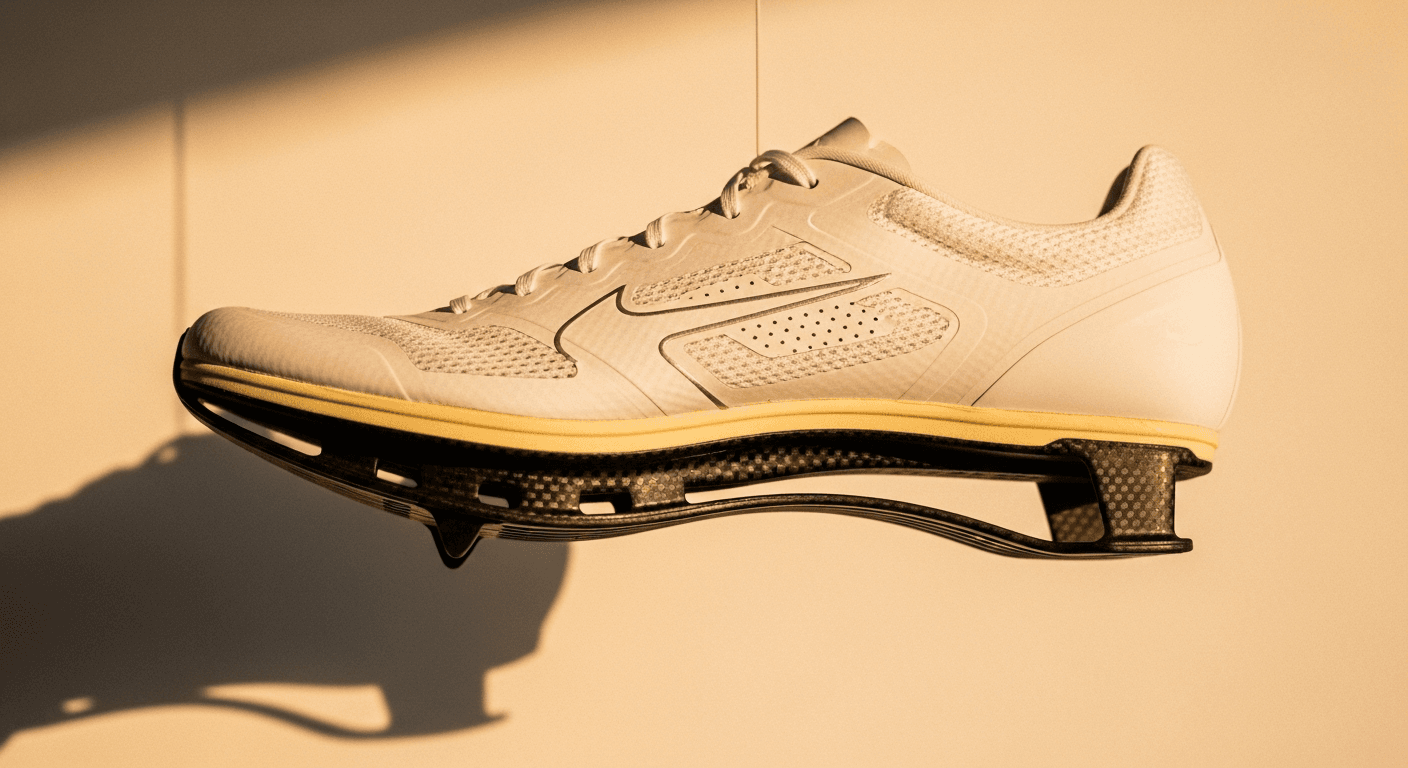
On April 26, 2026, Sabastian Sawe crossed a finish line that most physiologists had quietly stopped believing was reachable. His 1:59:30 marathon wasn't just a record. It was a verdict on how far human performance can be engineered from the outside in. The adidas Adizero Adios Pro Evo 3 on his feet weighed 97.27 grams per shoe. That's less than a smartphone. And it may have changed distance running permanently.
The question now isn't whether shoe technology mattered. It clearly did. The question is what happens next, and whether the runners chasing Sawe, including you, will benefit from the next wave of innovation or whether the curve is already flattening.
What the Adizero Adios Pro Evo 3 Actually Does
Weight is only part of the story. The Evo 3 combines Lightstrike Pro foam with an ENERGYRIM carbon chassis, a design that replaces the traditional full-length carbon plate with a rim structure that runs around the perimeter of the midsole. The effect is a stiffer toe-off and a more direct transfer of energy through the forefoot, without the dead weight of a plate that spans the entire shoe.
Lightstrike Pro foam, adidas's flagship cushioning compound, is engineered for energy return rather than just shock absorption. Independent lab testing has consistently shown energy return figures above 85% in this material, which places it in elite territory alongside the foams used by Nike and ASICS in their top competition models.
At 97.27 grams, the Evo 3 is roughly 30% lighter than the average carbon-plated racing shoe on the market. That number matters because research shows that each 100-gram reduction in shoe weight improves running economy by approximately 1%. Over 26.2 miles, that compounds into something real.
For a deeper look at how Sawe's performance is reshaping the business side of running, what adidas Q1 2026 results mean for runners breaks down how the brand is positioning this technology going forward.
A Record Built in the Lab as Much as on the Track
Sports scientists have been tracking the relationship between footwear and performance since Nike's Vaporfly first appeared in 2016 and upended road racing. That shoe, with its carbon plate and ZoomX foam, is now estimated to have improved marathon times across the elite field by between 2% and 4%. A decade later, the margins are smaller but the compounding is greater.
Sawe's run has been widely described as a triumph of engineering as much as human physiology. His aerobic capacity and lactate threshold are exceptional, but so is his support infrastructure. Shoe design is now considered a legitimate performance input alongside training load, recovery protocols, and nutrition. why elite athletes are hiring nutrition-trained private chefs illustrates exactly this point: at the top of the sport, every controllable variable gets optimized.
The Evo 3 is not a shoe you can buy at a running store and wear on your Sunday long run. It was designed for one purpose. Racing fast on road surfaces, for a single event, at elite pace. adidas has been explicit about this. The materials are not meant to last hundreds of miles. They're meant to perform perfectly for one.
Where Does the Technology Go From Here?
Here's where it gets genuinely complicated. The gap between where shoe tech is today and what physics allows is narrowing. Engineers working at the major brands face a set of hard constraints that don't bend regardless of budget.
First, there's mass. Getting below 97 grams without sacrificing structural integrity or cushioning depth is a materials science problem, not just a design one. Brands are exploring bio-based foams, aerogel composites, and lattice-structure midsoles printed with precision. Some of these are already in prototype testing. None are ready for competition.
Second, there's the carbon chassis itself. The ENERGYRIM concept from adidas is one answer to the stiffness-versus-weight trade-off. Nike has explored segmented plates. ASICS has experimented with variable geometry. But the fundamental biomechanical benefit of a rigid forefoot lever appears to plateau at a certain stiffness level. Adding more carbon beyond that point returns nothing and adds weight.
Third, rules. World Athletics currently permits shoes with a stack height of no more than 40mm for road races. That ceiling was introduced specifically in response to the foam revolution of the late 2010s. If brands push to the absolute limit of that rule, the remaining variable becomes foam quality and chassis geometry, not stack height.
The honest answer from most engineers is that the next 1% to 2% of improvement will be harder to find than the last 4%. That doesn't mean it won't happen. It means the timeline stretches and the cost per marginal gain increases sharply.
The Diminishing Returns Problem
There's a version of this story that ends with shoe tech essentially plateauing within a few years. The foam compounds are already extraordinary. The plate designs are increasingly refined. The weight is approaching a floor set by physics and durability requirements. Future records, on this view, will come primarily from human physiology improvements, better training methods, smarter recovery, and incremental nutrition science.
That's not a pessimistic take. It's actually an interesting one for recreational runners. If elite shoe tech has nearly maxed out, the gap between what a professional wears and what you can buy is likely to shrink rather than grow. The materials that made the Evo 3 possible will eventually trickle into shoes priced for everyday training, the way ZoomX foam moved from the Vaporfly to the Pegasus over several years.
For context on what Sawe's record actually changes at the recreational level, two men under 2 hours: what it actually changes for you is worth your time. The performance ceiling at the elite level and the experience ceiling for everyday runners are moving in the same direction, just at different speeds.
What This Means If You're Training for Your Own Marathon
Shoe technology matters at every level, not just the elite. The same energy return and weight savings that helped Sawe run 1:59:30 will help you run a 3:45 or a 4:30. The proportional benefit is broadly similar. Research consistently shows that recreational runners gain as much or more from carbon-plated shoes as elite runners do, partly because their stride mechanics leave more room for the shoe to compensate.
That said, not every carbon shoe is equal, and the most expensive option isn't always the right one for your foot shape or gait. Here's what to actually consider:
- Match the shoe to your goal race distance. Super shoes are designed for marathon pace and faster. Using them for easy runs burns through the foam and negates the investment.
- Check stack height and drop. Higher stack shoes require more adaptation time. Don't debut a new platform on race day.
- Weight matters, but so does fit. A 100-gram shoe that moves laterally on your foot won't outperform a 130-gram shoe that locks you in.
- Budget for one pair per cycle. Most high-end racing shoes are designed for 150 to 300 miles of hard effort. Plan accordingly, especially if you're targeting multiple races per year.
If you're combining marathon training with cross-training formats like HYROX, the footwear question gets more layered. the HYROX World Championships 2026 guide covers what competitive athletes are doing across multiple disciplines this season, and footwear choice plays a role there too.
The Next Leap, If It Comes
Most sports technology researchers expect the next meaningful breakthrough to come from outside the shoe itself. Wearable energy return systems, exoskeleton-adjacent compression garments, and real-time biomechanical feedback tools are all areas receiving serious investment. Whether World Athletics permits any of these in competition is a separate debate entirely.
Within the shoe, the most credible candidates for a step change are adaptive foam compounds that respond to foot strike pressure in real time, and manufacturing processes precise enough to tune a shoe's properties to an individual athlete's gait profile. Both exist in early form. Neither is scalable yet.
The deeper truth is that Sawe's 1:59:30 arrived at the intersection of two curves: human physiological development and material science. Both have been climbing steeply. Both are approaching limits. The next record, when it comes, will require either a new tool that doesn't exist yet or a human being whose physiology operates at a level we haven't measured before.
Either way, the shoe on their foot will be extraordinary. It will probably weigh less than 97 grams. And it will have been engineered as carefully as any piece of equipment in any sport on earth.