
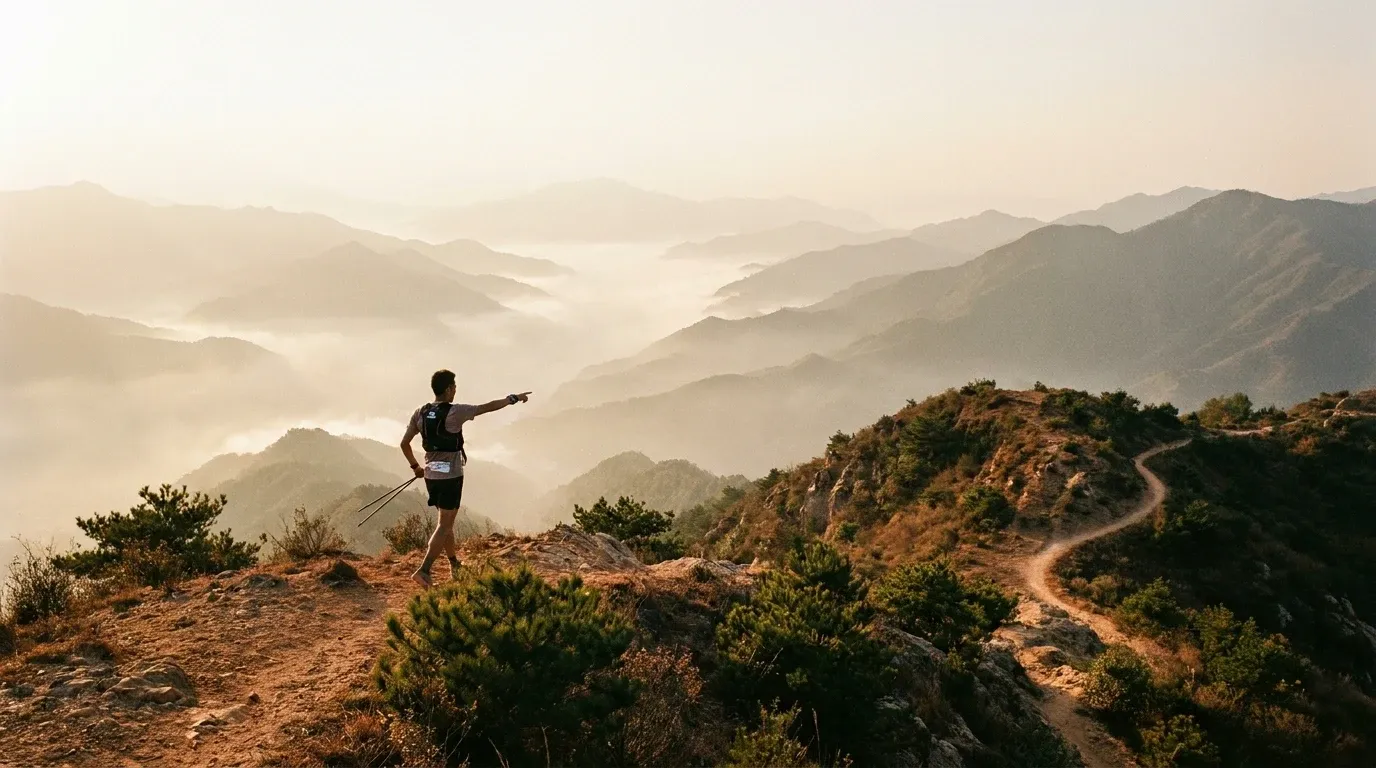
When Salomon chose China as the host for its Trail Week finale at Tsaigu, it wasn't a marketing experiment. It was a signal. Trail running's next major growth frontier isn't in the Alps or the Rockies. It's in Asia, and China is leading the charge.
The event brought together some of the world's top elite trail runners, placing them on Chinese terrain, in front of Chinese crowds, competing under a format designed to deepen roots rather than just generate footage. That distinction matters more than it might seem.
What Tsaigu Actually Represents
Tsaigu isn't a household name yet among Western trail runners. But the landscape is extraordinary: high-altitude ridgelines, technical descents, and a visual drama that rivals anything in Chamonix or Colorado. Salomon didn't stumble onto this location. The brand spent years tracking where participation numbers were climbing fastest, and China kept coming up.
Trail running participation in China has grown at a pace that outstrips almost every other market. Estimates put the number of organized trail events in China at several hundred per year, up from almost nothing a decade ago. The country now hosts ultras, vertical kilometers, and multi-stage races across terrain that most Western runners have never seen and may not even know exists.
Salomon Trail Week at Tsaigu is the brand's clearest statement yet that China isn't just a sales market. It's a cultural destination for the sport itself.
The Numbers Behind the Shift
Trail running has grown roughly 57% globally over the past several years, driven by a mix of post-pandemic outdoor momentum, social media exposure, and rising middle-class interest in endurance sport across Asia. That last factor is the one most Western media tends to underweight.
China's middle class now numbers in the hundreds of millions, and a meaningful segment of that group has turned to endurance sports as both a lifestyle marker and a competitive outlet. Running clubs in Beijing, Shanghai, and Chengdu have waiting lists. Gear spend per participant in China is rising fast, tracking toward the kind of per-runner investment seen in the US and UK markets.
For context, the global trail running market is projected to exceed $4 billion by the late 2020s. A significant and growing share of that value is now being generated in Asia. Salomon, like any smart brand, is simply following the money and the momentum.
Elites as Ambassadors, Not Just Competitors
Bringing global elites to Tsaigu does something that prize money alone can't accomplish. It tells Chinese trail runners that their terrain is worth the world's best showing up for it. That's a legitimacy signal with long-term cultural weight.
When elite athletes from Europe and North America compete seriously on Chinese courses, they generate content, conversations, and credibility that flows in both directions. Western runners start paying attention to Chinese events. Chinese runners start seeing themselves as part of the same global community that includes UTMB, Western States, and the Hardrock 100.
This kind of cross-pollination is exactly how trail running grew in Europe. Early investment by brands and elites turned regional trails into internationally recognized venues. Salomon knows that playbook well, having helped write it. Now they're applying it eastward.
If you've been following the global ultra scene, you've already seen glimpses of this shift. Javelina 100K saw De Winter beat the entire field outright, a result that would have seemed unthinkable in trail running a decade ago. The sport keeps expanding what's possible, and that expansive energy is now finding new geography.
Race Tourism: The Opportunity You Might Be Missing
If you're a recreational trail runner who's already ticked off races in the Dolomites or logged miles on the Laugavegur in Iceland, China deserves a serious look. Not as an exotic bucket-list detour, but as a legitimate race tourism destination with infrastructure that's improving rapidly.
Events in China are increasingly well-organized, with international registration pathways, English-language support, and competitive fields that make finishing times meaningful. The terrain alone offers something genuinely different: karst landscapes, alpine ridgelines, ancient trade-route trails through Yunnan, desert courses in Xinjiang. These aren't just backdrops. They're distinct running experiences you can't replicate anywhere else.
The logistics are getting easier too. Direct flights from major Western hubs, expanding visa-on-arrival options, and growing hospitality infrastructure around race venues mean the friction of competing in China is declining. That's precisely what happened with trail running in Japan, which went from curiosity to must-do for serious international runners within about five years. China is on a similar trajectory, but at larger scale.
Asia's rise as a trail destination also reflects a broader boom in global marathon events. The Nice-Cannes Marathon hit 25,000 runners in 2026, and participation records are falling across global events, including New York City's marathon breaking its own finisher record. The appetite for destination racing is real and growing. China is positioning itself to capture a share of that appetite.
What Salomon's Move Tells You About Brand Strategy
Salomon isn't the only trail brand expanding its Asia presence, but it's moving with the most visible intentionality. Building a flagship event format, Trail Week, in a specific Chinese location rather than just sponsoring an existing race is a meaningful distinction. It means the brand is building an asset, not just buying exposure.
That approach mirrors what brands like Salomon, Arc'teryx, and Hoka have done in North America and Europe for years: anchor themselves to places, not just athletes. When a brand owns the narrative of a location, it captures runner loyalty at a deeper level than a logo on a bib can achieve.
For athletes on the sponsorship side, this matters too. Chinese trail running is producing competitive runners who are starting to appear on international results sheets. As the talent pipeline deepens, Western brands will face genuine decisions about investing in Chinese athletes as global ambassadors, not just regional ones. Expect those conversations to accelerate over the next three to five years.
The Training Implications for Serious Runners
If you're inspired by Tsaigu and thinking about targeting a race in China or Asia more broadly, the terrain demands honest preparation. High-altitude events, technical descents, and mixed surface conditions require a different training approach than road-focused runners typically use.
Vertical gain training, single-leg stability work, and time on technical terrain are non-negotiable for performance. It's also worth revisiting how hard you're pushing in training cycles leading into a destination race. Understanding where your actual training ceiling sits becomes especially important when you're preparing for courses with profiles you've never experienced firsthand.
Nutrition strategy for high-altitude racing also carries more stakes than a road half marathon. Caffeine use, hydration, and energy management all behave differently at elevation. If you haven't thought carefully about fueling for altitude, that's a gap worth closing well before race day. The science on caffeine dosing for endurance performance is worth reviewing, particularly if you're planning to rely on it heavily during a multi-hour effort at altitude.
A Sport Finding Its New Edge
Trail running has always defined itself against the idea of limits. First it was distance. Then altitude. Then the concept that elite performance and wild terrain couldn't coexist. Each time, the sport proved the skeptics wrong.
The idea that trail running's next chapter would be written in China would have seemed implausible ten years ago. It doesn't anymore. Salomon Trail Week at Tsaigu is the most visible marker yet of a shift that's been building steadily. The global trail community now has a new address, and it's worth paying attention to.
For you as a runner, that means more options, more destinations, and more competitive fields to test yourself against. It also means the sport you love is bigger than it's ever been, and showing no signs of slowing down.