
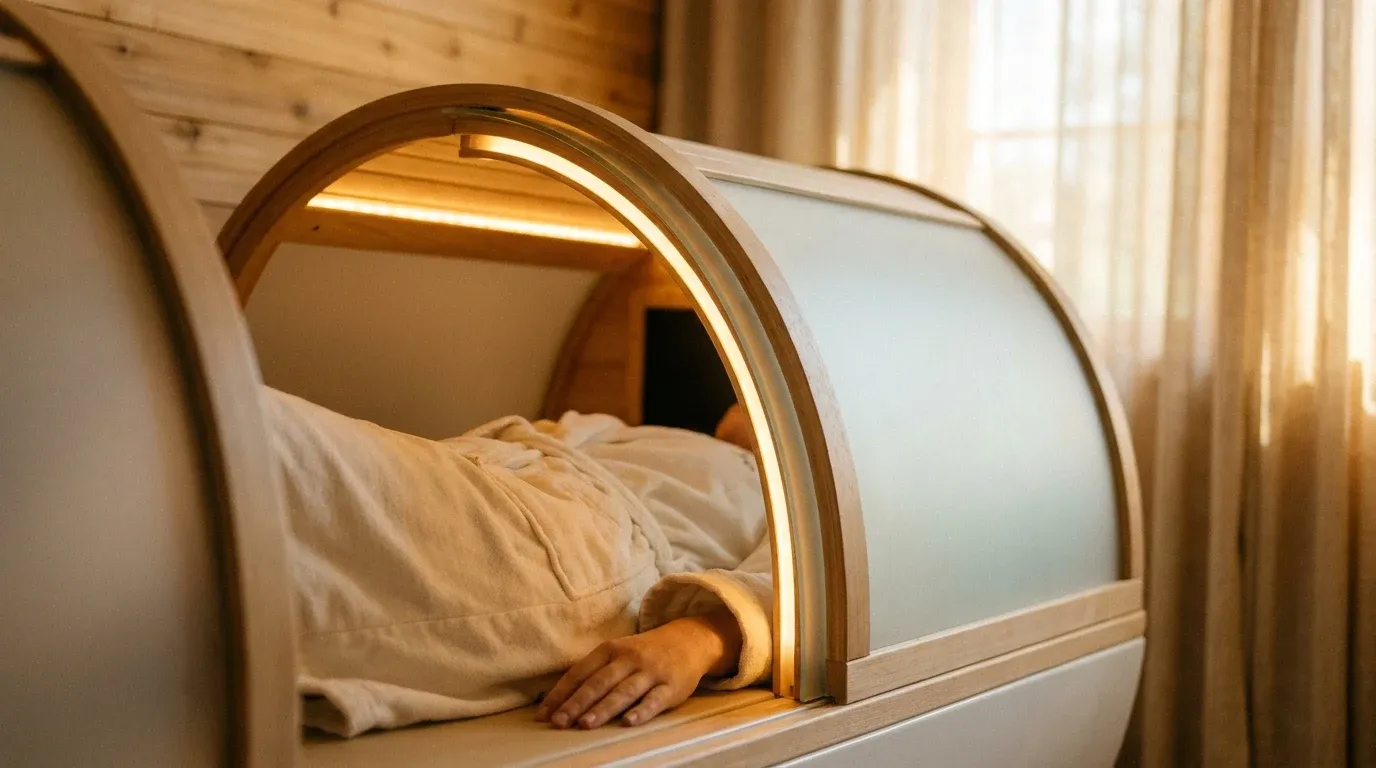
Walk into one of the new premium wellness centers popping up in major cities and you'll find yourself choosing between cryotherapy chambers, PEMF mats, infrared saunas, hyperbaric oxygen pods, red light panels, and float tanks. All under one roof. Often bundled into a single monthly membership that runs anywhere from $150 to $600 or more.
The pitch is compelling: combine multiple recovery modalities, accelerate results, optimize performance. The reality is more complicated. Some of these services have a reasonable body of evidence behind them. Others are charging premium prices for effects that science hasn't confirmed. Here's how to tell the difference before you commit your wallet.
Why High-Tech Wellness Centers Are Booming
The global wellness economy is now valued at over $5.6 trillion, and recovery technology is one of its fastest-growing segments. Boutique wellness centers have recognized that bundling multiple modalities into a single membership creates better retention, higher perceived value, and recurring revenue. That's good for business. It's not automatically good for you.
The model borrows heavily from elite sports recovery, where professional athletes do use cryotherapy, infrared, and compression therapy. What often gets lost in translation is that those athletes are also training at extreme volumes with sophisticated medical teams tracking outcomes. The average consumer using a wellness center two or three times a week is operating in a very different context.
That doesn't mean these centers have nothing to offer. It means you need a sharper filter than the marketing materials provide.
The Services With a Reasonable Evidence Base
Infrared sauna is probably the most evidence-supported technology currently available in consumer wellness centers. Research consistently links regular sauna use to improved cardiovascular markers, reduced muscle soreness after exercise, and meaningful short-term recovery benefits. A well-designed trial documented these effects across a structured three-week protocol. For a detailed breakdown of what that kind of regular use actually produces, infrared sauna for recovery: what a 3-week trial found is worth reading before you book your first session.
The key caveat: duration and temperature matter. Many wellness centers offer 25-minute sessions at moderate heat. Studies showing cardiovascular benefit often used longer sessions at higher temperatures. Ask specifically what protocol the center recommends and whether it aligns with the research they're citing.
Cold exposure and cryotherapy sit in a more complicated middle ground. Cold water immersion has solid short-term data for reducing delayed onset muscle soreness (DOMS) after high-intensity exercise. Whole-body cryotherapy, the kind delivered in commercial cryotherapy chambers at temperatures around -166°F (-110°C) for two to four minutes, has a thinner evidence base. Some studies show modest benefits for inflammation and perceived recovery. Others show no meaningful advantage over cold water immersion, which costs a fraction of the price. If your center charges $40 to $80 per session for cryotherapy, cold water immersion at home may deliver comparable results.
Compression therapy using pneumatic compression devices has reasonably consistent data supporting its use for reducing post-exercise swelling and perceived fatigue, particularly in the legs. It's unlikely to produce dramatic results, but it's a low-risk, moderately supported recovery tool.
The Services That Need More Scrutiny
PEMF (pulsed electromagnetic field therapy) is one of the more heavily marketed services in premium wellness centers, and the evidence picture is genuinely mixed. PEMF has legitimate clinical applications in orthopedic medicine, particularly for bone healing after fractures, where it's been used under medical supervision for decades. The leap from that clinical application to general wellness benefits, improved sleep, reduced inflammation, enhanced energy, is not well-supported by high-quality research. Studies exist, but most are small, poorly controlled, or conducted in clinical populations with specific conditions. The wellness center selling PEMF as a general recovery or performance tool is working well ahead of the science.
Hyperbaric oxygen therapy (HBOT) follows a similar pattern. In clinical medicine, HBOT has established uses for wound healing, carbon monoxide poisoning, and certain infections. The evidence for using it to accelerate athletic recovery, reduce inflammation in healthy people, or improve cognitive function in the general population is limited. Sessions at consumer wellness centers typically run at lower pressures than clinical HBOT, which further complicates any comparison to the medical research.
Red light therapy (photobiomodulation) has genuine scientific interest behind it. Laboratory and animal research is promising. Human trials for muscle recovery, skin health, and inflammation are more mixed, with effect sizes that are often modest. It's not pseudoscience, but it's also not settled science. The dosing questions, wavelength, power density, duration, distance from the device, are complex, and most consumer devices and wellness center panels don't publish enough technical detail to know whether you're receiving anything close to the protocol used in positive studies.
Float Tanks and Mindfulness-Adjacent Services
Sensory deprivation float tanks have a genuinely interesting research profile for stress reduction and subjective wellbeing. Studies suggest meaningful reductions in anxiety and improvements in mood, particularly for people with high baseline stress levels. The effects on physical recovery are less clear. If stress is your primary concern, floating may be worth exploring. If you're primarily chasing faster muscle recovery, the evidence doesn't strongly support it for that goal.
This matters because managing stress and sleep quality are foundational to any recovery strategy. building a structured approach to stress, sleep, and recovery often delivers more consistent results than any single piece of technology, at considerably lower cost.
Questions to Ask Before You Sign Anything
High-tech wellness centers rely on the fact that most consumers don't ask hard questions. Here's a short list that will tell you a lot about whether a center is worth your money.
- What specific outcomes does this service have evidence for? Ask them to be specific. "Reduces inflammation" is not a specific outcome. "Reduces DOMS 24 hours after high-intensity resistance training" is.
- What's the research quality? Single studies, animal studies, and testimonials are not equivalent to replicated randomized controlled trials. Ask whether the evidence they're citing comes from healthy people in conditions similar to your own.
- What protocol do you recommend, and why? Session duration, frequency, and sequencing all affect outcomes. A center that can't answer this question isn't taking the science seriously.
- What's included in the base membership versus add-ons? Many centers lead with an attractive price point and then charge separately for the most popular services. Know exactly what you're getting before you sign.
- Can I try individual services before committing to a bundle? Any reputable center should offer this. If they push hard against it, that's informative.
The Opportunity Cost Problem
Here's the question most people don't ask: what else could you do with $200 to $500 a month? The wellness center industry benefits from a kind of halo effect where proximity to evidence-backed services lends credibility to the entire menu. But the evidence base for basic training, nutrition, and sleep is vastly stronger than the evidence base for most of the technology in these centers.
Research increasingly supports strength training as one of the most powerful tools available for long-term health, not just physique goals. the case for doctors prescribing strength training as preventive medicine reflects how seriously the clinical community is beginning to take resistance training as a health intervention. Similarly, getting protein and overall nutrition right has a larger effect on recovery than most people realize. current protein and exercise guidelines may be set too low for people with active training demands, which means this is an area where adjusting your approach can produce measurable results.
None of that requires a premium membership. It requires consistency.
How to Build a Practical Prioritization Strategy
If you're genuinely interested in what high-tech wellness centers offer, the most rational approach is to prioritize by evidence strength and personal relevance.
Start with infrared sauna if cardiovascular health and post-exercise recovery are your primary goals. The evidence is strongest here, the risk is low, and most centers offer it as part of base membership tiers. Use it consistently and according to a protocol that aligns with the research.
Add cold exposure if you're doing high volumes of intense training and experiencing significant DOMS. Cold water immersion at home is a reasonable alternative. If you prefer the cryotherapy chamber experience and can afford it, the downside risk is minimal. Just don't expect dramatically superior results.
Treat everything else as experimental until you've seen your own response. Sleep quality and consistency are frequently overlooked in recovery discussions despite having some of the strongest evidence available. sleep timing and consistency have significant effects on cardiovascular and brain health, and no amount of PEMF will compensate for chronically poor sleep.
Skip or deprioritize HBOT and PEMF unless you have a specific clinical indication. These services carry the highest price tags and the weakest general wellness evidence. If a center is pushing these heavily without nuance, treat that as a signal about how they approach the rest of their offering.
The Bottom Line on Premium Wellness Centers
High-tech wellness centers aren't a scam. Some of what they offer is genuinely useful, and the convenience of accessing multiple modalities in one location has real value for people who would actually use them. The problem is the packaging. Bundling strong and weak evidence services together, pricing them as a unified premium offering, makes it easy to pay a lot for things that don't move the needle.
The centers worth your money are the ones that answer hard questions confidently, distinguish between what's supported and what's exploratory, and don't pressure you to commit to packages before you've tried individual services. Those centers exist. Finding them requires asking better questions than the marketing encourages you to ask.