
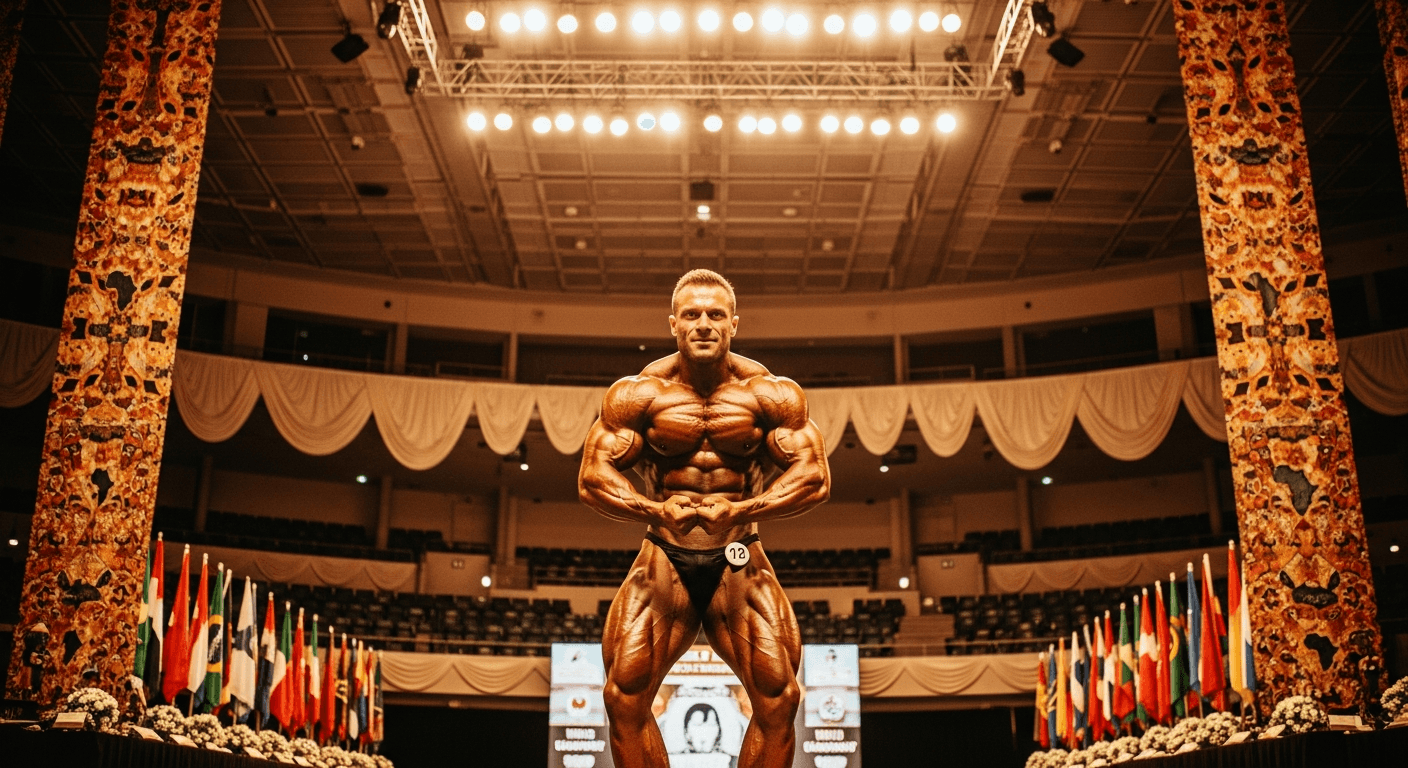
Something shifted in competitive bodybuilding on April 28, 2025, when it was announced that Cameroon will host the World Fitness Federation Bodybuilding World Championships in July 2026. The confirmation came after direct talks between Cameroon's Sports Minister and WFF leadership. It's a milestone that few in the sport saw coming this soon, and it says a great deal about where competitive bodybuilding is actually heading.
For decades, the sport's biggest events have clustered in the United States, Europe, and the Gulf states. Cameroon hosting a world championship at this level breaks that pattern. It's the first time an African nation will have done so, and the implications reach well beyond a single event on the calendar.
What the WFF Actually Is
If you follow competitive bodybuilding through mainstream fitness media, you're probably most familiar with the IFBB. the International Federation of Bodybuilding and Fitness. That organization has historically dominated the sport's professional tier, running events like the Mr. Olympia and the Arnold Classic circuit. But the landscape isn't as simple as it once was.
The World Fitness Federation is a separate, growing international body that operates its own competitive structure, sanctioned events, and world championships. It isn't a breakaway faction or a minor regional federation. It has genuine international reach, with affiliated national federations across multiple continents, and it's been steadily expanding the geographic footprint of competitive bodybuilding beyond its traditional strongholds.
The WFF's model tends to be more accessible at the grassroots level, which matters when you're talking about growth in markets where elite sport infrastructure is still being built. That accessibility is part of why a Cameroon-hosted world championship is plausible now, rather than a decade from now.
A First for African Competitive Sport
The significance of Cameroon hosting this event isn't just symbolic, though the symbolism matters. Africa has one of the fastest-growing populations of young people on the planet, and physical culture, including gym training, bodybuilding, and fitness competition, has been expanding rapidly across the continent over the past decade. Countries like Nigeria, South Africa, Kenya, Ghana, and Cameroon itself have produced competitive bodybuilders who travel abroad to compete at international events. Bringing a world championship home changes the equation.
Hosting a major international sports competition requires coordination across government, sports federations, hospitality, and logistics. That Cameroon's Sports Ministry engaged directly with WFF leadership to secure this event signals that the government views sport as a vehicle for international visibility, not just domestic recreation. That's a meaningful policy statement, and it positions the 2026 championships as something more than a sporting event. It's a proof-of-concept for what African nations can organize at this level.
South Africa hosted the FIFA World Cup in 2010. Egypt has hosted various continental football tournaments. But a bodybuilding world championship represents a different category of event, one where the sport itself is trying to prove something about its own global reach. Cameroon hosting it puts both parties on record.
Why This Matters for the Sport's Growth
Competitive bodybuilding has a tension at its core that doesn't get discussed enough. The sport commands a passionate global following, significant social media audiences, and a booming supplement and nutrition industry built around its aesthetics and training culture. Yet its biggest events remain concentrated in a handful of wealthy, Western or Gulf-based markets.
That concentration shapes everything from which athletes get visibility to which training philosophies get treated as the global standard. It's worth noting that as bodybuilding's cultural influence has expanded online, so have some of its pressures. Research has linked the sport's visual culture to rising rates of muscle dysmorphia and body image distress among young men, a dynamic explored in TikTok's Muscle Ideal Is Hurting Young Men. Broadening where the sport's major events are held could also broaden what bodies, training cultures, and competitive traditions get treated as legitimate.
There's also a straightforward competitive development argument. Athletes in West and Central Africa currently have limited opportunities to compete at the highest international levels without significant travel costs and logistical barriers. A world championship on home soil, or at least on the continent, lowers those barriers and creates a visible pathway for younger athletes who might otherwise never pursue the sport seriously.
The Infrastructure Question
Hosting any major international sports event is operationally demanding. You need venues that meet federation standards, accommodation for athletes and officials from dozens of countries, media infrastructure, and the organizational capacity to run a multi-day, multi-category competition smoothly. These aren't trivial requirements.
Cameroon has experience hosting significant continental competitions, most notably the Africa Cup of Nations in football. That organizational history matters. It means there are government bodies, private sector partners, and event management professionals who have navigated international sports logistics before. The 2026 WFF championships will be a different scale and a different sport, but it's not starting from zero.
The WFF's involvement is also worth considering. A federation with genuine interest in growing its global footprint has strong incentives to support a host nation in delivering a successful event. That's not charity. it's institutional self-interest aligned with development goals, which tends to produce more durable outcomes than either party going it alone.
What Athletes and Coaches Should Watch
If you're a competitive bodybuilder or a coach working with athletes at any level, the 2026 WFF World Championships in Cameroon is worth tracking for a few reasons.
- New competitive pathways: The expansion of WFF-sanctioned events globally means more routes to international competition, which matters for athletes who don't compete under IFBB-affiliated federations.
- Training culture exchange: African competitive bodybuilding has developed its own methodologies and aesthetic standards. Exposure to those approaches at a world championship level can genuinely influence how the sport evolves globally. If you're thinking about how to structure your own training development, How to Add Workout Variety Without Wrecking Your Progress covers the principles that hold regardless of which competitive tradition you're drawing from.
- Nutrition and supplementation standards: International competition means drug testing and supplementation guidelines. If you're preparing for any sanctioned event, understanding what's actually supported by evidence is non-negotiable. The current science on common competition prep supplements is more complicated than marketing suggests, and Fat Burner Supplements in 2026: What Science Actually Says gives you an honest read on where the evidence stands.
- Recovery demands: Elite-level competition prep is physically and psychologically intensive. Sleep quality and consistency are among the most undervalued performance variables at any level of the sport, and Sleep Consistency: The Overlooked Lever for Better Rest covers why regularity matters more than most athletes assume.
The Bigger Picture for Fitness Culture
Bodybuilding has always been a sport that reflects broader cultural forces. Its growth in post-war America tracked the country's emerging consumer culture. Its Gulf expansion tracked petrostate wealth and the desire for international soft power. Its online explosion tracked social media's transformation of how bodies are displayed and judged.
An African-hosted world championship tracks something different: the rebalancing of global sport toward regions that have long been treated as talent exporters rather than event hosts. That rebalancing isn't unique to bodybuilding. It's happening across multiple sports, and it's driven by demographic reality, economic growth, and the increasing confidence of national sports bodies that have spent decades building capacity.
Cameroon in July 2026 is one data point. But it's a meaningful one. When a federation chooses a host nation, it's making a statement about who belongs at the center of the sport, not just at the margins. For competitive bodybuilding, that statement has been overdue.
The athletes who will compete in Cameroon next July will be focused on conditioning, stage presence, and results. That's how it should be. But the event they're competing at will mean something beyond the scorecards, and that context is worth understanding if you care about where fitness culture is going globally.
It's not every year that a world championship creates a precedent. This one does. Watch what happens next.