
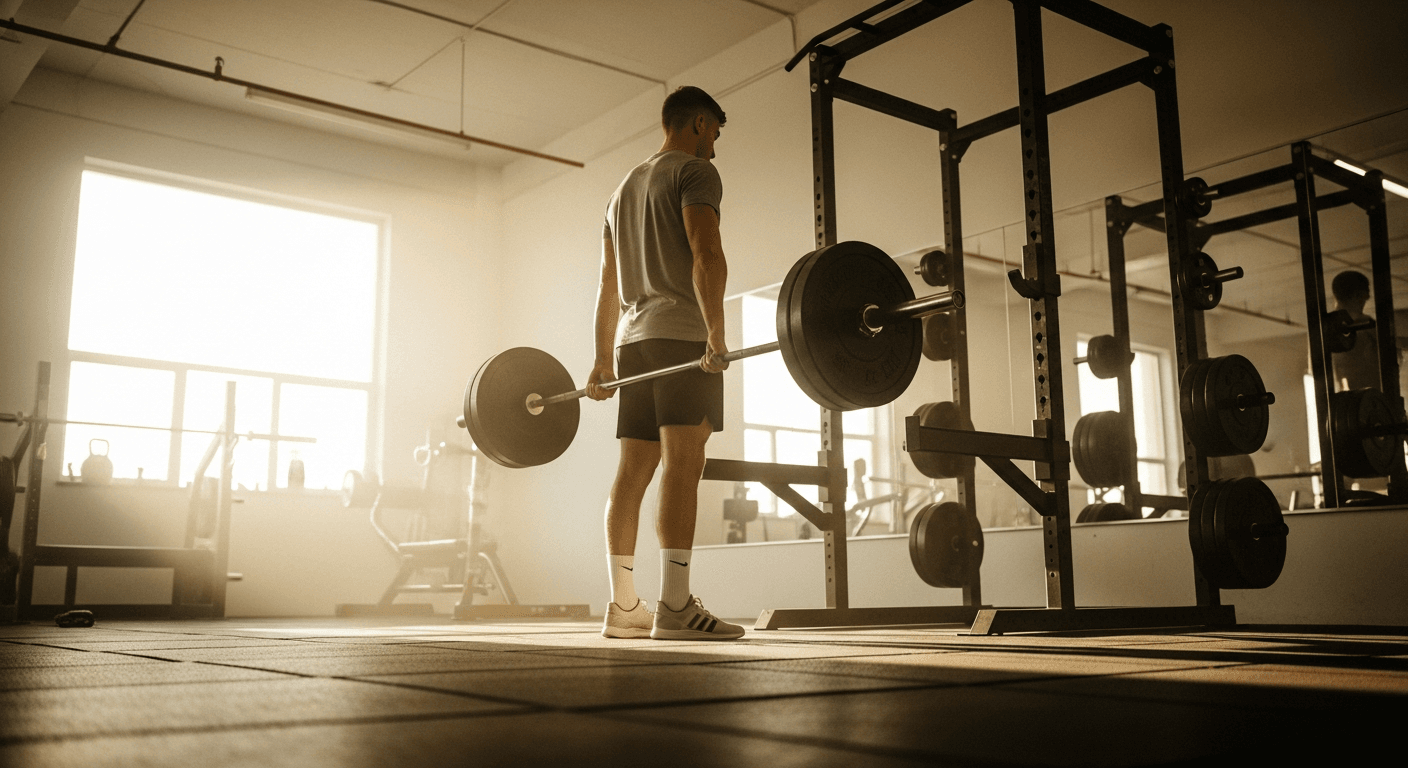
For decades, the phrase "train to failure" has carried an almost moral weight in gym culture. If you weren't grinding out that last impossible rep, you weren't really working. That belief is now formally challenged by the most comprehensive global resistance training guidelines published to date, released in May 2026 by an international consortium of exercise scientists and sports medicine bodies.
The verdict is clear: training to muscular failure is not necessary for optimal muscle growth or strength development. And for the vast majority of lifters, it may actually be holding you back.
What the New Guidelines Actually Say
The May 2026 guidelines, synthesizing data from over 140 controlled studies and representing input from research institutions across North America, Europe, and Australia, mark the first time a globally coordinated body has taken a definitive position on proximity-to-failure training.
The core recommendation is straightforward: stopping 1 to 3 repetitions before failure, a concept researchers call Repetitions in Reserve (RIR), produces muscle hypertrophy and strength gains that are comparable to, and in several measures superior to, training that pushes every set to complete muscular failure.
Critically, the guidelines also document that failure-based training significantly increases injury incidence, extends required recovery time between sessions, and elevates markers of systemic fatigue. That last point matters more than most lifters realize. Accumulated fatigue doesn't just make you sore. It degrades movement quality, compresses sleep, and raises psychological stress, all of which undermine the very adaptations you're training for.
This is particularly relevant as strength continues to emerge as a central pillar of long-term health. Strength is 2026's top health priority, which makes training sustainability, not just training intensity, a genuine medical concern.
Why the Old Belief Was So Persistent
The "failure is mandatory" doctrine didn't come from nowhere. Early hypertrophy research in the 1990s and 2000s frequently used training-to-failure protocols because they were easier to standardize in lab settings. If every subject trained until they physically couldn't complete another rep, researchers could be confident that effort was maximal and consistent across participants.
The problem is that lab-controlled failure training doesn't translate cleanly to real-world programming. Outside a controlled setting, training to failure repeatedly across multiple sets and multiple sessions per week creates a compounding fatigue debt that the early studies weren't designed to capture.
Gym culture then amplified the misreading. Failure reps are dramatic. They're visible. They became a proxy for effort, even as the evidence base quietly shifted underneath them.
By 2022, several meta-analyses were already suggesting that RIR-based training produced equivalent hypertrophy. The 2026 guidelines don't represent a sudden reversal so much as an official crystallization of a scientific consensus that had been building for years.
The Science Behind Stopping Short
The physiological logic is less counterintuitive than it sounds. Muscle growth is primarily driven by mechanical tension applied to muscle fibers over time. You don't need to reach failure to achieve meaningful tension. What you need is sufficient load, sufficient volume, and sufficient proximity to failure to recruit the high-threshold motor units responsible for growth.
Research included in the new guidelines confirms that sets performed at 2 RIR activate motor unit recruitment patterns nearly identical to failure sets. The difference, measured across a full training block, is that 2 RIR sets can be performed with better technique, greater consistency, and without the same spike in cortisol and inflammatory markers that failure sets produce.
Over an eight-week training block, that adds up. The guidelines cite data showing that lifters using RIR-based programming maintained higher training quality in weeks five through eight, the period when failure-focused programs typically see the sharpest performance decline.
How Elite Coaches Are Already Responding
You don't have to wait for your personal trainer to catch up with the literature. Many already have. Strength and conditioning coaches working with professional athletes have used RIR-based periodization for years, partly because they couldn't afford the injury and recovery costs of repeated failure training with athletes who compete year-round.
What's shifting now is the application of those principles to recreational and general population training. Coaches who work in hybrid models, splitting time between in-person and online clients, are finding that RIR-based programming translates particularly well to remote coaching contexts, where a trainer can't physically spot a client to failure safely. More than half of personal trainers now work both online and in-person, and this guideline shift may accelerate how those coaches structure remote programming.
Programming is also becoming more sophisticated in how it integrates RIR targets with broader recovery metrics. Coaches are increasingly cross-referencing perceived effort data with wearable recovery scores to individualize training loads week to week, rather than applying a fixed failure-or-not rule to every session.
What This Means for Recreational Lifters
If you train three to five days a week and you're not a competitive athlete, the practical implications of these guidelines are significant. Here's what the shift looks like in real programming terms.
- Stop treating failure as the success marker. A set that ends at 2 RIR isn't a lazy set. It's a well-executed set. The goal is stimulus, not suffering.
- Expect longer, more productive training blocks. When you're not accumulating failure-induced fatigue, your performance doesn't drop off a cliff by week five. Training blocks of ten to twelve weeks become genuinely sustainable.
- Reduce forced deload frequency. Many lifters currently need a deload week every four to six weeks specifically because failure training degrades their recovery baseline. RIR-based training often extends that window significantly.
- Apply RIR strategically, not uniformly. The guidelines recommend training closer to failure, around 1 RIR, on isolation exercises for smaller muscle groups, while keeping compound lifts like squats and deadlifts at 2 to 3 RIR to protect joint integrity and technique.
- Track your RIR honestly. Most untrained lifters overestimate their proximity to failure. If you think you have 5 reps left, you probably have 7 or 8. Learning to self-assess accurately takes a few weeks of deliberate attention.
This also has implications for recovery management beyond the gym. If you're already using a wearable to monitor sleep and readiness, smart recovery trackers from brands like Whoop, Oura, and Garmin can help you calibrate how close to failure you train on any given day based on your body's current recovery state. RIR-based training and data-driven recovery tools are a natural pairing.
The Psychological Benefit Nobody's Talking About
There's a dimension to this shift that goes beyond physiology. Training to failure is psychologically costly. It requires you to push into genuine discomfort on every set, which creates a pattern where many lifters subconsciously avoid the gym, cut sessions short, or reduce session frequency to defer that discomfort.
When training no longer requires you to suffer through failure on every working set, adherence improves. You're more likely to show up, more likely to train with full attention, and more likely to maintain consistency over months and years. That consistency compounds in ways that any single training session never can.
Chronic stress from overtraining also has measurable effects on mental health. Managing training load intelligently is one piece of a broader recovery puzzle that includes sleep quality, nutrition, and stress management. Sleep has become the top wellness priority in 2026 for good reason. Excessive training fatigue is one of the most common reasons lifters report poor sleep quality, and reducing that fatigue load has a direct downstream effect on recovery and mood.
How to Start Applying RIR Today
You don't need to overhaul your entire program. Start with these adjustments over the next two weeks.
On your compound lifts, aim to finish each set knowing you could have completed two to three more reps with good form. On isolation movements, push to one rep in reserve. Log how each set felt immediately after it ends using a simple 1 to 5 scale. Over time, that subjective data becomes surprisingly accurate.
If you're working with a coach, share the new guidelines with them and ask how they're incorporating RIR targets into your programming. If you're training independently and want structure, choosing between online and in-person coaching in 2026 comes down to how much real-time feedback you need on your form, which matters more when you're self-managing effort levels without the built-in ceiling of failure.
The most important shift is mental. Stop measuring workout quality by how destroyed you feel afterward. Start measuring it by how well you'll be able to perform in your next session. That's the standard the new guidelines are built on, and it's the standard that produces the best long-term results.
Training smarter isn't a compromise. It's the actual method.