
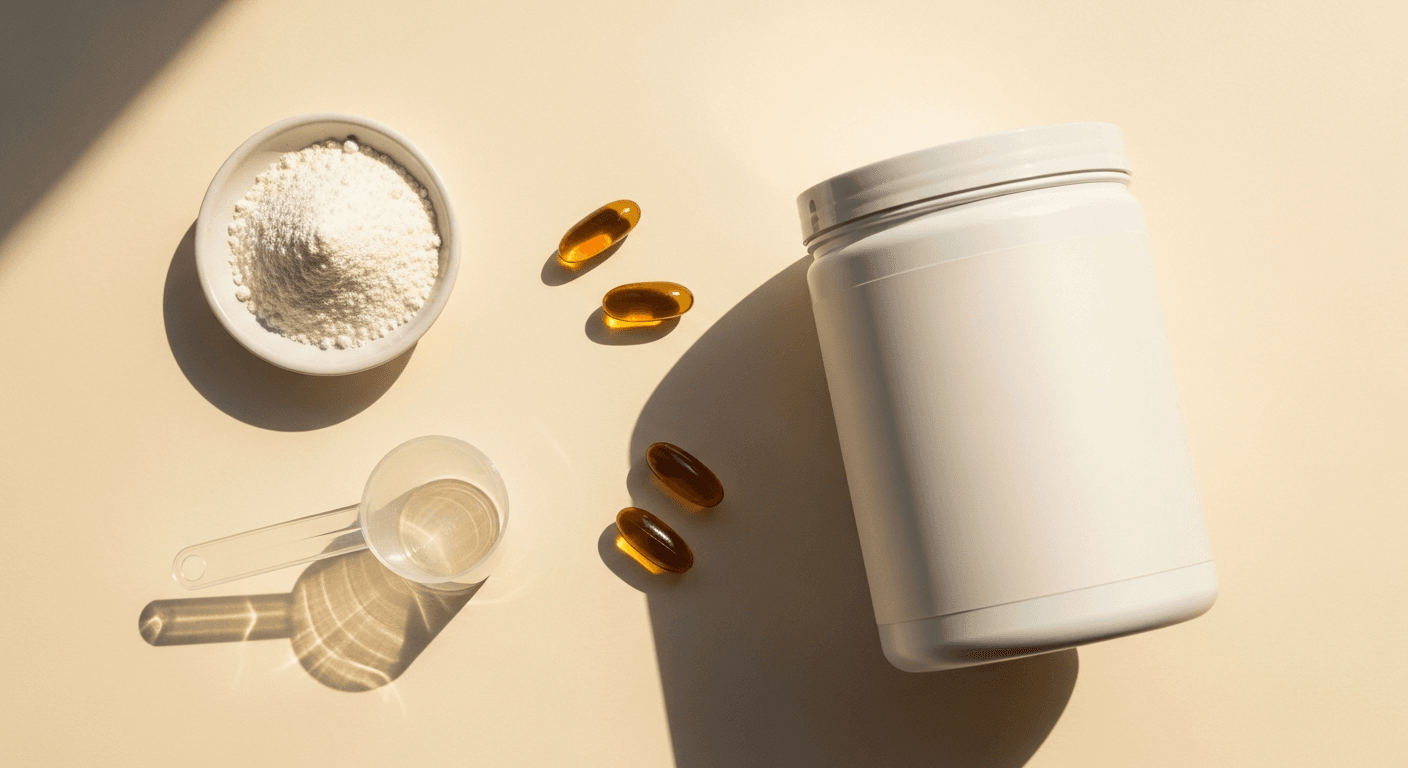
Walk into any gym locker room and you'll find protein shakers, pre-workout packets, and vitamin pill organizers sitting alongside ordinary gym bags. A May 2026 study tracking supplement use across recreational sports populations confirmed what coaches and nutritionists had already suspected: products once reserved for professional and elite athletes have gone fully mainstream. The amateur athlete is now one of the supplement industry's most important customers.
The global supplement market reached $187 billion in 2026, according to industry data. A significant portion of that growth is being driven not by professional sports teams or Olympic programs, but by weekend runners, recreational cyclists, CrossFit regulars, and casual gym-goers who are spending real money on products they often don't fully understand.
From the Lab to the Locker Room
The democratization of supplement use didn't happen overnight. Several forces have been pushing it along for years. Social media has played a massive role. Fitness influencers routinely promote supplement stacks to audiences of millions, blurring the line between evidence-based recommendations and paid sponsorship. When you see an athlete you admire crediting creatine or BCAAs for their physique, the leap to "I should try that" is short.
Retail access has also changed dramatically. Supplements that once required a trip to a specialty store or a bulk order from a sports nutrition supplier are now available on Amazon, at Target, and in supermarket aisles. The price per unit has dropped too, making it easier than ever to experiment without a huge financial commitment upfront.
The May 2026 study, conducted across multiple French recreational sports clubs and cohorts, found that a large majority of participants were consuming at least one supplement regularly, with protein powders, creatine, and vitamins topping the list. Critically, most users reported receiving little to no professional guidance on what to take, how much, or whether their choice was appropriate for their actual training load. That pattern holds across global markets, including the US, where surveys consistently show that amateur athletes are self-directing their supplement strategies based on peer recommendations and online content rather than clinical advice.
The Guidance Gap Is a Real Problem
Spending money on supplements isn't inherently a problem. The problem is spending money without knowing what you're buying or why. The supplement industry in most markets, including the United States, operates under far less regulatory scrutiny than pharmaceuticals. Products don't need to prove efficacy before hitting shelves. Labels can be vague. Dosing guidance varies wildly between brands.
For amateur athletes, this creates a situation where you might be taking a product that does nothing for your goals, a product that's useful but dosed incorrectly, or in rarer cases, a product that interacts poorly with medications or underlying conditions. None of these outcomes are catastrophic for most healthy adults, but they represent real waste, both financial and physiological.
The average American gym-goer spending on supplements can easily reach $80 to $150 per month once you add up protein powder, a pre-workout, a multivitamin, and a joint support product. Over a year, that's up to $1,800 spent on products with highly variable evidence behind them.
What Actually Works for Non-Elite Athletes
Here's the honest picture. Out of the hundreds of supplements currently marketed to fitness consumers, a small handful have strong, consistent clinical backing for people who train recreationally. Everything else sits somewhere on a spectrum from "possible mild benefit" to "essentially marketing."
- Creatine monohydrate is the most well-researched performance supplement in existence. It improves high-intensity output, supports muscle recovery, and has a strong safety profile. It's relevant for strength training, sprinting, and any sport with repeated explosive efforts. It's not a magic muscle builder, but the evidence for it is genuinely robust. For recreational lifters, a standard dose of 3 to 5 grams per day is sufficient. Loading phases are optional, not required.
- Caffeine is effective. Studies consistently show it improves endurance, reduces perceived effort, and sharpens focus during training. Most people already consume it daily. The performance benefit is real but modest, and tolerance builds quickly if you're relying on it for every session.
- Protein is perhaps the least glamorous but most practically important. Most recreational athletes don't hit adequate daily protein targets through food alone. A quality protein supplement, whether whey, casein, or a plant-based alternative, can help bridge that gap. The goal isn't supplementation for its own sake. It's meeting a target you'd otherwise miss.
- Vitamin D is worth taking for a large portion of the population, particularly in northern latitudes or for people who spend most of their time indoors. Deficiency is common and it has downstream effects on muscle function, immune response, and bone health. That said, the form matters. Research published by the University of Surrey found that taking vitamin D2 can actually suppress your vitamin D3 levels, which has real implications for which supplement you choose.
- Omega-3 fatty acids support recovery, reduce exercise-induced inflammation, and may offer cardiovascular benefits. Recent research has extended their relevance further. A 2026 study found that fish oil reduces insulin resistance even in people who aren't obese, suggesting metabolic benefits that matter to active individuals beyond just recovery.
That's a short list. Deliberately so. The supplements with legitimate evidence for amateur athletes don't number in the dozens. If you're taking more than five or six products simultaneously, the odds are high that at least a few are doing very little.
What You Can Safely Skip
BCAAs are one of the most popular supplements sold to gym-goers and one of the least necessary. If you're already meeting your daily protein targets, you're getting adequate branched-chain amino acids through your diet and protein supplements. Paying extra for isolated BCAAs adds cost without meaningful additional benefit for most recreational athletes.
Many pre-workout formulas are essentially caffeine plus a proprietary blend of ingredients at sub-effective doses. You're paying a premium for the packaging and the marketing. A cup of strong coffee before your session delivers most of the same effect for a fraction of the cost.
Detox supplements, alkalizing products, and anything marketed with phrases like "flush toxins" or "reset your metabolism" have no credible scientific basis. Your liver and kidneys handle detoxification. No supplement changes your body's pH in any meaningful way.
The Bigger Picture: What's Driving This Trend
The surge in amateur supplement use isn't happening in isolation. It's part of a broader wellness optimization culture that has taken hold across multiple categories. Sleep tracking, recovery monitoring, and biometric data have become normal parts of the recreational athlete's toolkit. Smart recovery devices from brands like Whoop, Oura, and Garmin have made data-driven training accessible at the consumer level, and supplements fit neatly into that same optimization mindset.
Strength training has also seen a major cultural resurgence. Strength has become 2026's top training priority across age groups and fitness levels, and with that shift comes increased interest in the nutritional strategies that support muscle development and recovery. Creatine and protein aren't just for bodybuilders anymore. They're part of a mainstream conversation about healthy aging and functional fitness.
This broader context is worth understanding because it explains why the market keeps growing even when the evidence for many products is thin. People aren't buying supplements purely for their biochemical effects. They're buying them as part of an identity, a commitment to taking their health seriously. That's not irrational. But it does mean the purchasing decision is often more emotional than analytical.
Getting More From Less
Before adding another product to your supplement shelf, it's worth auditing what you're already taking and why. If you can't clearly explain the mechanism and the expected benefit of something you're taking daily, that's a signal to either research it properly or cut it.
Nutrition fundamentals still outperform supplementation at almost every level. Getting enough protein, eating sufficient vegetables and whole foods, and staying consistently hydrated will do more for your performance and recovery than any stack of capsules. Supplements fill gaps. They don't replace the foundation.
It's also worth noting that some common dietary habits actively work against the supplements you're taking. Research shows that adding a banana to your smoothie can destroy up to 84% of its antioxidant content, a reminder that how you combine foods and supplements matters as much as what you consume.
If you're serious about optimizing your nutrition for sport, the most valuable investment isn't a new supplement. It's an hour with a registered dietitian or sports nutritionist who can assess your actual needs. In a market worth $187 billion, that guidance is the rarest commodity of all.