
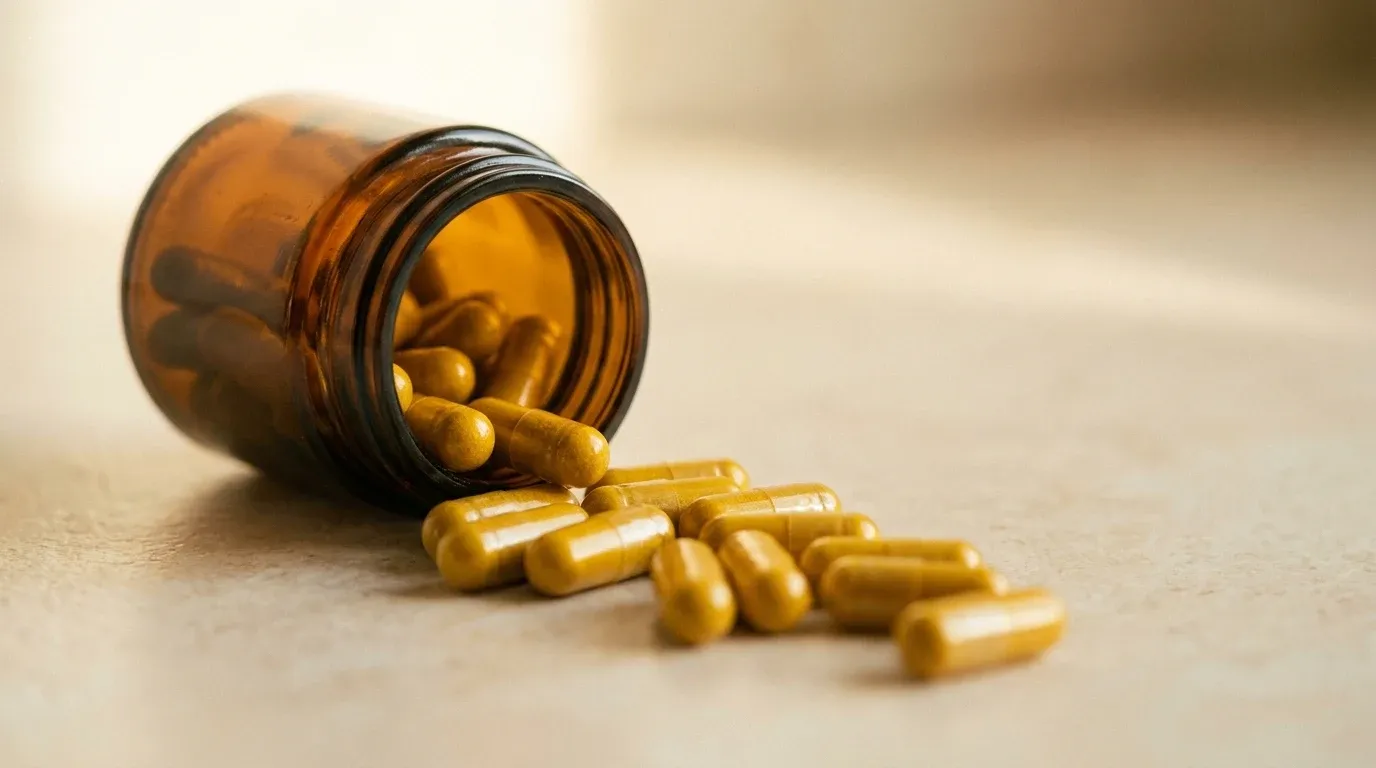
A new randomized controlled trial has confirmed that a low-dose berberine formulation can meaningfully raise circulating GLP-1 levels in healthy adults. That finding landed fast in supplement circles, where berberine has already been nicknamed "nature's Ozempic" for the better part of two years. Before you order a three-month supply, here's what the data actually says and what it doesn't.
What the Study Found
The trial, published this week in a peer-reviewed metabolic health journal, randomized participants to either a low-dose berberine formula (typically 500 mg twice daily in this design) or a placebo over an eight-week period. Fasting and postprandial GLP-1 measurements were taken at baseline, week four, and week eight.
The berberine group showed a statistically significant increase in postprandial GLP-1 secretion compared to placebo. The researchers also observed modest improvements in fasting glucose and insulin sensitivity markers, consistent with earlier mechanistic work showing berberine activates AMPK and influences L-cell signaling in the gut.
That's a real finding. It's not noise. But context, as always, does a lot of heavy lifting here.
GLP-1: Same Pathway, Very Different Magnitude
GLP-1 (glucagon-like peptide-1) is an incretin hormone released from the gut after eating. It tells the pancreas to release insulin, slows gastric emptying, and signals satiety to the brain. It's the same pathway targeted by semaglutide-class drugs like Ozempic and Wegovy, which have dominated clinical obesity treatment over the past three years.
Here's the part the supplement headlines skip. Pharmaceutical GLP-1 receptor agonists don't just nudge GLP-1 activity. They bind directly to the GLP-1 receptor with high affinity and a long half-life, producing sustained, pharmacological-level receptor activation. Weekly injections of semaglutide at therapeutic doses drive an average body weight reduction of 12 to 15 percent in clinical trials. That's not the same mechanism as a supplement stimulating slightly more endogenous GLP-1 secretion from gut cells.
Berberine raises the amount of GLP-1 your gut naturally releases. That is genuinely useful. But it operates in a physiological range, not a pharmacological one. Calling it a natural GLP-1 agonist is technically misleading. It's more accurate to say it supports GLP-1 signaling at the dietary end of the spectrum.
The effect size in this RCT was meaningful enough to show up in a controlled setting, but not large enough to produce the appetite suppression or weight loss that clinical GLP-1 agonists deliver. Anyone telling you otherwise is selling something.
Who Might Actually Benefit
This is where it's worth being specific, because berberine is not one-size-fits-all.
Active adults managing blood sugar and metabolic health: If you're in a caloric surplus during a muscle-building phase, or you're noticing that your post-meal energy crashes are affecting training quality, berberine's effect on glucose disposal and GLP-1 signaling could provide a modest but real benefit. It's not going to replace a well-structured diet, but it's not snake oil either.
People with prediabetes or insulin resistance: This is actually the population with the strongest existing evidence base for berberine. Multiple earlier meta-analyses have shown berberine reduces fasting glucose, HbA1c, and triglycerides in this group with effect sizes comparable to metformin in some studies. The new GLP-1 data adds a plausible mechanism to what was already clinically observed.
Weight-loss seekers hoping to replicate semaglutide results: Don't. Berberine won't suppress your appetite the way pharmaceutical GLP-1 agonists do. If you're comparing a $30 supplement to a drug that costs $900 to $1,300 per month without insurance, the cost difference reflects an enormous difference in potency. Managing expectations isn't pessimism. It's how you avoid wasting money and, more importantly, delaying care you might actually need.
Elite endurance athletes: Proceed with more caution. Berberine has been shown to inhibit certain cytochrome P450 enzymes, which affects how the body processes a range of compounds. If you're on any medication, including hormonal contraceptives, check with a pharmacist before adding berberine. Recovery quality and sleep also matter far more to performance than any supplement tweak. If you haven't optimized those variables, one-size-fits-all sleep advice is wrong for active adults, and that's where your attention should go first.
Who's Probably Wasting Their Money
Healthy, lean, active adults with no blood sugar irregularities and a solid nutrition base are unlikely to notice much from berberine. The GLP-1 effect is most pronounced in contexts where glucose metabolism is already impaired. If your postprandial GLP-1 secretion is functioning well, nudging it slightly higher produces diminishing returns.
The supplement industry has a consistent pattern of taking metabolic research designed for clinical populations and marketing the results to healthy consumers. The new RCT doesn't change that dynamic. Read the baseline characteristics of any berberine study before you assume the results apply to you.
Dosing and What the Evidence Supports
The most-studied dosing protocol for berberine sits between 900 mg and 1,500 mg per day, typically split into two or three doses taken with meals. This matters because berberine has poor oral bioavailability on its own. Taking it with food, and specifically with a meal containing some fat, improves absorption.
The trial under discussion used a low-dose formulation, likely paired with a bioavailability enhancer such as piperine (black pepper extract). This approach is increasingly common in newer products and addresses one of the compound's biggest limitations. If you're shopping for a supplement, look for formulations that explicitly address absorption, not just raw berberine content.
For context, hydration and electrolyte management for endurance athletes follows a similar principle: the form and timing of delivery matters as much as the compound itself.
Safety Profile: What You Should Know Before Buying
Berberine has a reasonable safety profile at studied doses, but it's not without considerations.
- GI side effects: Nausea, constipation, and cramping are the most commonly reported issues, particularly at doses above 1,000 mg per day. Starting at 500 mg once daily and titrating up over two weeks reduces this significantly.
- Drug interactions: Berberine inhibits CYP3A4 and CYP2D6 enzymes. This creates interaction potential with statins, certain blood pressure medications, and some antidepressants. This is not a minor footnote. Speak to a pharmacist if you take any prescription medication.
- Blood sugar medications: If you're on metformin or any diabetes medication, berberine can compound the glucose-lowering effect. Monitor accordingly.
- Pregnancy and breastfeeding: Not recommended. Berberine crosses the placental barrier, and safety data in this population is insufficient.
Long-term safety data beyond 12 months remains limited. Most trials run for eight to twelve weeks. Cycling berberine rather than using it continuously is a reasonable precaution given the current evidence base.
What to Look for on a Supplement Label
The supplement market is not regulated like pharmaceuticals, which means label claims and actual content can diverge. Before purchasing, check for the following:
- Third-party testing certification: Look for NSF Certified for Sport, Informed Sport, or USP verification. These programs test for label accuracy and banned substances.
- Berberine HCl vs. berberine complex: Berberine hydrochloride is the most studied form. Some products use vague "berberine complex" language. That's often a red flag for proprietary blends that underdose the active compound.
- Bioavailability enhancers: Piperine at 5 to 10 mg per serving is the most evidence-backed addition. Some newer formulas use phospholipid complexes (berberine phytosome). Both are legitimate approaches.
- Dose transparency: Avoid proprietary blends where individual ingredient doses are hidden. You need to know how much berberine you're actually getting per serving.
A quality berberine product typically costs between $25 and $50 for a month's supply. Anything significantly cheaper warrants scrutiny on sourcing and testing. Anything significantly more expensive warrants scrutiny on the marketing claims being used to justify the markup.
The Bigger Picture for Active Adults
Berberine is one of the more legitimately interesting compounds in the supplement space, and the new RCT adds real signal to an already interesting literature. But it sits in a hierarchy of priorities that the supplement industry rarely wants to discuss honestly.
Resistance training, sleep quality, protein intake, and stress management all produce metabolic benefits that dwarf what berberine can deliver on its own. If those foundations are solid, adding berberine as a targeted support tool makes some sense for the right person. If they're not, the compound lifts that actually extend your life are a far more efficient use of your energy and attention.
And if you're looking at the broader picture of what moves the needle on longevity and metabolic health, too much or too little sleep accelerates biological aging in ways that no supplement currently offsets. That's not a reason to dismiss berberine. It's a reason to sequence your priorities correctly.
The new GLP-1 data is worth knowing about. It makes berberine more interesting, not transformative. Use it with that framing and you'll make a better decision about whether it belongs in your routine.