
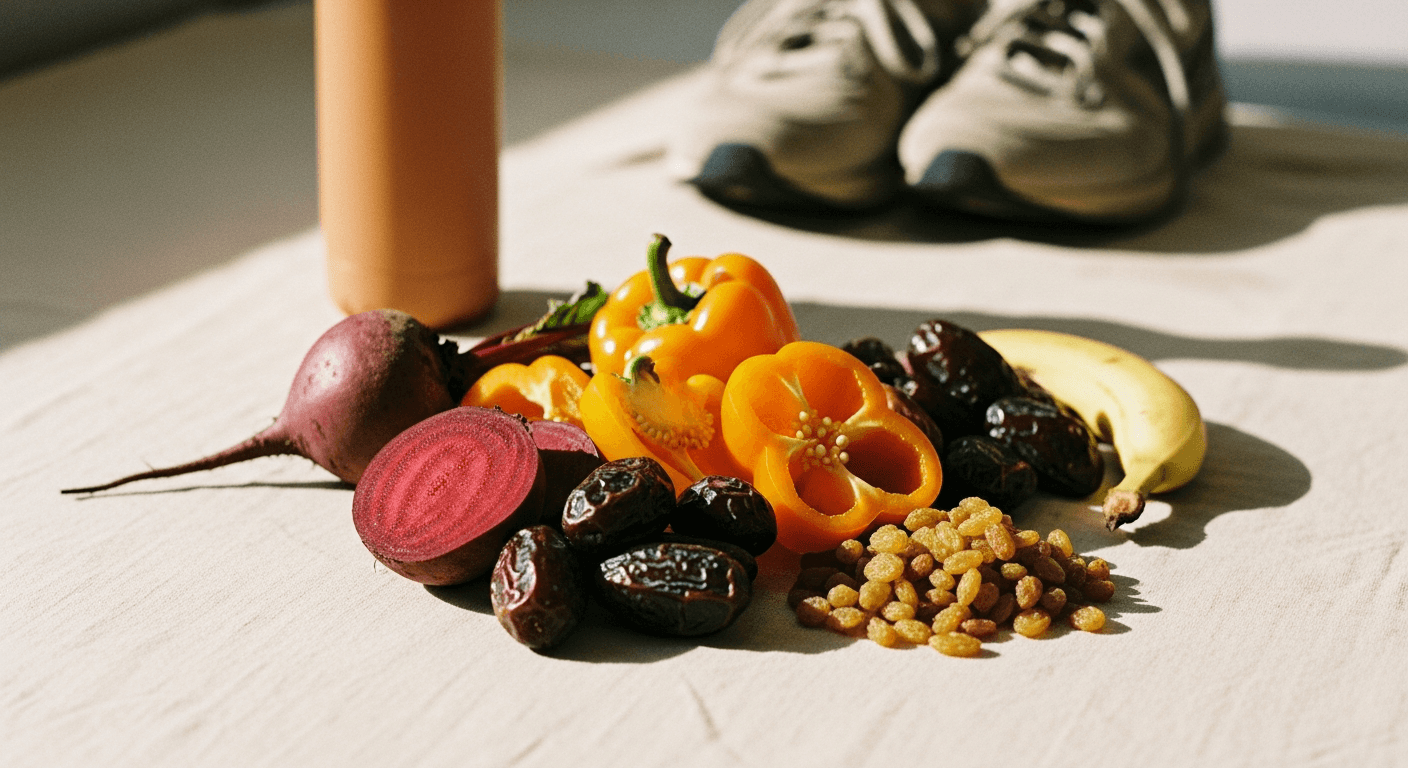
Sports nutrition conversations tend to orbit the same two planets: protein and carbohydrates. Grams per kilogram, timing windows, shake formulas. What gets left out of that conversation is the produce aisle, which is, frankly, one of the most practical and evidence-backed performance tools available to any athlete training at any level.
Whole fruits and vegetables deliver carbohydrates, yes. But they also bring fiber, antioxidants, nitrates, electrolytes, and phytonutrients that processed sports products simply don't replicate. And unlike a lot of supplements, the research on produce and athletic performance is remarkably consistent. This guide breaks it down by training phase so you can make concrete decisions, not just vague intentions.
Why Produce Gets Overlooked in Sports Nutrition
Part of the problem is marketing. Supplement culture dominates the conversation, and whole foods don't have advertising budgets. There's also a real misunderstanding about how whole-food carbohydrates behave differently from refined ones, and why that difference matters depending on when and how hard you're training.
If you've been relying on gels, chews, and powders as your primary fuel strategy, it's worth questioning whether the label is even telling you the full story. Research consistently shows inconsistencies between what's declared on supplement packaging and what's actually inside. Before spending money there, it makes sense to optimize what grows in the ground first. For more on this, Can You Actually Trust What's on Your Supplement Label? is a useful place to start.
Before Training: Fuel That Lasts
The goal in the pre-workout window, roughly one to three hours before exercise, is to top off muscle glycogen without overloading your gut. You want carbohydrates that digest steadily, not a spike and crash before you've finished your warm-up.
Bananas are a reliable staple here. They're moderate on the glycemic index, high in potassium, easy to digest, and cheap. A medium banana provides around 27 grams of carbohydrates and is one of the most studied fruits in exercise science contexts. It performs comparably to commercial sports drinks for moderate-intensity training, without the additives.
Legumes, including lentils, chickpeas, and black beans, are slower-digesting carb sources that work well for athletes who train in the late morning or evening and have time for a proper meal beforehand. Their fiber content slows glucose absorption, which stabilizes energy output over longer sessions. A small serving of lentils with roasted sweet potato two hours before a long run or strength session is a genuinely effective pre-workout meal.
Other strong pre-workout produce choices include:
- Oats with fruit (steel-cut oats with sliced strawberries or blueberries for added antioxidants)
- Sweet potatoes (baked or steamed, a slow-digesting carbohydrate with beta-carotene)
- Apples or pears (for shorter sessions under 45 minutes, the fiber is manageable and the fructose is accessible)
One thing to watch: high-fiber vegetables like raw broccoli, cabbage, or large salads right before training can trigger GI distress mid-session. Save those for other meals.
During Training: Fast Fuel Without the Gut Load
For sessions lasting under 60 minutes, you likely don't need to eat anything mid-workout if you've fueled well beforehand. But once you cross that threshold, particularly for endurance athletes, cyclists, or anyone doing long HIIT circuits, on-the-go carbohydrates become relevant.
This is where certain fruits shine. The key qualities you need during exercise are fast glucose availability, minimal fiber, and low fat. Dried fruits fit this profile well.
- Dates are one of the best natural mid-workout fuels available. Two Medjool dates provide roughly 36 grams of carbohydrates with simple sugars that absorb quickly. They're portable, require no refrigeration, and don't spike digestion the way high-fiber options do. Research comparing dates to commercial sports gels found comparable glycogen replenishment and performance in endurance contexts.
- Dried mango is high in glucose and fructose, which means your body can process them through separate absorption pathways simultaneously. This increases total carbohydrate uptake capacity, which matters during long sessions.
- Raisins are another underrated option. Studies on cyclists showed raisins performed equivalently to commercial chews for maintaining power output during prolonged moderate-intensity rides.
- Banana halves work well for athletes who tolerate them mid-exercise. They're slightly bulkier than dried fruit but still low in fat and manageable for most people.
Hydration is also a factor during training, and produce-based electrolytes only go so far in hot or humid conditions. For anyone training in summer heat, Electrolytes in the Heat: What You Actually Need This Summer covers the sodium and hydration side of the equation in more detail.
After Training: Recovery Is Where Produce Earns Its Reputation
The post-workout window is where vegetables, particularly antioxidant-dense ones, make their strongest case. Exercise generates reactive oxygen species as a byproduct of energy metabolism. This oxidative stress is a normal part of training adaptation, but when it's excessive or chronic, it slows muscle repair and increases soreness duration.
Antioxidant-rich produce directly counters this. The research is clear on a few standout options:
Beets and beet juice contain both nitrates and betalain pigments. Nitrates improve blood flow and oxygen delivery to working muscles, and betalains have demonstrated anti-inflammatory effects in post-exercise recovery studies. Drinking beet juice in the 24 to 48 hours following intense training has been associated with reduced muscle soreness and faster force recovery.
Dark leafy greens like spinach, kale, and Swiss chard are high in vitamin C, vitamin E, and magnesium. Magnesium is critical for muscle relaxation and sleep quality, and most athletes don't get enough from diet alone. Adding a large portion of cooked greens post-workout costs almost nothing and covers multiple recovery bases at once.
Berries, including blueberries, tart cherries, and blackberries, are probably the most studied produce category in exercise recovery research. Tart cherry juice specifically has strong evidence behind it for reducing inflammation markers and improving overnight recovery. One study found that athletes consuming tart cherry juice twice daily for four days around intense exercise reported significantly lower muscle soreness compared to a placebo group.
Pairing these with your post-workout protein source makes practical sense. A bowl of Greek yogurt with blueberries, a spinach smoothie with protein powder, or a grain bowl with roasted beets and a poached egg all deliver the protein-antioxidant combination your muscles need after hard effort.
Recovery isn't just nutritional, of course. Sleep plays an equally important role in how well your body rebuilds after training, and it's an area worth taking seriously. 5 Simple Recovery Habits That Actually Work covers the full picture, including sleep and stress management alongside nutrition.
Listening to Your Body Over Any Protocol
Timing frameworks are useful starting points. They're not prescriptions. Your digestion, training intensity, training time, and individual food tolerances will all shape what actually works for you.
Some athletes feel great eating a banana 30 minutes before training. Others need two hours between eating and exercise to feel settled. Neither response is wrong. It's data about your own system, and it's worth paying attention to rather than overriding with a rigid protocol you read somewhere.
The same applies post-workout. If you're not hungry immediately after training, forcing food in a narrow window isn't always necessary. Emerging research suggests the anabolic window is longer and more flexible than previously thought, particularly for recreational athletes who aren't training twice daily.
If you're consistently unsure about what your nutrition should look like relative to your specific goals and biomarkers, Personalized Nutrition: How to Actually Use Your Blood Work offers a practical framework for using lab data to make informed dietary decisions.
Seasonal and Budget-Friendly: Getting the Most From Produce
One of the strongest arguments for whole fruits and vegetables over supplements is cost. A bag of frozen spinach runs about $2 to $3. A bag of frozen blueberries costs around $5 to $7. A pound of dried dates is roughly $6 to $10 depending on variety and source. These are among the most nutrient-dense foods available at any price point.
Seasonal produce is generally higher in micronutrient density than out-of-season imports, which are often harvested early and ripened artificially. Buying what's in season locally, whether at a farmers market or in the seasonal section of a grocery store, typically means better nutritional value and lower cost simultaneously.
Frozen produce is a fully valid alternative. Freezing locks in nutrients at peak ripeness, and studies comparing fresh versus frozen vegetables consistently find comparable or near-equivalent vitamin content. For athletes on a budget, frozen spinach, frozen berries, and frozen edamame are practical staples that don't require any compromise on quality.
If you want to build better dietary habits more broadly without overhauling everything at once, Simple Diet Changes That Actually Move the Needle lays out incremental strategies that compound over time.
The Bottom Line
Fruits and vegetables aren't a soft alternative to "real" sports nutrition. They're evidence-backed, cost-effective, and appropriately timed produce can meaningfully improve energy, performance, and recovery at every phase of training. The specifics matter: slower carbs before, fast-digesting dried fruits during, and antioxidant-dense vegetables after. But consistency matters more than perfection, and starting with one change at each phase is enough to feel the difference.