
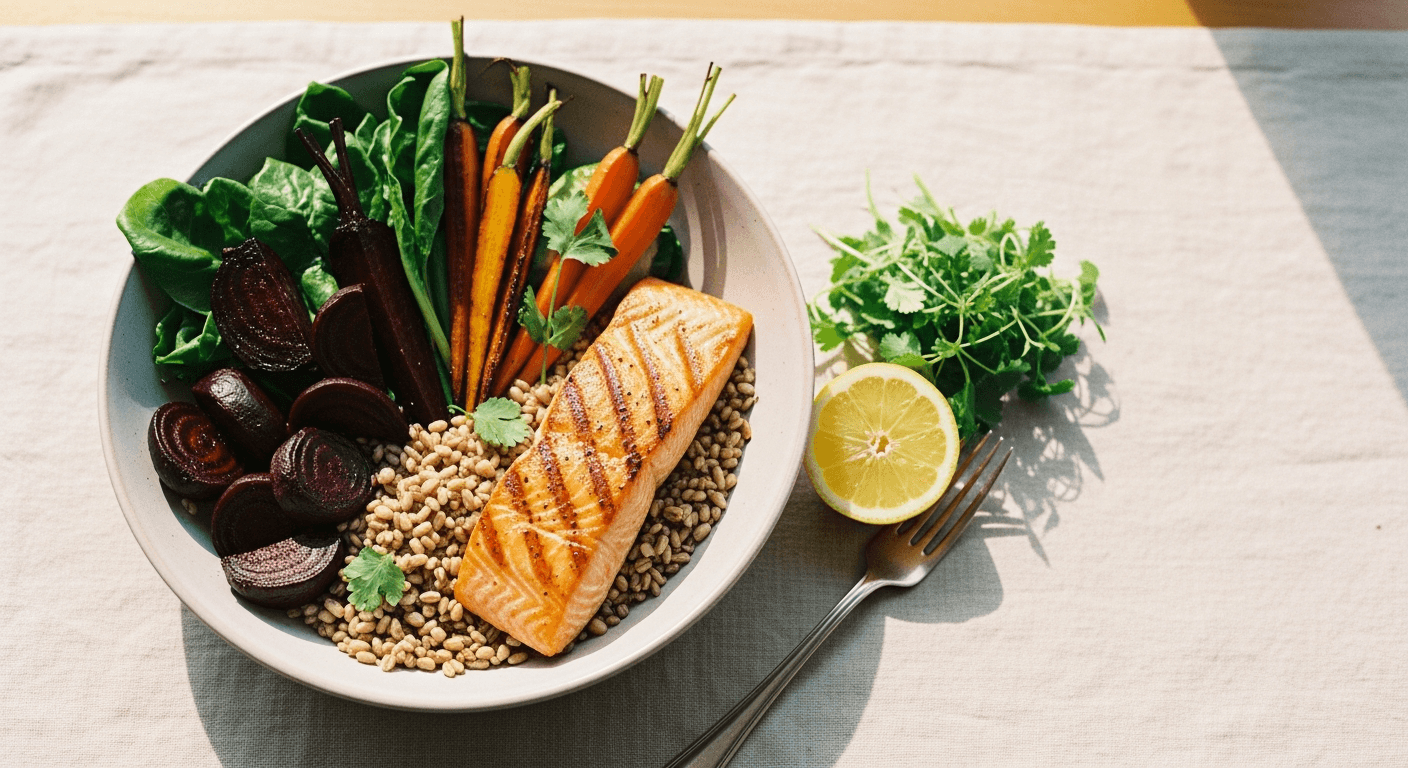
For the second year in a row, U.S. News and World Report has ranked the DASH diet as the top heart-healthy eating plan. That's not a coincidence, and it's not just marketing. The diet has decades of clinical research behind it, a clear mechanism for reducing cardiovascular risk, and enough flexibility that active adults don't have to choose between protecting their heart and fueling their training.
Here's what the ranking actually means, what the diet involves, and how you can make it work without leaving performance on the table.
What the U.S. News Ranking Actually Measures
Each year, U.S. News evaluates dozens of diets across multiple categories, including ease of compliance, nutritional completeness, safety, and evidence for specific health outcomes. The heart-healthy category carries particular weight because it draws directly on clinical trial data rather than observational trends or popular appeal.
DASH, which stands for Dietary Approaches to Stop Hypertension, took the top heart-healthy spot in both 2025 and 2026. The panel of nutrition and medical experts cited its consistent performance in reducing blood pressure, improving lipid profiles, and lowering markers associated with cardiovascular disease. That's a hard combination to beat.
Other well-known diets, including the Mediterranean diet and several plant-based frameworks, ranked highly overall but didn't match DASH's specific cardiovascular evidence base in the panel's assessment.
The Core Principles of DASH
DASH isn't built around restriction for restriction's sake. It's structured around food groups that research has consistently linked to better blood pressure and heart health.
- Vegetables and fruits: The foundation of the diet. Both provide potassium, magnesium, and fiber, nutrients that directly support healthy blood pressure regulation.
- Whole grains: Brown rice, oats, quinoa, and whole wheat bread replace refined carbohydrates. The fiber content helps manage cholesterol and blood sugar.
- Lean proteins: Poultry, fish, legumes, and low-fat dairy are preferred. Red meat is limited but not eliminated entirely.
- Nuts and seeds: In moderate quantities, these contribute healthy fats, magnesium, and plant-based protein.
- Low sodium: This is the most defining feature. The standard DASH target is 2,300 mg of sodium per day, with an enhanced version targeting 1,500 mg for those with elevated blood pressure.
Saturated fat, added sugars, and alcohol are all minimized. That's not extreme by most standards. For many people, the biggest adjustment is the sodium ceiling, given that the average American consumes closer to 3,400 mg per day.
Why It Keeps Winning on the Evidence
The DASH diet was developed in the 1990s through a series of controlled clinical trials funded by the National Institutes of Health. Those original trials showed meaningful reductions in systolic blood pressure within two weeks of starting the diet, even without weight loss or sodium restriction. That finding was significant because it demonstrated the diet's mechanism was about food composition, not just caloric reduction.
Since then, the evidence base has only grown. Meta-analyses consistently show DASH adherence is associated with lower rates of coronary heart disease, stroke, and heart failure. One large analysis found that people with high DASH adherence had a roughly 20 percent lower risk of cardiovascular events compared to low-adherence groups. These are numbers that hold up across different populations and study designs.
The nutrition lessons from April 2026 reinforced a consistent theme: diets that emphasize whole foods and reduce processed sodium tend to outperform more restrictive protocols when it comes to long-term cardiovascular outcomes. DASH fits that profile exactly.
It's also worth noting that DASH's benefits extend beyond blood pressure. Research links it to improved insulin sensitivity, reduced inflammation, and better lipid panels. For anyone tracking cardiovascular risk holistically, those secondary effects matter.
The One Area Where Active Adults Get Confused
If you train seriously, your first question about DASH is probably about protein and carbohydrates. The standard DASH framework was designed for a general adult population, not for someone running 40 miles a week or lifting five days out of seven. On paper, the protein targets can look low for performance purposes, and the carbohydrate distribution doesn't always account for training-day needs.
That's a real tension, but it's more solvable than it looks.
The new 2025-2030 dietary guidelines have shifted protein recommendations for active adults upward. As covered in why the new guidelines target 1.2 to 1.6 g/kg of protein, the evidence now supports higher protein intakes for muscle maintenance and adaptation, particularly for adults over 40. DASH doesn't prohibit this. It just doesn't prioritize it by default.
The fix isn't to abandon DASH principles. It's to scale within them.
How to Adapt DASH for Training Without Breaking the Framework
Active adults can meet both cardiovascular and performance nutrition goals by making targeted adjustments to portion structure rather than swapping out food categories entirely.
Increase lean protein volume, not variety. DASH already includes fish, poultry, legumes, and low-fat dairy. If you need 1.4 g/kg of protein daily, you don't need to add foods that fall outside the diet. You just need more of what's already on the list. Greek yogurt, canned salmon, chicken breast, and lentils are all DASH-compatible and protein-dense.
Treat carbohydrates as training-responsive. On high-output days, scaling up whole grain portions and adding fruit around workouts keeps you fueled without introducing processed carbohydrates. On rest days, those portions naturally come down. This approach aligns with what the evidence shows about fueling strategies for endurance and long-duration sports, where carbohydrate timing around sessions matters more than daily totals alone.
Watch sodium more carefully if you sweat heavily. This is where endurance athletes need to pay attention. Heavy sweating can deplete sodium, and the DASH ceiling of 1,500 to 2,300 mg may not account for significant sweat losses during long training blocks. In those cases, strategic sodium replenishment during and after long sessions is warranted. Don't interpret DASH as a blanket reason to go ultra-low on sodium when your training demands otherwise.
Lean into the gut health benefits. DASH is naturally high in fiber and diverse plant foods, which supports a healthy microbiome. That matters for athletes too. Research outlined in gut health and athletic performance shows that microbiome diversity affects energy metabolism, immune function, and recovery capacity. DASH's emphasis on vegetables, legumes, and whole grains supports all of that without any extra effort.
A Practical Day on DASH for an Active Adult
To make this concrete, here's what a DASH-aligned day might look like for someone training at a moderate-to-high level:
- Breakfast: Oatmeal with berries and a cup of Greek yogurt. Potassium, fiber, protein, and low sodium from scratch.
- Pre-workout snack: Banana with a small handful of unsalted almonds. Fast carbohydrate and healthy fat.
- Lunch: Grilled chicken over a large mixed green salad with quinoa, olive oil, and lemon. No added salt needed when the flavor comes from produce and acid.
- Post-workout: Low-fat chocolate milk or a smoothie with Greek yogurt and frozen fruit. Protein and carbohydrate recovery without processed ingredients.
- Dinner: Baked salmon with roasted sweet potato and steamed broccoli. Omega-3 fats, complex carbohydrates, and vegetables all in one plate.
- Evening snack: A small portion of unsalted nuts or a piece of fruit if hunger warrants it.
That day hits DASH's food group targets, stays well within the sodium ceiling if you're cooking from scratch, and delivers enough protein and carbohydrates for most training loads. Scaling up portion sizes on heavier training days is straightforward within this structure.
What DASH Doesn't Do
It's worth being clear about the diet's limitations. DASH wasn't designed for rapid weight loss, and it doesn't produce dramatic short-term results that trend well on social media. If you're looking for a 30-day transformation protocol, this isn't it.
It also requires more cooking and food preparation than many people are used to. Processed foods are typically high in sodium, so genuinely following DASH means you're preparing most of your meals yourself. That's a real commitment.
And while the cardiovascular evidence is strong, DASH alone isn't a complete approach to heart health. Sleep quality, stress management, and movement all contribute significantly. Research from Stanford on how AI analysis of sleep data can predict cardiovascular disease years in advance underscores how much cardiac risk sits outside the plate. DASH is a powerful tool. It's one part of a larger picture.
The Bottom Line
The DASH diet earned its second consecutive top heart-healthy ranking because the evidence behind it is durable. It's not built on a trend or a single mechanism. It's built on consistent findings across decades of clinical research showing that a diet centered on vegetables, fruits, whole grains, lean proteins, and controlled sodium measurably improves cardiovascular outcomes.
For active adults, the framework is more adaptable than it first appears. You don't need to choose between heart health and training performance. You need to understand which parts of DASH are negotiable for your activity level and which aren't. The food categories stay the same. The portion structure scales with what your body demands.
That's not a complicated message. It's just one that takes consistency to act on.