

It's been more than a year since Berkshire Partners first signaled it wanted out of CrossFit, and the exit still hasn't happened. The sale process launched in March 2025 has now outlasted the CEO who was supposed to guide the brand through it. Don Faul stepped down on March 6, 2026, after nearly four years at the helm, leaving CrossFit without permanent leadership as ownership negotiations drag on with no deal closed.
Key Takeaways
- The sale process launched in March 2025 has now outlasted the CEO who was supposed to guide the brand through it.
- Don Faul stepped down on March 6, 2026, after nearly four years at the helm, leaving CrossFit without permanent leadership as ownership negotiations drag on with no deal closed.
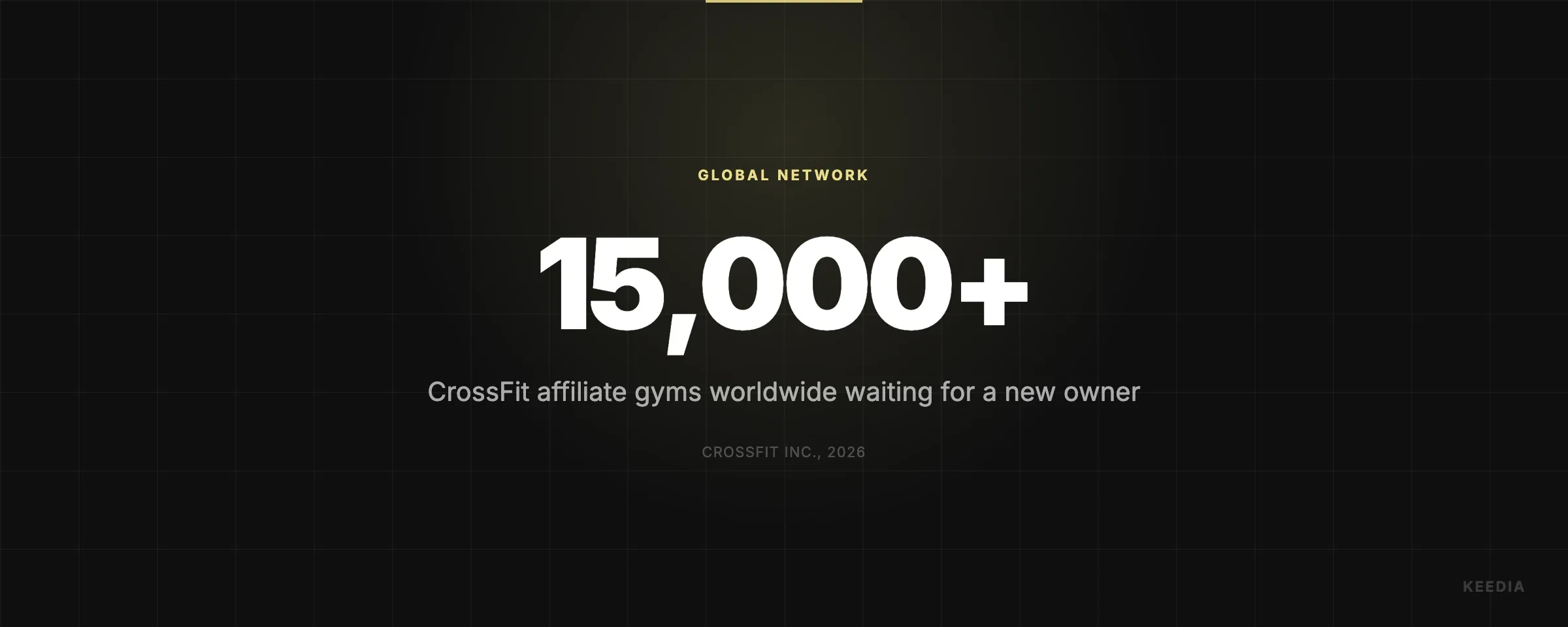
- For the 15,000-plus affiliate gym owners paying annual licensing fees and building their business calendars around CrossFit's infrastructure, the silence from the top is starting to cost real money.
For the 15,000-plus affiliate gym owners paying annual licensing fees and building their business calendars around CrossFit's infrastructure, the silence from the top is starting to cost real money.
A Year of Failed Timelines
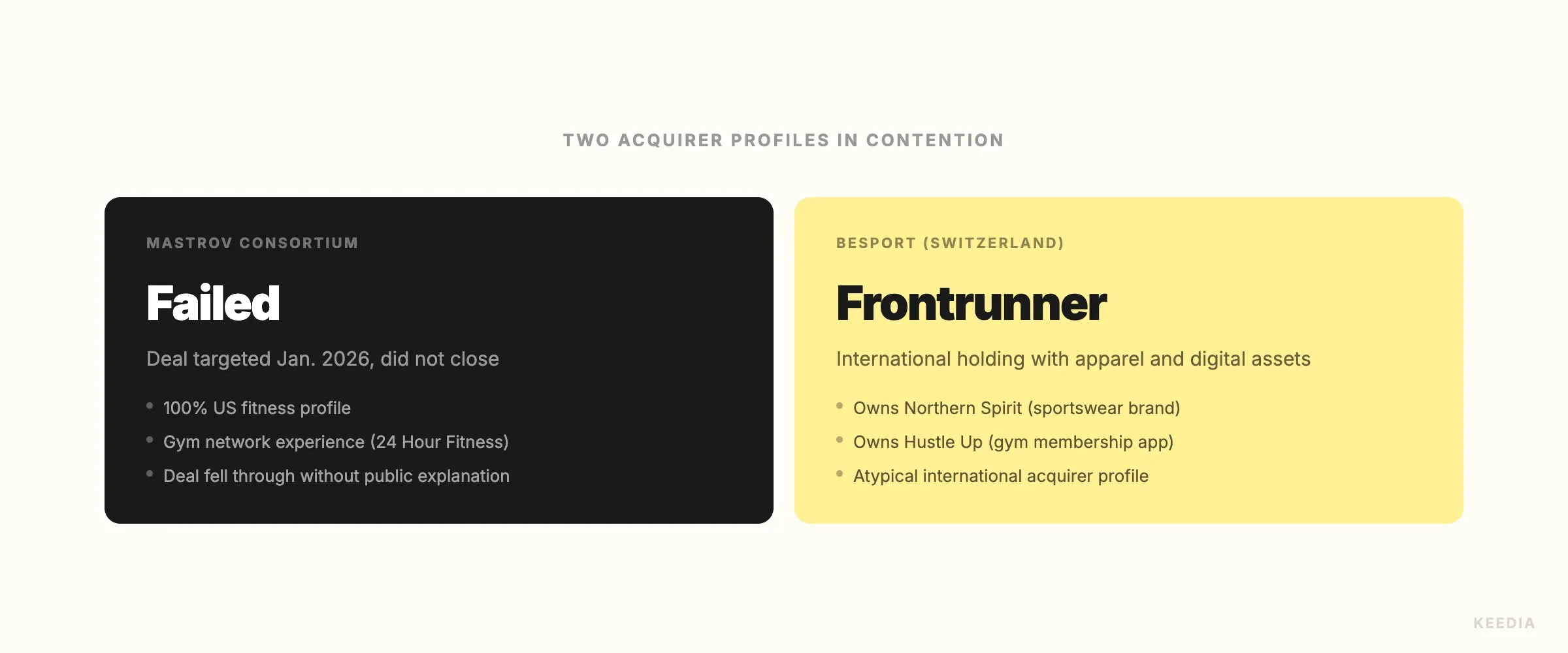
The first serious bid came from a consortium led by fitness entrepreneur Mark Mastrov and partner Wade Diebner. By late 2025, that group was widely reported as the frontrunner, with a target close date in January 2026. The deal didn't happen. No public explanation was offered, and no replacement buyer was immediately announced.
That kind of failed close isn't unusual in private equity fitness deals. Valuation gaps, financing conditions, and due diligence complications can stall transactions for months. But for a brand with CrossFit's cultural weight and operational dependencies, every month of uncertainty compounds the problem. Affiliates need to commit to equipment contracts, sponsorship agreements, and programming structures well in advance. When ownership is in flux, those decisions get delayed or made defensively.
Berkshire Partners acquired CrossFit in 2021 from founder Greg Glassman following a period of significant brand controversy. The investment thesis was straightforward: stabilize the brand, grow the affiliate network, and position it for a profitable exit. That exit has taken longer to execute than anyone publicly anticipated.
Who Is BeSport, and What Does It Want With CrossFit?
The current frontrunner is BeSport, a Swiss holding company that operates in two adjacent spaces: sportswear and digital fitness distribution. Its portfolio includes Northern Spirit, a functional sportswear brand with a strong presence in functional fitness communities, and Hustle Up, a gym membership and class-booking app with distribution across European and international markets.
An international acquirer with those specific assets changes the strategic picture considerably. If BeSport closes a deal, CrossFit wouldn't just be changing ownership. It would be folding into an ecosystem that already has apparel supply chains, digital member acquisition infrastructure, and brand positioning in exactly the demographic CrossFit serves.
That's either a smart vertical integration play or a culture risk, depending on how it's executed. CrossFit's identity has always been built around community authenticity, coach-led programming, and a skepticism of corporate fitness. Introducing a Swiss holding company with apparel and app assets could accelerate revenue streams, or it could read as exactly the kind of institutional drift that pushes loyal members toward independent boxes.
This dynamic isn't unique to CrossFit. As private equity continues to consolidate the fitness sector, brands that built on grassroots culture consistently face the same tension: the optimization strategies that generate returns in traditional gym chains don't transfer cleanly to community-first models.
What This Means for Affiliates Right Now
CrossFit's affiliate model is its most valuable and most fragile asset at the same time. Roughly 15,000 gym owners worldwide pay annual licensing fees that give them the right to use the CrossFit name, access programming resources, and participate in the affiliate network. In return, they build their entire business identity around the brand.
That works well when the brand is stable and actively supporting affiliate growth. It becomes a liability when the brand is in extended ownership limbo. Affiliates are currently making decisions for the 2026-27 season without knowing who their licensing partner will be, what the fee structure will look like, or whether the programming direction will shift under new ownership.
For gym operators trying to plan ahead, the uncertainty maps directly onto the retention challenge that's already reshaping the industry. The retention strategies that work in 2026 all depend on consistency. Consistent programming, consistent community identity, consistent brand signals. A brand in ownership transition sends the opposite message to members who are already evaluating their options.
The risk isn't that affiliates leave immediately. CrossFit's community loyalty is real and well-documented. The risk is that a prolonged transition creates an opening for competing functional fitness formats to position themselves as more stable, more independent, and more aligned with the culture that CrossFit originally built.
The Broader Private Equity Problem in Fitness
CrossFit's stalled sale is a clean case study in why fitness brands are complicated PE assets. The numbers look attractive on paper: recurring licensing revenue, an established global network, strong brand recognition, and a passionate member base. But the underlying economics depend on cultural trust that's difficult to quantify and easy to damage.
Private equity buyers typically apply playbooks that work in scalable, standardized businesses. Centralize operations, optimize unit economics, expand into adjacent revenue streams, exit at a multiple. CrossFit has resisted that playbook at every step. Its affiliate network is deliberately decentralized. Its programming philosophy is coach-driven. Its community culture actively rejects the glossy, low-friction experience that scales well in budget gym chains.
The fitness sector's broader consolidation is accelerating this tension. As the fitness club market in 2026 shows, large-scale operators are capturing more market share, but independent and community-driven formats continue to hold member loyalty at levels that outperform the corporate chains on retention metrics. That's a data point CrossFit's next owner will need to respect.
It's also worth noting how the digital side of fitness is shifting the calculus for any acquirer. BeSport's Hustle Up app suggests the company sees digital distribution as a core growth lever. But coaches and trainers are already operating in an increasingly sophisticated digital landscape. Hybrid coaching has become the default business model for independent trainers, and the tools they're building around are often not brand-affiliated platforms. An acquirer betting on app-driven engagement will need to offer something genuinely useful to both affiliates and their members, not just a new distribution layer.
What Comes Next
CrossFit is now searching for a new CEO while simultaneously navigating a sale process that has no confirmed close date. BeSport is the reported frontrunner, but until a deal is signed and announced, that status can change. The Mastrov consortium was in the same position six months ago.
For affiliates, the most practical posture right now is to continue operating as if the brand fundamentals won't change dramatically, while quietly stress-testing what their business looks like without CrossFit branding if that scenario ever became necessary. That's not disloyalty to the brand. That's basic risk management for a small business owner in an uncertain environment.
For the fitness industry, CrossFit's drawn-out sale is a reminder that brand equity built on community culture doesn't transfer cleanly through a transaction. Whoever closes this deal won't just be buying a licensing business. They'll be inheriting a relationship with 15,000 gym owners and hundreds of thousands of members who have strong opinions about what CrossFit is supposed to be.
Getting that right will matter far more than the purchase price.
Related articles
- Oura Acquires Doublepoint: The Smart Ring Now Wants to Control Your Devices With Gestures
- Weight Management Supplements: 17.9% CAGR, the Fastest-Growing Supplement Category
- Client acquisition: the 3 channels that still work