
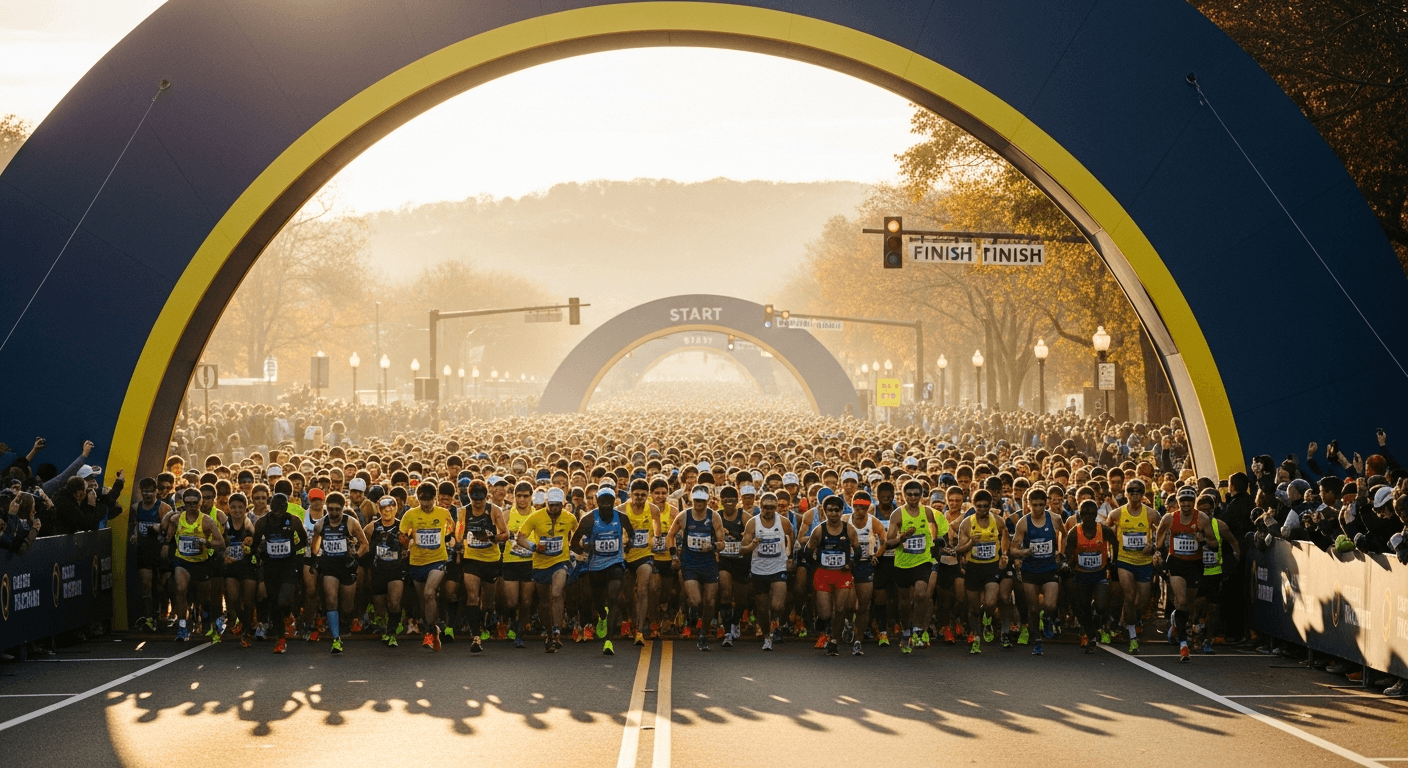
The morning of April 21, 2026 will feel different in Hopkinton. It always does. But this year, with a record field of 30,000 runners preparing to make the 26.2-mile journey to Boylston Street, the scale of the 130th Boston Marathon has shifted into territory the race has never seen before. If you're toeing the start line Monday, here's what you need to know before the gun goes off.
A Record Field for a Historic Edition
The Boston Athletic Association confirmed 30,000 registered runners for the 130th edition, making this the largest field in the race's history. For context, the 2023 and 2024 editions both hovered around 26,000 to 27,000 participants. The surge reflects broader growth in marathon participation globally, a trend well documented across major World Marathon Majors events in the past three years.
That scale creates genuine logistical challenges. Getting 30,000 bodies through a single start corridor in a reasonable window requires a fundamentally different approach to race morning. The BAA has responded with two significant structural changes that every runner in this year's field needs to understand before they leave their hotel.
If you haven't already reviewed the full logistics breakdown, the Boston Marathon 2026 race day guide covers everything from athlete village procedures to bag check cutoffs.
Six Waves Instead of Four: How the New Structure Works
The most consequential change this year is the move from four waves to six. The BAA restructured the start format specifically to accommodate the expanded field while maintaining manageable spacing on the course through Ashland, Framingham, and Natick in those critical opening miles.
Here's how the wave schedule breaks down on Monday:
- Wave 1: Wheelchair and handcycle divisions, 8:00 a.m.
- Wave 2: Elite women, 9:32 a.m.
- Wave 3: Elite men and Wave A qualifiers, 10:00 a.m.
- Wave 4: Waves B and C qualifiers, 10:25 a.m.
- Wave 5: Waves D and E qualifiers, 10:50 a.m.
- Wave 6: Wave F qualifiers and invitational runners, 11:15 a.m.
The gaps between waves have been extended from the previous 20-minute intervals to 25 minutes. That decision keeps density on the course manageable and reduces the bottlenecks that plagued the Newton hills section in past high-volume years.
For runners in Waves 4 through 6, this means a significantly longer wait in the athlete village. If you're in Wave 6, you won't cross the start line until mid-morning. Plan your nutrition and hydration strategy around that window. You'll want to be fueling actively in the athlete village, not just waiting.
For a deeper look at how the wave assignments were determined and what corral positioning means for your race strategy, Boston Marathon 2026's new six-wave start explained has the full breakdown of the qualification thresholds and placement logic.
The New Route from Hopkinton High School
The second major change is physical. The BAA has implemented a new route connecting Hopkinton High School to the official start line on Route 135. This adjustment was driven by the expanded field size. The previous pedestrian flow from the athlete village created dangerous crowding at the narrow choke points near Main Street during the pre-race window.
The revised route adds approximately 0.4 miles to the walk from the athlete village to the start corral. It runs along the outer perimeter of the school grounds before connecting to a designated runner pathway that feeds into the corrals from the north side, bypassing the congestion that previously built up near the town common.
Key points on the new route:
- Follow the blue route markers from the athlete village exit. Do not follow spectator or volunteer signage, which uses a separate color system this year.
- Budget an additional 12 to 15 minutes for the walk to your corral compared to previous years.
- The route is fully accessible. Wheelchair athletes and runners using mobility aids have a parallel pathway that connects to the accessible start zone without street crossings.
- There are three portable restroom stations along the new route. Use them. The corral area has significantly reduced facilities this year due to the rerouting of the access lane.
The BAA strongly recommends arriving at the athlete village no later than 90 minutes before your wave start. For Wave 6 runners, that still means being on the buses before 9:30 a.m.
Course Conditions and Weather Outlook
The April 21 forecast as of Friday shows partly cloudy skies, temperatures starting at 48°F at race start and rising to approximately 58°F by midday. Wind is projected from the west-southwest at 8 to 12 mph. That's a broadly favorable setup, particularly for later waves who benefit from cooler conditions in the opening half before temperatures climb toward the finish.
The course itself is in strong shape. Rain earlier in the week softened ground along the wooded stretches near Miles 16 and 17, but the road surface is reported fully dry. The repaved section of Commonwealth Avenue between Miles 24 and 25 in Newton, a project completed in late 2025, has eliminated the uneven surface that caused issues in recent editions.
One note for runners who have done Boston before: the Mile 17 to 21 segment through the Newton hills hasn't changed, but the larger field means you'll hit Heartbreak Hill with more company than in any previous edition. Pace discipline in Miles 15 and 16 matters more than ever this year.
Final Preparation: What to Prioritize Today and Tonight
Race morning execution is a product of the decisions you make in the 18 hours before the gun. Tonight is not the time to experiment with food or change your gear setup. Keep it simple.
On nutrition, if you've been following a structured plan leading into this race, your carbohydrate loading window should already be complete. For runners who want a science-based perspective on gut performance under race stress, the research connecting gut health and sports performance through the microbiome is worth understanding before you make choices about race-morning breakfast.
On sleep, the night before a marathon is rarely great. That's normal. The quality sleep that matters was the two nights before. If you're anxious about rest tonight, know that one disrupted night has minimal measurable impact on aerobic performance in well-trained athletes. What disrupts performance is poor sleep across the training block. That window has passed. You're fine.
On injury management, if something has been nagging in the final taper weeks, Monday is not the day to ignore it. Make sure your tape job, support gear, or any prescribed protocol is ready to go before you sleep tonight. How AI is changing injury recovery for runners in 2026 offers useful context on how athletes are now managing load and tissue stress leading into major events.
What Race Day Looks Like on the Ground
The BAA has expanded volunteer presence significantly for this edition. There will be over 9,000 volunteers on course, up from roughly 7,500 in 2024. Medical stations have been added at Miles 8, 13, and 18, in addition to the existing network. The expanded field means more demand on those resources. Don't hesitate to use them if you need to.
The spectator crowd this year is projected to exceed 500,000 along the course. The Wellesley Scream Tunnel at Mile 13 and the crowds through Cleveland Circle near Mile 22 will be as loud as they've ever been. If you've never run Boston before, those crowd walls genuinely change how your body feels. Bank the energy rather than spending it.
Crossing the finish line on Boylston Street on Monday afternoon, 130 years after the first edition of this race, will be a moment worth every cold morning, every long run, every training week that brought you here. The preparation is done. Trust it.
For runners already thinking about what comes next after Monday, the principles behind recovery-first training and smarter post-race rebuilding are worth keeping in mind as you plan the weeks ahead. The 2026 racing calendar is long, and how you treat your body after a marathon determines how quickly you get back to full capacity.
Good luck on Monday. Hopkinton is ready. Now it's your turn.