
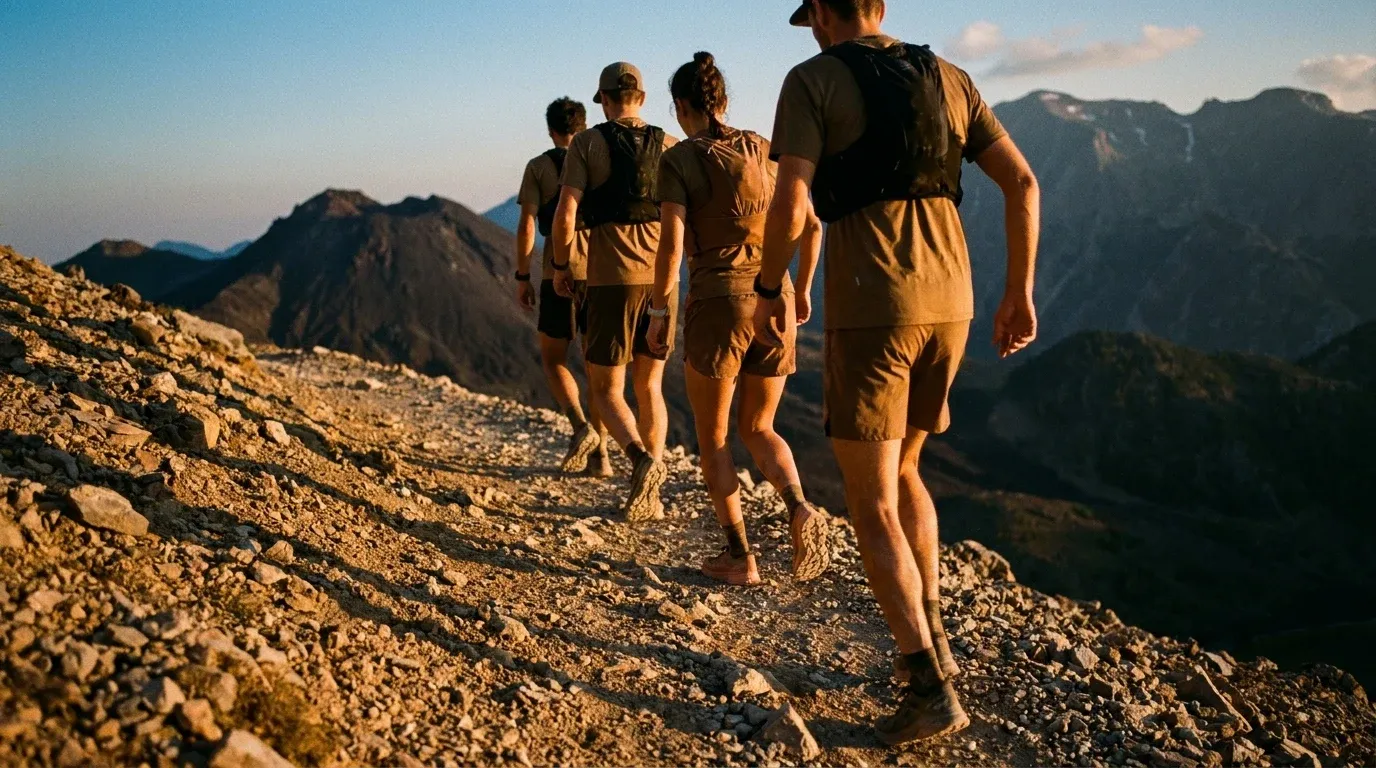
If you've been watching the UTMB World Series expand across the globe, you've probably noticed that some of its newest stops are quietly becoming its most compelling. Kaçkar by UTMB is one of them. For its second edition, held September 11–13, 2026, in Turkey's Rize province, nearly 2,000 runners from more than 60 countries lined up in the shadow of the Kaçkar Mountains. That's not a soft number for a second-year event. That's a statement.
What's happening in northeastern Turkey right now is worth paying attention to, whether you're a seasoned ultra runner looking for your next target or someone just starting to build toward longer mountain distances.
What Is Kaçkar by UTMB?
Kaçkar by UTMB is an official stop on the UTMB World Series calendar, giving it instant credibility and access to the global community of runners who use Running Stones to qualify for Chamonix. But the race itself sits in terrain that most Western runners have never considered. The Kaçkar Mountains, part of the Pontic range in Turkey's Black Sea region, are rugged, remote, and genuinely demanding.
The 2026 edition featured four race distances, ranging from accessible mountain trail formats to full ultra distances that tested even experienced competitors. Elevations are serious, weather is unpredictable in mid-September, and the terrain doesn't reward complacency. If you're preparing for a race like this, getting your pacing and course-reading skills right matters more than raw fitness. Closing the gap between your trail ambitions and your actual readiness is exactly the kind of work that separates finishers from DNFs in mountain ultras.
The Numbers That Matter
Nearly 2,000 registered runners. More than 60 countries represented. Those figures place Kaçkar's second edition ahead of where many established races were at the same point in their history. For context, building an international field of that size typically takes five to seven years of consistent delivery. Kaçkar is doing it in two.
The distribution across nationalities tells you something about how the UTMB brand travels. Runners from Europe, North America, Asia, and the Middle East all showed up in Rize. That kind of geographic spread doesn't happen by accident. It happens when the race product is strong enough to justify the travel cost and logistical effort of getting to a remote part of Turkey.
Organizers expanded participant capacity for year two, a deliberate move that signals confidence rather than caution. The decision to scale up early, rather than hold steady and play it safe, reflects a long-term vision for what this event can become.
Confirmed Through 2030: Why That Matters for You
One of the most significant announcements around the 2026 edition is that Kaçkar by UTMB is now confirmed to remain in Rize through 2030. In the world of trail racing, that kind of institutional stability is rarer than you'd think. Events move, change format, lose partnerships, or quietly disappear. A five-year commitment from both the local government and UTMB gives Kaçkar something most races at this stage don't have: a guaranteed runway.
For runners, that stability is directly useful. It means you can plan a two- or three-year training arc with Kaçkar as the goal. It means the local infrastructure will keep improving. It means sponsors, local businesses, and sports tourism operators in Rize have reason to invest rather than wait and see.
It also means the race community will compound. The runners who finished in 2025 will return. They'll bring friends. Word-of-mouth from a genuinely good mountain experience is still the most effective marketing in this sport.
Sports Tourism as a Mission, Not a Side Effect
Rize province is not a traditional sports tourism destination. That's exactly the point. Organizers have been explicit that Kaçkar by UTMB is designed partly as an economic development lever for the region, using elite sport as a vehicle to bring international visitors into a part of Turkey that rarely sees them.
This model works when the race product is strong enough to stand on its own. Runners don't travel halfway around the world just to support a region's tourism economy. They go because the course is worth it, the organization is reliable, and the experience is memorable. The sports tourism mission only succeeds if the race itself delivers.
By all accounts from the 2025 debut and the 2026 expansion, it's delivering. The Kaçkar Mountains provide exactly the kind of dramatic, photogenic, technically demanding terrain that trail runners seek out. The local culture, food, and landscape of Turkey's Black Sea coast add a layer of experience that a runner simply cannot get at a Western European race.
Kaçkar as a UTMB-Series Alternative Worth Considering
Here's the honest appeal of Kaçkar for a certain type of runner. If you're chasing Running Stones for Chamonix qualification but don't want to navigate the massive crowds and lottery pressure of races like CCC or OCC, Kaçkar offers a real alternative. You get official UTMB World Series status, competitive international fields, qualifying stones, and mountain terrain that demands the same respect as the Alps. But you're not competing against tens of thousands of applicants for a start line.
That access window won't stay open indefinitely. As the race grows toward its 2030 horizon, field sizes will increase and registration will become more competitive. The runners who identify Kaçkar as a target in the next two to three years are getting in during the growth phase, which is usually when the race experience is at its most personal and the community is at its most welcoming.
If Kaçkar is on your radar for 2027 or 2028, now is the time to start building the training base that earns you a strong finish rather than just a start line. A structured, week-by-week build toward a fall race is the kind of preparation that makes September mountain racing feel manageable rather than overwhelming.
Racing in September: What the Conditions Demand
The September window in the Kaçkar Mountains is not forgiving by default. Temperatures can shift dramatically between valley starts and high-altitude sections. Afternoon weather in the Pontic range can deteriorate quickly, and mid-September sits in a shoulder season where conditions are genuinely variable.
Hydration strategy in that kind of environment is easy to get wrong. Cooler mountain air creates a false sense of security. Runners underestimate fluid loss because they're not sweating visibly the way they would in summer heat. The hydration mistakes that sideline athletes in fall races are exactly the errors that show up in mountain events like Kaçkar, where aid station spacing and altitude compound the problem.
Nutrition across multi-hour efforts in technical terrain is equally demanding. Female athletes in particular are often underprepared in this area. Research consistently shows that a significant proportion of female endurance athletes are operating with low energy availability, which directly affects performance, recovery, and injury risk in events that require sustained output over many hours.
Getting the fueling right across a full ultra distance in mountain terrain is a skill set, not an afterthought. The runners who approach Kaçkar's longer distances with a practiced nutrition plan will have a measurable advantage over those who improvise on course.
What to Watch for in 2027
With the 2026 edition now in the books and a five-year confirmation locked in, the question for Kaçkar becomes how quickly it matures into a marquee event. A few indicators will tell you a lot.
- Field size: If registration fills faster in 2027 than in 2026, the growth trajectory is intact.
- Elite presence: Top-tier trail runners choosing Kaçkar over other September options will signal that the prize structure and course profile are becoming genuinely competitive.
- Infrastructure improvements: Better access to Rize, expanded accommodation options, and improved course marking and aid station quality are all markers of a race that's reinvesting in its product.
- Community depth: A race that builds a loyal returning runner community alongside new international entrants is one that compounds in value year over year.
None of those things are guaranteed. But the foundation laid by two successful editions and a long-term commitment from both Rize province and UTMB gives Kaçkar a stronger starting position than most events at this stage of development.
The Case for Going
Trail running is a sport built on the search for terrain that earns your attention. The Kaçkar Mountains do that. They're not famous the way the Alps or Dolomites are famous. They don't carry the cultural weight of Western European ultra circuits. But they're real mountains, with real altitude, real technical demands, and a landscape that most international runners have never seen.
Kaçkar by UTMB is giving you a reason to go. An official race format, a confirmed multi-year calendar, a growing international field, and a region that's investing in the experience around the event. That combination is harder to find than the crowded race calendar might suggest.
If you're building your race calendar for 2027 or beyond, Turkey's mountains deserve a serious look.