
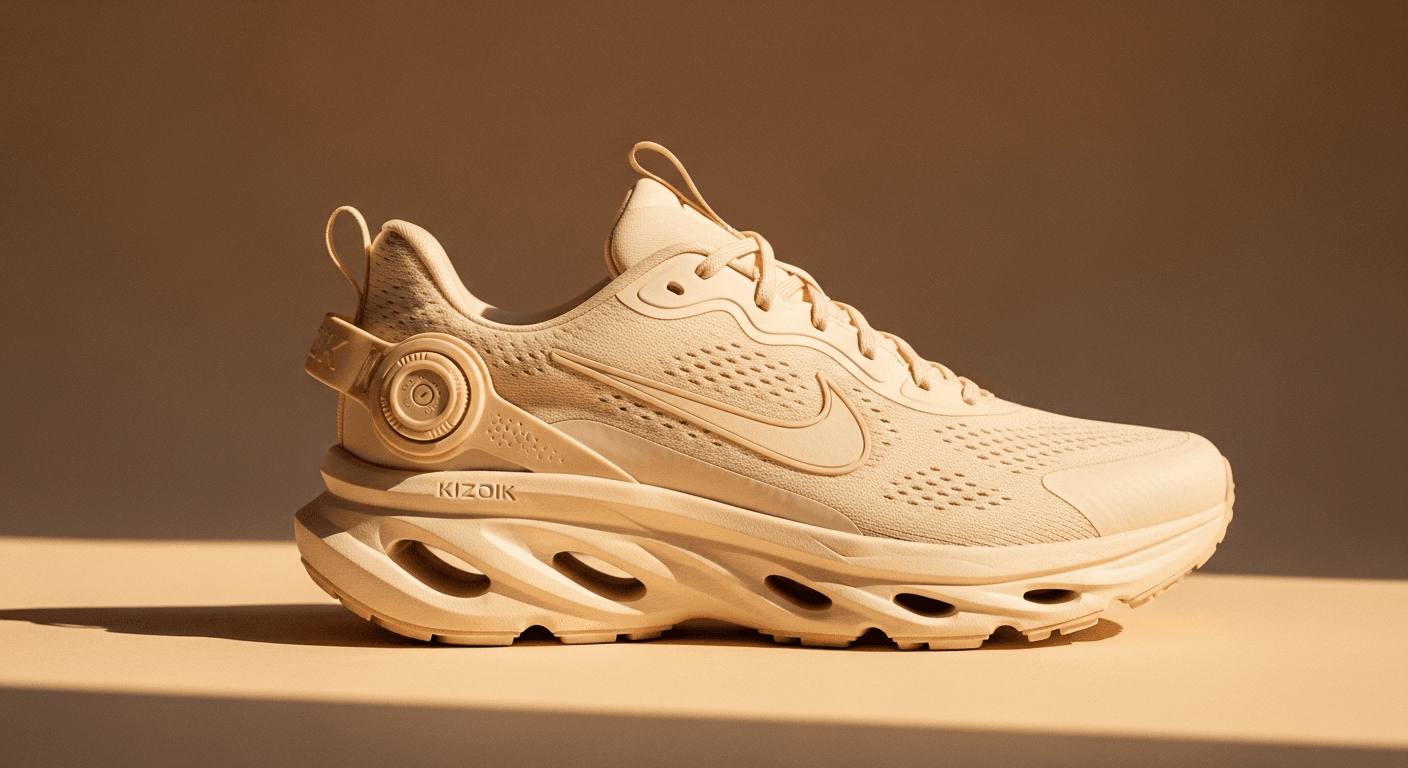
Kizik built its reputation on a simple premise: you shouldn't need your hands to put on your shoes. That idea earned the brand a loyal following among older adults, people with mobility challenges, and anyone who's ever fumbled with laces while running late. Now, on April 17, 2026, Kizik is taking that premise somewhere it's never been tested before: the performance running market.
The Freedom Run is Kizik's first hands-free running shoe designed explicitly for athletic performance. It's not a lifestyle sneaker with a foam upgrade. It's a direct entry into a category dominated by Brooks, ASICS, Saucony, and Hoka. And it arrives with technology built from the ground up to prove that convenience and performance don't have to be a trade-off.
What the Freedom Run Actually Is
At its core, the Freedom Run combines two distinct systems. The first is Kizik's patented step-in technology, the same collapsible heel mechanism found across its casual lineup. You step in, the heel snaps into place, and the shoe holds. No bending, no lace-tightening, no hands required. The mechanism has been re-engineered here to handle the lateral forces, heel strike patterns, and repetitive flexion demands of actual running.
The second system is VivaFoam, a proprietary midsole compound developed specifically for the Freedom Run. Kizik hasn't released detailed density or energy-return data yet, but the brand describes VivaFoam as designed to balance cushioning with propulsive energy return across a range of paces. That positions it to compete with foam technologies like ASICS' FF Blast+ or Brooks' DNA Loft v3, which retail in shoes priced between $130 and $180.
The Freedom Run is priced at $155, landing squarely in the mid-to-premium performance running segment. That's a deliberate signal. Kizik isn't positioning this as a budget convenience play. It's asking you to take the shoe seriously as a training tool.
The Step-In Mechanism Under Running Conditions
The obvious question any runner will ask is whether the heel hold actually works at speed. Traditional running shoes rely on laces, heel counters, and sock-liner friction to keep the foot locked in. The Freedom Run replaces the lacing ritual with its step-in collar system, but it still needs to deliver the same containment once you're moving.
Kizik's engineering team has reportedly tested the mechanism through extended run cycles to address heel slippage and structural fatigue. The collar uses a layered compression design that springs back after each step-in, reportedly rated for thousands of cycles without degraded performance. For most recreational runners logging 20 to 40 miles per week, that durability window should cover a normal shoe lifespan before midsole compression becomes the limiting factor anyway.
That said, independent long-term testing data isn't available at launch. Early reviews from press preview runs have been cautiously positive, noting that the heel feel is more secure than expected, but wider community feedback across different foot shapes, gait patterns, and terrain types will be the real test over the months ahead.
Who This Shoe Is Actually For
The Freedom Run isn't trying to serve elite marathoners chasing sub-3 finishing times. Its primary audience is considerably broader, and that's a strategic choice, not a limitation.
Runners with arthritis, limited hand dexterity, or conditions like Parkinson's disease have long faced a practical barrier with traditional laced footwear. Adaptive athletes and older runners who want to maintain an active lifestyle without the daily hassle of managing laces represent an underserved segment of the running market. Industry data suggests that adults over 55 now account for a growing share of recreational running participation, particularly in formats like 5Ks, charity runs, and low-impact trail events.
Beyond accessibility, the Freedom Run also targets a second audience: time-pressed, convenience-oriented runners who train before work, stack their runs with other sessions, or simply want to reduce friction in their daily routine. If you're following a structured plan like those used in HYROX beginner training programs, where transitions between activities matter, a genuinely fast step-in shoe has real practical value.
Post-run recovery transitions are part of the same equation. Runners who prioritize recovery-first training methods know that what happens immediately after a run, including getting out of shoes quickly and moving through a cooldown routine, contributes to overall training quality. A shoe you can slip off without sitting down fits that workflow.
A New Category Play in Performance Footwear
The Freedom Run represents something larger than a single product launch. It's an argument that accessibility-first design belongs in performance footwear, not just lifestyle or orthopedic categories.
The running shoe industry has historically treated performance and accessibility as separate lanes. Performance brands optimize for biomechanical efficiency, weight, and energy return. Adaptive or accessibility-focused footwear tends to sacrifice some of those qualities in exchange for ease of use. Kizik is explicitly challenging that separation with the Freedom Run, and the timing matters.
Running is growing in reach and diversity. Trail running participation data shows consistent year-over-year growth across age groups and fitness backgrounds. Road running events continue to attract first-time participants who aren't lifelong athletes. These runners want footwear that meets them where they are, not just where competitive performance standards dictate.
There's also a broader shift happening in how performance brands think about inclusive design. The argument that building for edge cases, people with disabilities, older adults, or those with limited mobility, produces better products for everyone has gained traction across industries. The Freedom Run is one of the clearest examples of that principle being applied to athletic footwear at a mainstream price point.
How VivaFoam Fits Into the Midsole Race
Proprietary foam technology has become the central battleground in running shoe development over the past several years. Every major brand now has its own compound with a branded name and a set of performance claims. Kizik entering this space with VivaFoam is a necessary step if the Freedom Run is going to be evaluated as a performance product rather than a novelty.
Without independent lab testing data, it's too early to rank VivaFoam against established compounds. What's notable is that Kizik invested in developing a proprietary material rather than sourcing a generic EVA or off-the-shelf foam blend. That decision suggests long-term ambition in the performance category, not a one-off product experiment.
Runners curious about how foam performance interacts with overall training load, particularly how AI tools are now helping runners manage injury risk and recovery based on shoe wear patterns and training stress, will want to pay attention to how VivaFoam holds up over time. Midsole compression is one of the most consistent predictors of when a running shoe stops providing adequate protection.
What the Launch Tells the Industry
Kizik's move into performance running will be watched carefully by larger brands. If the Freedom Run finds a meaningful audience, it validates a market segment that the major players have largely ignored. It also introduces competitive pressure to consider hands-free or reduced-friction entry systems in performance contexts.
Nike and Adidas have both experimented with adaptive lacing systems, but those technologies have remained premium, complex, and largely inaccessible at mid-range price points. Kizik's step-in mechanism is mechanically simpler, which makes it more durable and easier to manufacture at scale. That's a meaningful structural advantage if the company decides to expand the Freedom Run into additional categories like trail running or track workouts.
For now, the Freedom Run stands as a credible first attempt to bridge two worlds that the footwear industry has kept apart. Whether it succeeds as a performance product will depend on real-world durability, foam performance across mileage, and whether the running community adopts it beyond its core accessibility audience. Those answers will come over the next several months as runners log miles and submit reviews.
What's already clear is that Kizik has made a serious bet. The Freedom Run isn't a limited-edition collaboration or a marketing campaign dressed up as a product. It's a $155 performance shoe built on proprietary technology, priced to compete, and launched with the explicit goal of redefining what performance footwear has to look like. That's worth watching, whether you're a runner who needs hands-free access or one who simply wants to know if the industry's next design shift is already on the starting line.