
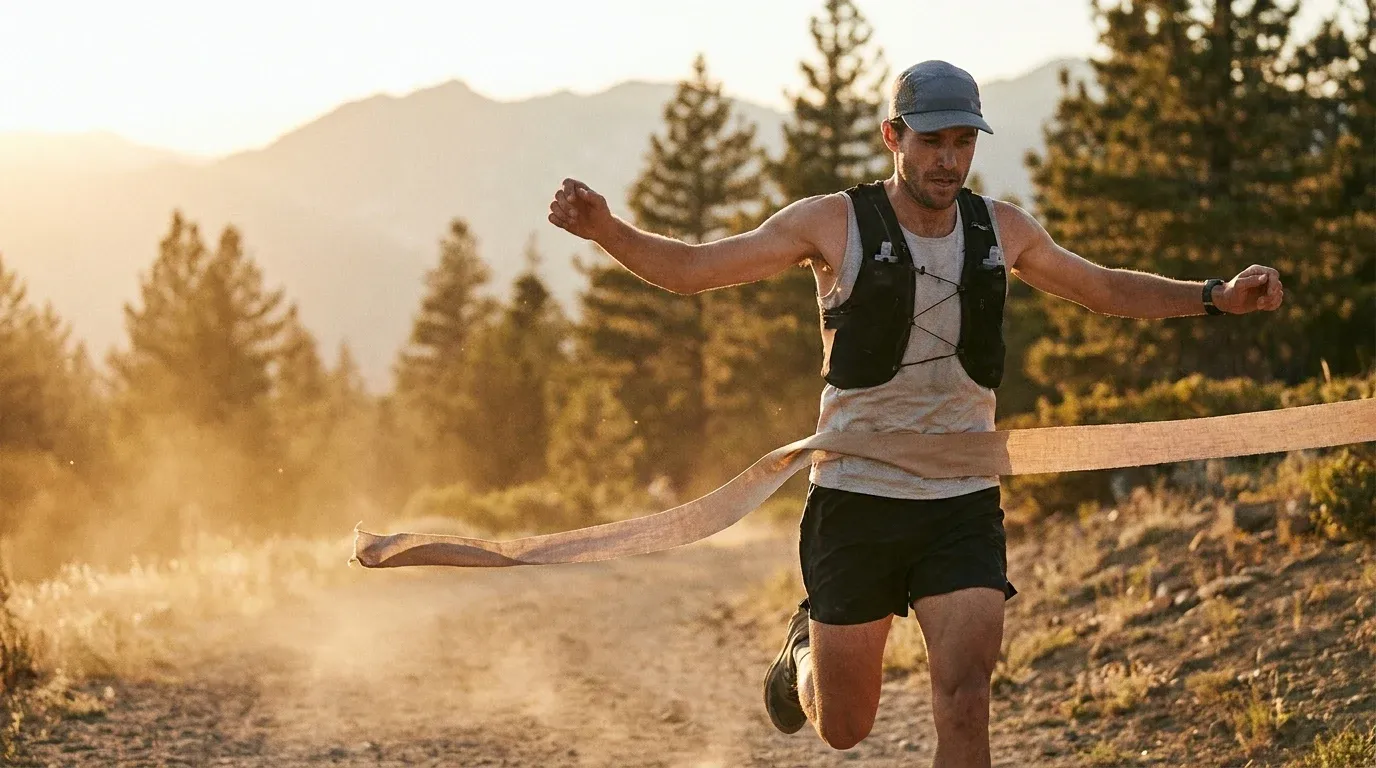
Some race results feel like a footnote. Others feel like a page turning. What happened at the Rollercoaster 21 in September 2026 was firmly the latter. Two athletes who had spent the better part of two seasons hovering just outside the top step finally broke through, and the trail running world took notice.
Antoine Dentis and Lina Nilsson claimed their first Trail Running World Cup victories at one of the circuit's most technically demanding fixtures. They didn't just win. They won convincingly, against deep international fields, on a course that punishes any weakness in your fitness or your head.
What Is Rollercoaster 21 and Why Does It Matter
The Rollercoaster 21 is a 21-kilometer trail race known for its relentless elevation changes. The name isn't decorative. The course climbs and drops repeatedly across its distance, demanding athletes who can shift gears quickly between steep ascents and technical descents. It's the kind of race that separates runners who train on trails from runners who truly race them.
As a fixture on the ITRA and World Athletics trail running circuit, Rollercoaster 21 carries genuine ranking points and attracts elite fields from across Europe, North America, and the Asia-Pacific region. A win here doesn't just look good on a resume. It moves you up the global rankings in a meaningful way and signals your readiness to compete at the very top of the sport.
Trail running's rise as a structured, points-based global circuit has accelerated sharply. Running's biggest participation surge in a decade has brought new athletes, new sponsorship, and more eyes on events that once flew under the radar. Rollercoaster 21 is a direct beneficiary of that momentum, drawing fields this year that would not have looked out of place at a major road race.
Dentis Takes the Men's Race
Antoine Dentis has been one of trail running's most watched prospects for the past 18 months. He'd collected a handful of World Cup top-ten finishes and one podium appearance before September, enough to confirm his talent but not quite enough to silence the "almost" label that tends to follow athletes in that position.
At Rollercoaster 21, he ran a different kind of race. Dentis moved into the lead group early and held his position through the mid-race climbs where many of his rivals typically put time into him. On the final descent, where technical confidence matters as much as leg strength, he opened up and didn't look back.
His finishing time set a new course record, which adds another layer to the result. Winning is one thing. Winning while rewriting the benchmark on a course this demanding signals that Dentis isn't just peaking for one race. He's operating at a level that could sustain results across the remainder of the season and into 2027.
Dentis has spoken publicly about his approach to nutrition during training blocks, particularly around fueling for back-to-back hard days. For athletes curious about how elite trail runners think about this side of performance, understanding the timing and composition of meals around training is increasingly central to how professionals at his level are building their programs.
Nilsson Claims the Women's Title
Lina Nilsson's victory in the women's race was, if anything, even more emphatic. She led from the second major climb and extended her advantage progressively through the back half of the course. By the time she crossed the finish line, she had put nearly three minutes into the second-place finisher, a margin that tells you something about the quality of her run.
Nilsson has been one of those athletes whose training performances and local race results hinted at World Cup potential long before she could convert it at the highest level. There's a pattern here worth recognizing. Athletes who compete frequently at well-run local and regional events often arrive at international races with more race sharpness than those who wait for big moments. The culture built around local running events plays a genuine role in developing the competitive instincts that show up when the stakes are highest.
Nilsson's performance also fits into a broader pattern that's reshaping trail and ultra-endurance running. Women across the sport are not just competing with men for attention. They're producing results that are redefining expectations about what's possible at the elite level. Women are quietly rewriting the standards of ultra-endurance running, and Nilsson's Rollercoaster 21 win is one more data point in that argument.
A New Generation Knocking on the Door
What makes the September 2026 results significant isn't just that Dentis and Nilsson won. It's the context around those wins. Both athletes are in their mid-twenties. Both have been consistent enough on the circuit to accumulate ranking points without yet claiming the headline results that put a name on the map for a general audience. That changes now.
Trail running at the World Cup level has been dominated for years by a relatively small group of established names. That's not unusual in endurance sports, where experience and accumulated training years compound into a significant competitive advantage. But circuits eventually turn over, and the signs of that transition have been building across the 2026 season.
Multiple race results this year have featured younger athletes either winning or finishing within seconds of the established elite. The young runner surge that's visible on road racing circuits is producing a similar effect in trail. Young runners flooding back to road races are bringing with them a training culture that translates naturally to the demands of technical trail events.
This generation also tends to approach strength and conditioning with more structure than earlier cohorts. Cross-training formats, hybrid fitness events, and more sophisticated periodization are all part of the toolkit. That well-rounded base often pays dividends in technical trail races, where upper body strength, hip stability, and core control matter more than they do on a flat road course.
What the Results Mean for the Remainder of the Season
Heading into the final quarter of the 2026 World Cup circuit, both Dentis and Nilsson now have the kind of result that changes how a season looks on paper and how rivals approach racing against them. A first win tends to unlock something psychologically, too. Athletes who've spent years being competitive without winning often perform differently once that barrier is gone.
The established names on the circuit won't hand over ground easily. Several of the top-ranked men and women were not at Rollercoaster 21 in full fitness, and some will point to that context when assessing the result. That's fair. But it doesn't diminish what Dentis and Nilsson actually did on the day. You still have to run the course, and they ran it faster than everyone else.
The broader question for the sport is whether these performances represent a genuine shift in the competitive landscape or a pair of one-off results that the established order will correct at the next major race. The history of endurance sports suggests that first wins frequently precede sustained runs of success. Athletes who win at this level rarely do it by accident.
What Trail Running's Growth Means for You
If you're someone who follows the World Cup circuit or aspires to race trail events at any level, September 2026 is a useful moment to take stock. The sport is growing, the competition is deepening, and the standard at the front of the field is rising every season.
For recreational trail runners, results like these serve as a reminder of what's possible when training is systematic and progression is patient. Dentis and Nilsson didn't arrive at their wins overnight. They built to them over years of consistent racing and deliberate preparation. That's a model that scales down to any athlete's level.
One area where trail runners across the experience spectrum continue to leave performance on the table is nutrition. Many athletes still carry misconceptions about protein needs, recovery fueling, and race-day carbohydrate strategy. If you want to understand where conventional wisdom tends to go wrong, the protein myths most athletes still believe in 2026 is worth working through before your next training block.
Dentis and Nilsson have served notice on the rest of the World Cup field. The trail running circuit has two new names to prepare for, and the sport is better for it.