
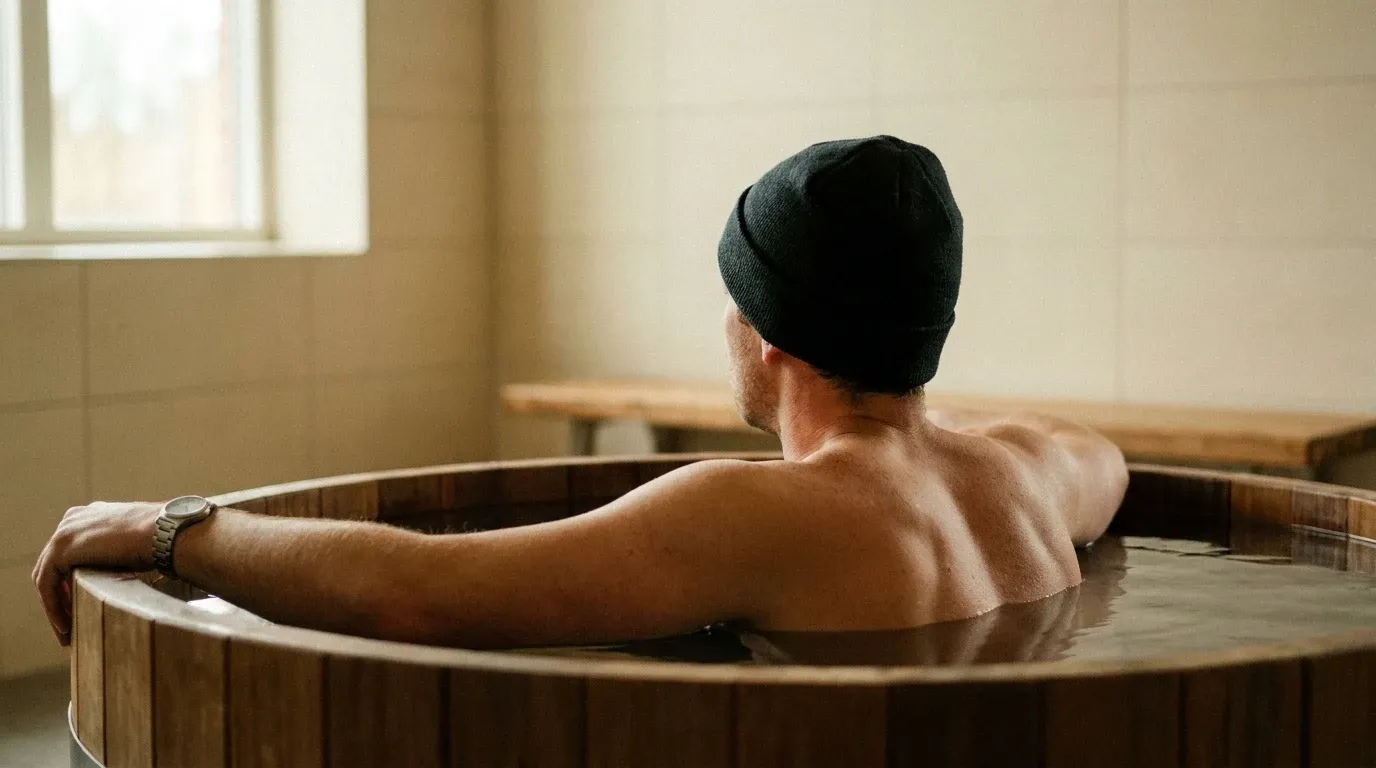
Recovery has become a booming industry. Ice baths, compression sleeves, massage guns, and stacked supplement protocols are now standard fixtures in gym culture. Athletes at every level treat these tools as essential. But a growing body of research suggests that some of the most popular recovery interventions are not only oversold. They may actively work against the results you're training for.
That's not a fringe opinion. It's a conclusion increasingly supported by exercise scientists studying how the body adapts to physical stress. The problem isn't that these tools don't do anything. The problem is that some of what they do is precisely what you don't want.
Recovery Has Become an Industry First, a Science Second
Walk into any gym or scroll through any fitness feed and you'll find recovery marketed as aggressively as training itself. Cold plunge tubs now appear in suburban wellness centers. Compression gear is sold in airport terminals. The global sports recovery market was valued at over $18 billion in 2023 and continues to grow rapidly.
The commercial expansion has outpaced the science. Many products are built on plausible mechanisms. Cold reduces inflammation. Compression reduces swelling. Certain supplements influence cellular repair. These mechanisms are real. But real mechanisms don't automatically produce meaningful training benefits. And in several cases, researchers have found they can produce meaningful training drawbacks.
If you're evaluating what's worth your time and money in this space, a closer look at what high-tech wellness centers actually offer versus what you can skip is a useful starting point before committing to anything.
The Ice Bath Problem: Cooling Down the Adaptation
Cold water immersion is probably the most discussed recovery tool in sports science right now. And not for flattering reasons. Studies have consistently shown that ice baths reduce delayed onset muscle soreness and perceived fatigue. That part is true. The complication is what else they reduce.
Muscle soreness after a hard session isn't just an inconvenience. It's a signal. The inflammatory response that makes you stiff and sore the next morning is part of the same biological cascade that triggers muscle protein synthesis and structural adaptation. When you blunt inflammation repeatedly with cold immersion, you're not just reducing soreness. You're suppressing the very process that makes training productive.
Research published in leading sports physiology journals has shown that regular cold water immersion after resistance training significantly attenuates long-term gains in muscle mass and strength compared to passive recovery. For elite athletes competing in-season, trading some adaptation for faster game-to-game recovery might be a reasonable tradeoff. For a recreational gym-goer trying to build muscle over months, it's a poor deal.
Occasional cold exposure for genuine stress relief or on active recovery days is a different question. But using ice baths routinely after every strength session, as many gym-goers do, is likely slowing your progress.
Compression Garments: Useful, But Not the Way Most People Use Them
Compression sleeves and tights have solid evidence behind them in specific contexts. During long-distance running events, they appear to reduce muscle oscillation and may lower the risk of minor soft tissue damage. For post-exercise recovery over a few hours, they show modest benefits for reducing swelling and perceived soreness.
The issue is that most recreational athletes wear them constantly. During training, immediately after, and sometimes throughout the day. The evidence for this kind of continuous, all-day use is weak. And some researchers have raised concerns that chronically compressing tissue may interfere with normal circulatory responses to exercise, particularly lymphatic drainage, which plays a role in clearing metabolic waste.
Like ice baths, compression gear is a tool with a relatively narrow effective application. Using it strategically, such as during a long flight after a heavy training block, is different from treating it as everyday athletic wear.
Supplements: The Most Overpromised Category
The supplement industry runs on the gap between mechanism and outcome. A compound can influence a biological pathway involved in recovery without producing any measurable benefit at the doses or timing available in a commercial product. That gap is wide, and supplement marketing routinely crosses it without acknowledgment.
Antioxidant supplements are a clear example. High-dose vitamin C and vitamin E have been marketed as recovery aids for years based on their role in reducing oxidative stress. But the same oxidative stress they suppress is a training signal. Studies have found that athletes supplementing with high-dose antioxidants show blunted improvements in endurance capacity and reduced mitochondrial adaptation. The antioxidants were doing their job. That job just happened to interfere with the adaptations the athletes were training for.
The same logic applies to several other popular supplements. If you're reconsidering what's actually in your recovery stack, understanding why consumer trust in supplements is eroding provides useful context on how the industry operates and what to watch for.
This doesn't mean all supplements are useless. Creatine monohydrate has a strong evidence base. Protein timing and total daily protein intake matter significantly. But the evidence quality varies enormously across categories, and understanding how protein quality is actually measured helps you separate what's genuinely useful from what's expensive noise.
Massage: Real Benefits, Modest Magnitude
Massage therapy sits in a slightly different position than the other interventions discussed here. It doesn't appear to blunt adaptive responses in the same way. The concern with massage is more about magnitude of benefit versus cost and time investment, and about replacing higher-value recovery behaviors with something that feels more indulgent.
The evidence for massage reducing muscle soreness is real but modest. It doesn't meaningfully accelerate strength recovery or improve subsequent performance in most controlled studies. Where it may genuinely help is in reducing psychological stress and improving perceived recovery, which has real downstream effects on training motivation and consistency.
As a complement to good foundational habits, massage is reasonable. As a substitute for them, it's not a good trade.
What Actually Works: The Unglamorous Basics
Exercise scientists are remarkably consistent on this point. The most effective recovery interventions are sleep, nutrition, and time. Not because researchers lack imagination, but because the data keeps pointing there.
Sleep is where most tissue repair and hormonal recovery occurs. Consistently getting seven to nine hours accelerates recovery, supports muscle protein synthesis, and improves next-day performance more than any commercial recovery tool studied to date. Athletes who sleep eight or more hours per night show significantly lower injury rates and better performance metrics than those sleeping six or fewer.
Nutrition is the other pillar. Adequate protein spread across the day supports muscle repair. Sufficient carbohydrate replenishes glycogen. Micronutrient sufficiency keeps the immune system functional during heavy training blocks. If your recovery is poor, your diet is almost always a contributing factor. A structured audit of your nutrition can reveal gaps that no ice bath or supplement will fix.
Rest between sessions, meaning genuinely structured training frequency that respects how long specific muscle groups take to recover, is the third variable most recreational athletes underestimate. The pursuit of more training days often overrides the basic physiology of when tissue is actually ready to be stressed again. For a framework that addresses this directly, training smarter rather than simply grinding harder covers the evidence on effective dose and recovery timing.
The Overuse Problem: Who This Hits Hardest
Elite and professional athletes have performance staff who calibrate recovery interventions with precision. Cold water immersion gets used strategically, not by default. Supplementation is periodized. Compression is applied for specific goals within specific windows. The nuance is built into the system.
Recreational athletes typically don't have that infrastructure. They see what professionals use and apply it uniformly, which is where the backfire happens. Using every available recovery tool after every session, without understanding the tradeoffs, is a recipe for blunted progress, unnecessary expense, and a false sense that you're doing everything right.
The fundamental question worth asking is not whether a recovery method does something. Most of them do something. The question is whether what it does advances your specific goals, at the frequency you're using it, given what else you're doing in your program.
A More Useful Approach
Rather than stacking recovery tools, consider a hierarchy. Sleep and nutrition come first, non-negotiably. Structured rest and appropriate training frequency come second. Everything else is optional and should be evaluated against whether it's genuinely serving your goals or simply filling a habit shaped by marketing.
If you enjoy cold exposure for mental clarity or stress relief, use it. Just don't schedule it immediately after resistance sessions. If you use compression during travel or find massage reduces anxiety around training, those are legitimate uses. The goal is intentionality rather than reflexive adoption of whatever the recovery industry is currently promoting.
The most sophisticated thing you can do with recovery is know when to do less. That's a harder sell than a cold plunge tub, but it's what the science consistently supports.