
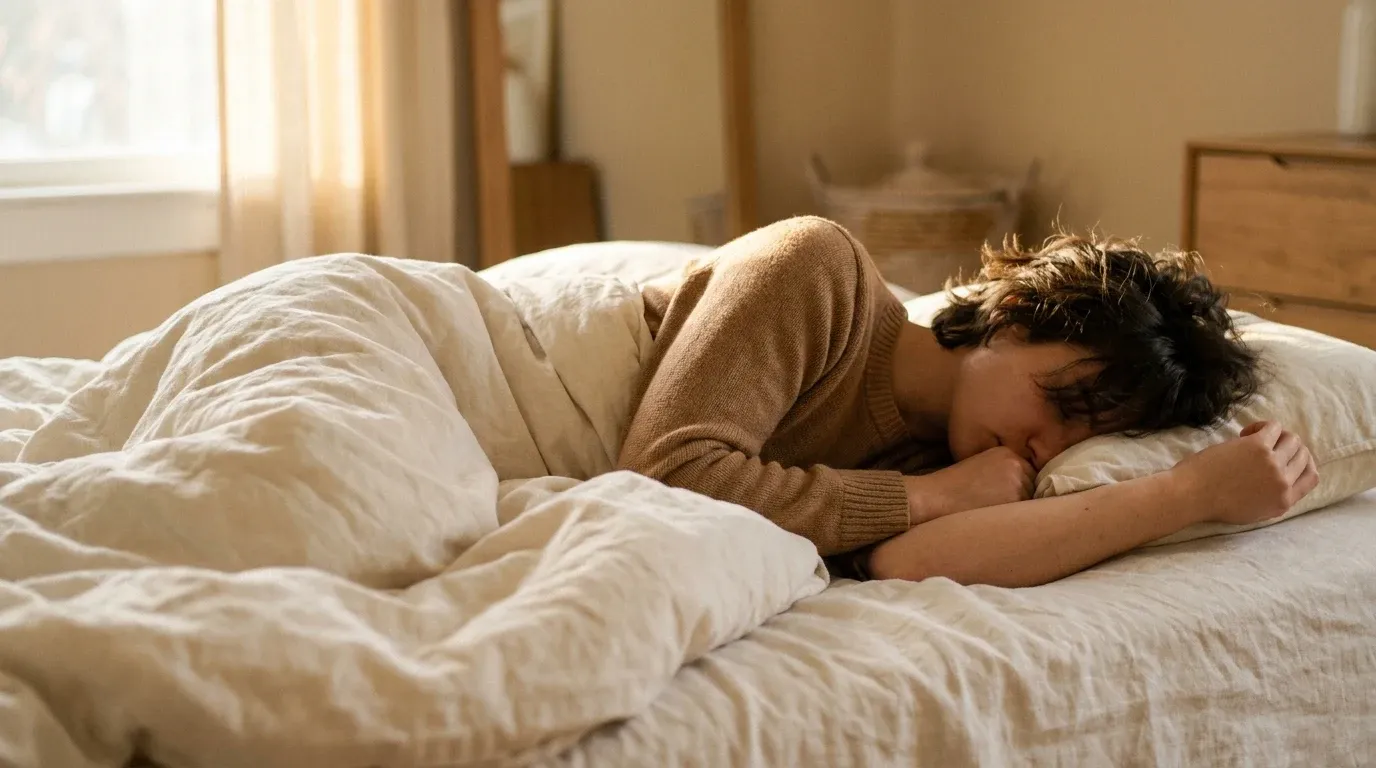
You've probably heard the advice a thousand times: get eight hours of sleep. It sounds clean, simple, and universal. But a growing body of research suggests that number is more myth than medicine. A new study using 23 distinct biological aging clocks has now pinpointed something far more precise. and the findings challenge nearly everything the wellness world has told you about sleep.
The optimal window, according to this research, sits between 6.4 and 7.8 hours per night. Not eight. Not "as much as you can get." A specific, measurable range. And what happens outside that range is worth paying close attention to.
What 23 Biological Clocks Actually Measure
Biological aging clocks are tools that measure how old your body is functioning. not how old your birth certificate says you are. These clocks analyze molecular markers, primarily patterns in DNA methylation, to estimate the biological age of specific tissues and organ systems.
This particular study didn't rely on a single clock or a generalized health score. It used 23 separate aging clocks across multiple organ systems, including the heart, liver, kidneys, and brain. That level of granularity is rare in sleep research, and it's what makes the results so compelling.
Rather than asking "does poor sleep age you?" the researchers asked something sharper: "Which organs age fastest, at which sleep durations, and by how much?" The answers were consistent and striking across nearly every system measured.
The Range That Matters: 6.4 to 7.8 Hours
People sleeping within the 6.4 to 7.8-hour window showed the lowest rates of biological aging across the organ systems analyzed. This wasn't a marginal difference. The biological age gap between those sleeping optimally and those sleeping outside this range was measurable and consistent.
What makes this finding particularly significant is its precision. Previous research had broadly categorized sleep as "short" (under six hours) or "long" (over nine hours), with most recommendations defaulting to eight hours as the gold standard. This study doesn't just refine that guidance. it replaces the rough estimate with a defined target range backed by multi-system biological evidence.
For a deeper look at how sleep duration connects to organ-level aging, Too Much or Too Little Sleep Ages You Faster breaks down the mechanisms behind why both extremes take a measurable toll.
More Sleep Is Not Better Sleep
Here's where the research gets uncomfortable for people who pride themselves on logging nine or ten hours a night. The study found that sleeping too much accelerated biological aging just as clearly as sleeping too little. This wasn't a minor effect. Across nearly every organ clock measured, oversleeping was associated with faster aging rates.
That might seem counterintuitive. Sleep is restorative. It's when the brain clears waste products, when muscle tissue repairs, when hormones regulate. How could more of that be harmful?
The likely explanation isn't that sleep itself is damaging at higher doses. it's that excessive sleep duration is often a symptom of underlying dysregulation. Inflammation, metabolic dysfunction, depression, and cardiovascular issues are all associated with sleeping long. The clocks may be picking up on those root causes rather than sleep as a direct villain. But the association remains, and it's consistent enough to take seriously.
The practical implication is clear: chasing more sleep as a wellness strategy isn't supported by this evidence. Consistency within the optimal range matters more than maximizing hours.
Why Active Adults Are Especially Affected
If you train regularly, you've probably been told to prioritize sleep for recovery. That advice isn't wrong. but it's incomplete. The quality and timing of sleep matters as much as duration, and many active adults overcorrect by trying to sleep longer than their biology actually needs.
Athletes and regular exercisers often have lower resting heart rates, better metabolic regulation, and stronger circadian rhythms. which means they may hit restorative sleep thresholds faster than sedentary individuals. Forcing extra hours in bed can fragment sleep architecture, reduce sleep efficiency, and ironically leave you more fatigued the next day.
This connects directly to an ongoing conversation about individualized health targets. One-Size-Fits-All Sleep Advice Is Wrong for Active Adults makes the case that your training load, recovery status, and circadian biology should shape your sleep target. not a blanket population average.
The same logic that applies to training volume applies to sleep. There's an optimal dose. More isn't better. Better is better.
Organ-by-Organ: What the Aging Clocks Revealed
One of the most valuable contributions of this study is the organ-level specificity. Biological aging doesn't happen uniformly across the body. Some systems are more vulnerable to sleep disruption than others.
The research identified particular sensitivity in:
- The brain and nervous system, where both short and long sleep durations were associated with accelerated cognitive aging markers
- The cardiovascular system, where sleep outside the optimal range correlated with faster heart-related biological aging
- Metabolic tissues, including the liver, which showed measurable aging acceleration under chronic sleep dysregulation
- Immune system markers, which reflected increased inflammatory aging in both sleep-deprived and oversleeping individuals
This multi-system picture reinforces that sleep isn't just a brain function. It's a whole-body process with whole-body consequences when it goes off course.
The Precision Health Reframe
What this research really signals is a shift in how we should think about sleep. not as a quantity to maximize, but as a variable to optimize. That's a meaningful distinction.
Precision health asks: what's the right dose for you, not for the average person in a population study? Sleep is increasingly fitting that model. Your optimal duration sits within a range informed by biology, not by a round number that's easy to remember.
This same principle applies across health behaviors. The 4 Compound Lifts That Actually Extend Your Life illustrates how structured, dose-appropriate exercise has its own sweet spot for longevity. Too little training leaves adaptation on the table. Too much increases injury risk and systemic stress. Sleep follows the same logic.
Similarly, recovery tools work best when matched to actual need rather than applied indiscriminately. If you've wondered whether cold or heat therapy belongs in your routine, Cold vs Heat Therapy: Which Recovery Tool Do You Actually Need? applies the same precision framework to post-training recovery.
What You Can Do With This Information
The 6.4 to 7.8-hour finding gives you a target range. Here's how to work with it practically:
- Track your actual sleep duration, not just your time in bed. A wearable or even a simple sleep log can reveal the gap between the two.
- Aim for consistency. Sleeping 7 hours every night is biologically better than sleeping 5 hours on weekdays and 10 hours on weekends. Irregular patterns disrupt circadian rhythm and appear to accelerate aging independent of total duration.
- Don't use tiredness as your only signal. Chronic sleep deprivation blunts your ability to accurately assess your own fatigue. You adapt to feeling suboptimal and stop noticing it.
- Examine the endpoints. If you're regularly sleeping under 6.4 hours, look at what's cutting your sleep short. stress, late screens, inconsistent schedules. If you're regularly sleeping over 7.8 hours, consider whether an underlying health factor might be driving that need.
- Protect sleep timing. Going to bed and waking up at the same time daily helps anchor your biological clocks. which may be just as important as hitting the right duration.
The Bigger Picture
This study matters because it replaces a cultural rule of thumb with biological data. The "eight hours" recommendation isn't dangerous. but it's imprecise, and precision is where the real health benefit lives.
Biological aging is not fixed. The rate at which your organs age is influenced by behavior. what you eat, how you move, how you manage stress, and yes, how you sleep. The fact that researchers can now measure those aging rates across 23 different organ systems and tie them to something as trackable as sleep duration is a significant step forward.
It means sleep is no longer just a recovery tool. It's a precision health lever. And knowing where to set that lever. between 6.4 and 7.8 hours. gives you something you can actually act on.
You don't need to sleep more. You need to sleep right.