
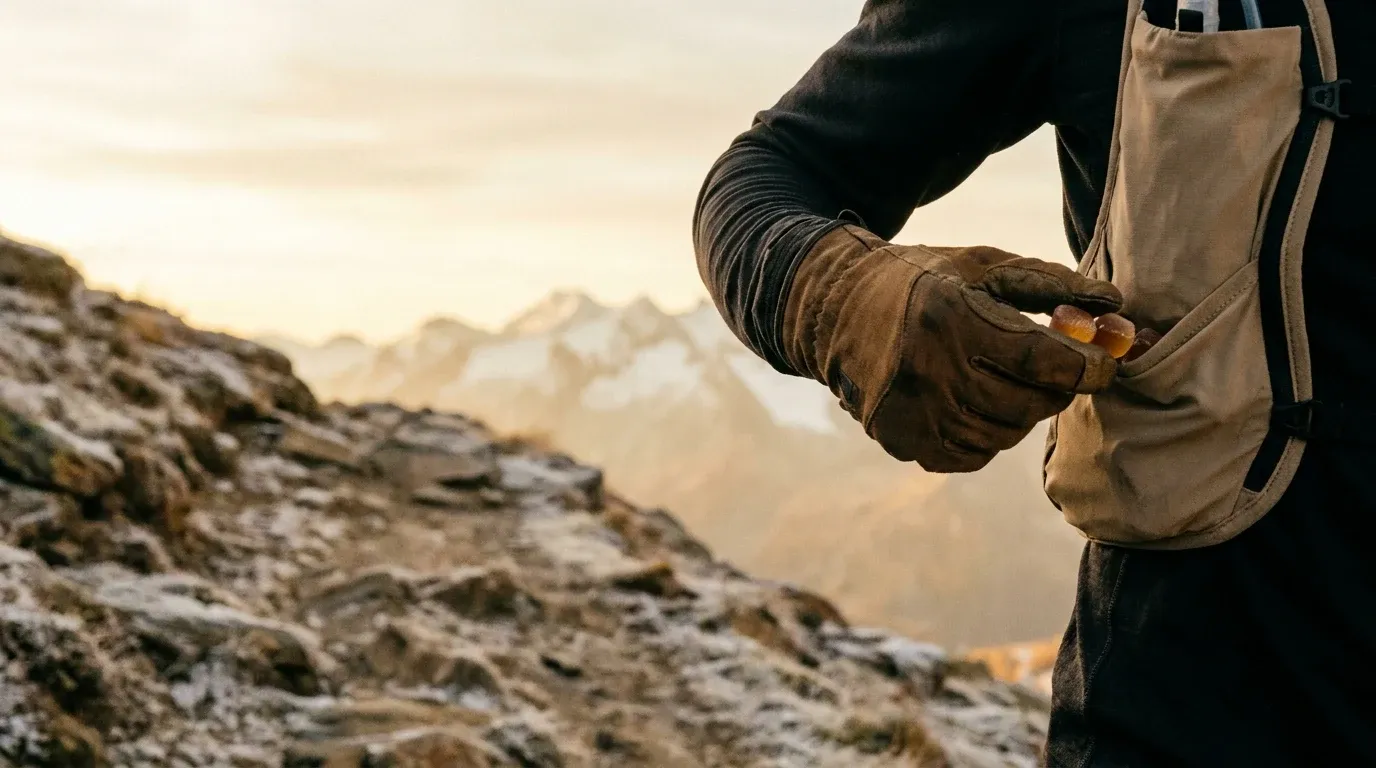
Most athletes prepare for mountain objectives by training harder, buying better gear, and studying route maps. Few think carefully about what to eat once they get there. That's a mistake. Altitude fundamentally rewires how your body produces energy, manages fluids, and absorbs nutrients. Ignoring those shifts doesn't just hurt performance. It can make you sick.
Whether you're skiing above 3,000 meters in the Rockies, running a high-altitude trail race, or trekking toward a summit, this is what the physiology actually demands from your nutrition strategy.
Your Caloric Needs Go Up. Significantly.
One of the most consistent findings in altitude physiology is that your basal metabolic rate rises at elevation. The main driver is ventilation. At altitude, lower partial pressure of oxygen means you have to breathe faster and more deeply just to deliver the same amount of oxygen to working tissues. That respiratory effort burns calories around the clock, not just during exercise.
Thermoregulation adds another layer. Mountain environments are cold, and maintaining core temperature requires additional energy expenditure even at rest. Research consistently estimates that caloric needs increase by roughly 10 to 25 percent above 2,500 meters compared to sea level, depending on the individual and conditions.
The practical problem is that appetite often suppresses at altitude, driven partly by elevated levels of leptin, a hormone that signals satiety. You need more fuel at exactly the time your body is telling you it wants less. This mismatch is one of the primary reasons mountain athletes lose muscle mass and experience significant fatigue during extended expeditions.
The fix is intentional eating. Plan caloric targets in advance. Bring calorie-dense foods that pack well. And eat on a schedule rather than waiting for hunger cues that may not reliably come.
Carbohydrate Becomes Your Primary Fuel
At sea level, trained endurance athletes can oxidize fat efficiently for sustained output. At altitude, that equation shifts. The core reason is oxygen economy. Fat oxidation requires more oxygen per unit of ATP produced compared to carbohydrate oxidation. When oxygen is scarce, your body preferentially burns carbohydrates because they're metabolically cheaper in that currency.
Studies on subjects at 4,300 meters show that carbohydrate oxidation rates increase substantially compared to equivalent efforts at sea level, while fat oxidation drops. That's your body making a rational trade under constraint.
What this means practically: your carbohydrate stores deplete faster at altitude, even at moderate intensities. If you're running on a high-fat or low-carbohydrate approach that might work fine at lower elevations, you'll likely hit a wall sooner and harder in the mountains.
Prioritize carbohydrate timing around your efforts. In the two to three hours before hard outputs, lean heavily toward easily digestible carbs: oats, rice, bread, fruit. During prolonged efforts above 90 minutes, target 60 to 90 grams of carbohydrate per hour. After sessions, restore glycogen aggressively in the first 30 to 60 minute window before thinking about anything else.
Hydration Is More Complicated Than You Think
Altitude accelerates fluid loss through two mechanisms that most athletes underestimate. First, increased ventilation means you're exhaling more water vapor with every breath. At high elevation in dry mountain air, respiratory water loss alone can account for one to two liters per day beyond what you'd lose at sea level. Second, altitude blunts thirst sensation, so your internal signal system isn't accurately reflecting your actual fluid deficit.
The result is a dangerous combination: you're losing more fluid than usual while feeling less thirsty than you should. Mild dehydration at altitude worsens symptoms of acute mountain sickness, impairs cognitive function, and degrades physical performance faster than it would at sea level.
Electrolyte management matters here, not just total fluid intake. Because respiratory losses are primarily water rather than electrolyte-rich sweat, aggressive plain water consumption without sodium replenishment can dilute blood sodium levels. That creates its own set of problems. Sodium drives fluid retention and supports the plasma volume expansion your body attempts at altitude. Increase sodium intake modestly, use electrolyte supplements during long efforts, and monitor urine color as a practical hydration check. Pale yellow is the target.
For athletes interested in the evidence around electrolyte pairing strategies, Creatine and Hydration: Why Pairing Them Makes Sense covers some of the underlying mechanisms worth understanding before a high-output mountain trip.
Iron: The Nutrient Altitude Stresses Most
When you ascend to altitude, your body detects lower oxygen availability and begins a compensatory process to produce more red blood cells. This is the same mechanism elite endurance athletes deliberately exploit through altitude training camps. The key ingredient for red blood cell synthesis is iron, specifically its role in hemoglobin production.
The demand for iron increases sharply at altitude. But the catch is that many recreational athletes arrive already running at suboptimal iron levels, particularly women, endurance athletes who experience hemolysis from foot-strike impact, and anyone eating a diet low in bioavailable iron sources. Altitude doesn't cause iron deficiency on its own in a short trip, but it can accelerate the functional consequences of an existing marginal status.
In the weeks before an altitude trip, assess your iron status if you can. Ferritin is the most informative marker. Support iron-rich food intake: lean red meat, organ meats, shellfish (oysters and clams are among the highest sources), lentils, and dark leafy greens. Pair plant-based iron sources with vitamin C to enhance absorption. Avoid consuming iron-rich meals with coffee or tea, which contain compounds that significantly inhibit iron uptake.
It's also worth noting that other minerals tend to shift under physical stress and environmental change. Why Your Minerals Drop Every Fall (And What to Do) outlines the broader mineral depletion patterns that often accompany high-output seasonal training periods, including fall and winter mountain seasons.
Acute Mountain Sickness and What Nutrition Can (and Can't) Do
Acute mountain sickness (AMS) affects a significant portion of travelers above 2,500 meters. Symptoms include headache, nausea, fatigue, and disrupted sleep. Nutrition isn't a cure for AMS, and it doesn't replace proper acclimatization protocols. But certain nutritional choices can reduce symptom severity or exacerbate them.
Alcohol is the most consequential one to address. It depresses respiratory drive, worsens dehydration, and disrupts sleep architecture at altitude. All three of those effects compound AMS risk. The first 48 hours at elevation are not the time for celebratory drinks.
Heavy, high-fat meals slow gastric emptying and can intensify nausea in people already experiencing AMS symptoms. Keep early-altitude meals lighter, carbohydrate-forward, and easy to digest. Ginger has modest evidence for reducing nausea in general contexts and is a low-risk addition if symptoms are present.
Antioxidant supplementation has been studied in the altitude context, largely because the physiological stress of hypoxia generates oxidative load. The evidence for specific antioxidant supplements improving AMS outcomes is not strong enough to make firm recommendations, but maintaining adequate dietary antioxidant intake through fruits and vegetables remains sensible baseline nutrition advice. If you want to evaluate the quality of altitude supplement claims before spending money, How to Actually Evaluate Supplement Evidence is a useful framework to apply.
Practical Adjustments Before and During Your Trip
Translating all of this into a workable plan doesn't require a sports dietitian on retainer. Here's what matters most:
- Increase total caloric intake by 10 to 25 percent above 2,500 meters. Don't rely on appetite. Eat by the clock and bring calorie-dense snacks you can consume consistently.
- Shift macronutrient balance toward carbohydrates. Aim for 55 to 65 percent of calories from carbs during active mountain days. Save high-fat meals for rest days when metabolic demands are lower.
- Drink on a schedule, not on thirst. Target at minimum 3 to 4 liters of fluid per day above 3,000 meters in active conditions, more in dry environments. Include electrolytes during long efforts.
- Audit iron status before departure. If ferritin is low, address it in the weeks prior. At altitude, it's too late to build stores quickly.
- Limit alcohol and heavy meals in the first 48 hours. Allow your body to begin acclimatizing without adding unnecessary physiological stress.
- Prioritize sleep quality. Recovery at altitude is genuinely harder, partly because hypoxia disturbs sleep architecture. It's Not How Much You Sleep. It's How You Sleep. explains why the structure of your sleep matters as much as the hours, which is especially relevant when altitude is already compressing recovery.
The Bigger Picture
Altitude exposes nutritional weaknesses that sea-level training and comfortable conditions allow you to ignore. The athlete who eats casually at home and performs fine may find that the same approach at 3,500 meters leads to early fatigue, poor recovery, and a miserable experience.
If you're building toward higher-volume mountain training, returning to structured exercise after a break, or working on foundational fitness before a planned elevation objective, 6 Post-Workout Recovery Habits That Matter After 35 offers a practical framework for the recovery side of the equation that applies broadly to mountain athletes.
The body adapts to altitude remarkably well given time and the right inputs. Give it those inputs, and you'll acclimatize faster, perform better, and come back from the mountains healthier than you arrived.