

Danone Buys Huel for $1.1B and Herbalife Acquires Bioniq: Reading Q1 2026 M&A
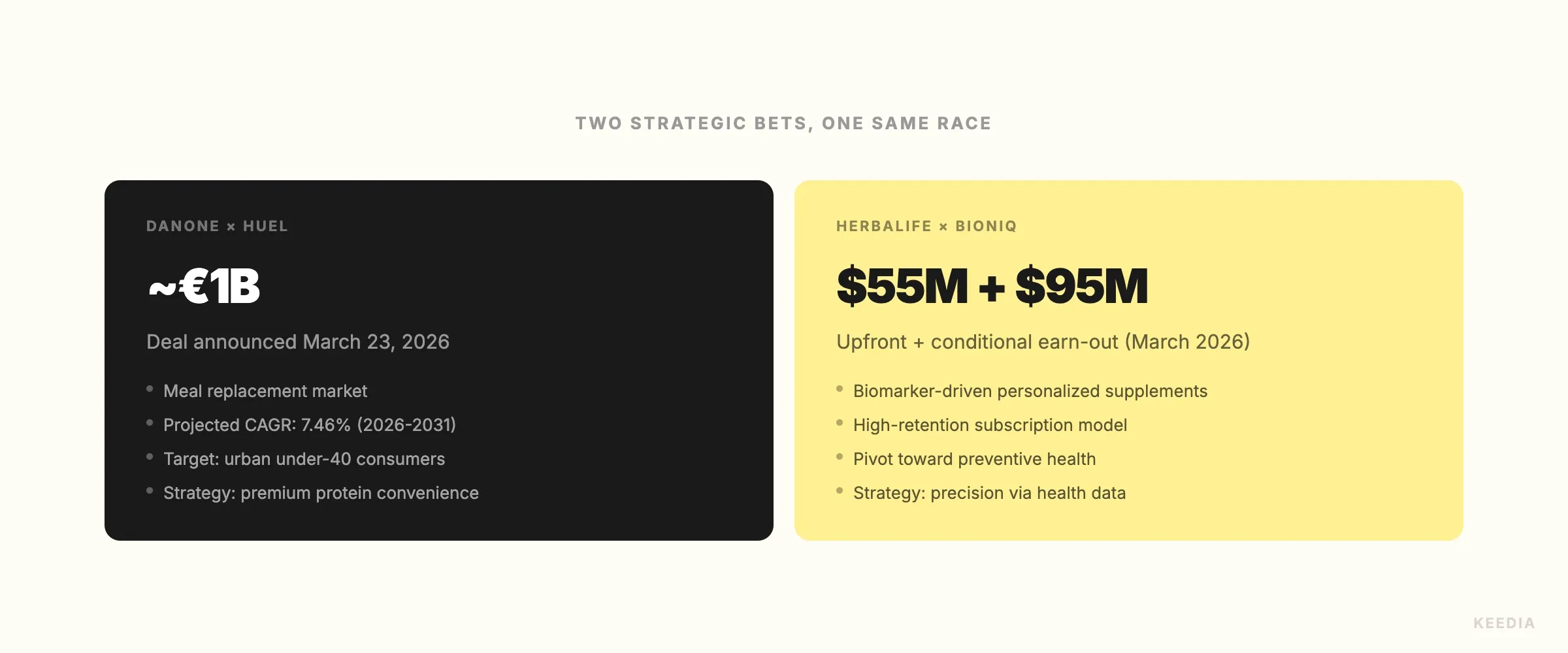
Two deals landed within four days of each other in late March 2026. Danone agreed to acquire Huel for approximately $1.1 billion on March 23. Herbalife announced the acquisition of Bioniq assets for $55 million upfront, with up to $95 million in contingent performance payments, on March 26. Neither deal happened in isolation. Together, they tell you exactly where the functional nutrition industry is heading, and what independent brands and fitness retailers need to do before the window closes.
The Danone-Huel Deal: Buying a Direct Line to the Under-40 Consumer
Danone's acquisition of Huel is the cleaner story to tell. Huel built a loyal customer base around nutritionally complete meal replacements: high-protein, convenient, designed for people who want to eat well without thinking about it. Its core audience skews young, digitally native, and increasingly urban. That's a demographic Danone has struggled to reach through its traditional dairy and plant-based product lines.
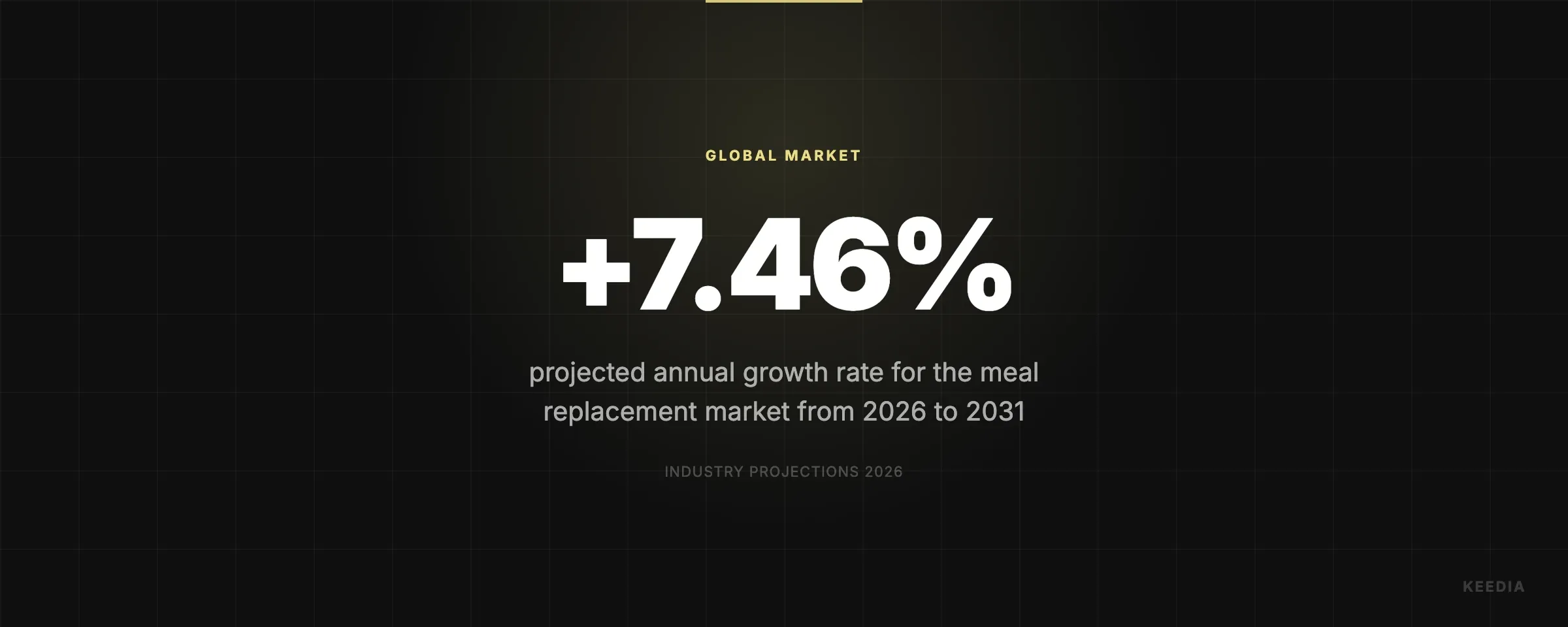
The deal fits squarely into Danone's Renew strategy, which prioritizes portfolio renovation and growth in high-margin categories. Meal replacements check both boxes. The global meal replacement market is projected to grow at a 7.46% compound annual growth rate from 2026 to 2031, driven by three converging forces: consumer demand for convenience, sustained appetite for high-protein formats, and a growing population of GLP-1 drug users who need muscle-preserving nutrition as they lose weight.
That last point is worth pausing on. GLP-1 medications like semaglutide are reshaping what consumers need from food products. People losing weight rapidly on these drugs face real muscle loss risk if protein intake isn't managed carefully. Understanding how protein distribution across meals affects muscle protein synthesis becomes commercially relevant at scale when millions of consumers are navigating this exact problem. Huel's format, pre-portioned, protein-dense, easy to track, is a natural fit.
For Danone, the acquisition also buys something harder to build from scratch: a functioning direct-to-consumer digital infrastructure. Huel sells predominantly online. Its subscription model generates predictable revenue. Its brand voice has credibility in fitness and wellness communities that a legacy food company simply can't manufacture overnight.
The Herbalife-Bioniq Deal: Personalization as the New Product
The Bioniq acquisition is a different kind of bet. Bioniq doesn't sell a protein shake. It uses blood biomarker data to generate personalized supplement formulations for individual users. You take a blood test, the platform analyzes your results, and it produces a tailored stack. The product is the data layer, not the capsule.
Herbalife paying $55 million upfront, with a potential total outlay of $150 million if performance targets are met, signals that the company sees personalization as a strategic necessity rather than a niche premium offering. Herbalife has spent decades selling standardized supplement stacks through a distributor network. Bioniq gives it a credible precision nutrition platform it couldn't build internally at this pace.
The contingent payment structure is also telling. Performance-based earnouts in M&A typically mean the acquirer believes the asset has upside but wants to validate it against real metrics before paying full price. Herbalife is making a calculated bet: get the technology and talent now, pay the rest only if the biomarker-driven model scales. That's rational. It's also an acknowledgment that the personalization model is still proving itself commercially.
Bioniq's approach connects to a broader industry shift. The adaptogen and specialty supplement market has been wrestling with a credibility problem: too many products make vague claims to too many consumers. A biomarker-first model sidesteps that problem by making the recommendation specific and evidence-tethered. That's a compelling value proposition, particularly for consumers who have grown skeptical of one-size-fits-all supplement marketing.
The Third Deal: Metagenics and Symprove
Danone and Herbalife weren't the only buyers active in Q1 2026. Metagenics acquired Symprove, a UK-based probiotic brand, in the same quarter. Symprove has a strong evidence base behind its liquid probiotic format and a loyal clinical following in gut health circles. For Metagenics, a practitioner-focused supplement brand, the acquisition extends its reach into a consumer-facing product with genuine research credentials.
Gut health continues to draw acquisition interest for the same reasons as meal replacements and personalization: the science is advancing, the consumer demand is real, and building brand trust from scratch takes years. Buying a brand that already has it is faster and, at the right price, cheaper. This deal is part of the same consolidation logic you're seeing across the broader functional nutrition space. For a fuller picture of what's moving in sports supplements M&A this quarter, the pattern is consistent: incumbents are acquiring what they can't build.
Two Bets, One Diagnosis
Step back and the strategic logic across these deals becomes clear. Large conglomerates are racing to own the functional nutrition space before it matures and consolidates further. Right now, the market is still fragmented enough that acquisition targets are available at reasonable multiples. In five years, the best assets will either be owned by major players or will have grown too expensive to acquire.
The two bets being placed are distinct but complementary. Convenience at scale is the Danone-Huel thesis: consumers want nutrition that fits into their lives without friction, and whoever owns the most trusted brand in that space will capture significant market share. Precision via data is the Herbalife-Bioniq thesis: consumers are increasingly willing to pay a premium for recommendations that feel specific to them, and whoever owns the biomarker data layer controls the personalization stack.
These aren't competing visions. They're targeting different moments in the same consumer journey. A person might rely on a meal replacement for daily convenience and use a biomarker-informed supplement protocol for targeted optimization. A brand that can serve both moments, or a conglomerate that owns brands covering both, has significant structural advantage.
What This Means for Independent Brands and Fitness Retailers
If you're running an independent supplement brand or a specialty fitness retailer, the consolidation picture has direct implications for your positioning and margin structure over the next 24 to 36 months.
The clearest threat is to undifferentiated products. If you're selling a standard whey protein or a generic multivitamin without a compelling brand story, defensible channel, or distinct formulation, you're competing on price in a market where large players are about to have more distribution leverage, more marketing budget, and more shelf presence. That's a race you probably don't want to run.
The two defensible positions are exactly what these deals are buying. Personalization, whether through biomarker testing, detailed intake forms, or practitioner partnerships, creates a relationship that a mass-market brand can't replicate easily. Convenience with genuine nutritional depth, not just convenience for its own sake, targets a consumer need that's growing and isn't going away.
For fitness retailers specifically, the implications extend beyond product selection. Coaches and trainers who understand functional nutrition, who can explain to clients why their supplement choices should reflect their training load, sleep quality, and recovery needs, are offering something a Danone-owned meal replacement brand can't provide. For context on the broader trends shaping the coaching profession, the state of personal training in 2026 reflects a growing demand for exactly this kind of applied expertise.
The gym environment matters here too. Facilities that curate their retail offering around evidence-based products and can explain why specific items are stocked are building a trust relationship with members. Those that simply stock whatever the distributor rep suggests are going to find their retail margins squeezed by the same consolidation dynamics hitting independent brands.
The Structural Shift Underneath the Deals
What's really happening in this M&A wave is a transfer of the functional nutrition market from fragmented entrepreneurial growth to structured institutional ownership. That's not inherently bad for consumers. It often means better distribution, more consistent quality, and more investment in research. But it does change the competitive landscape for anyone who isn't one of the acquirers.
Independent brands that survive this wave will be the ones that have built something genuinely difficult to replicate: a specific community, a proprietary formulation backed by real evidence, a practitioner network, or a personalization infrastructure. Everything else is a commodity, and commodities get squeezed when the big players move in.
The Danone-Huel and Herbalife-Bioniq deals aren't just financial transactions. They're signals about where the category is heading and how fast. If you're operating anywhere in functional nutrition, reading those signals now, before the next round of consolidation closes more doors, is the practical move.