
Marathon des Sables 2026: The 40th Edition Is Underway in the Sahara
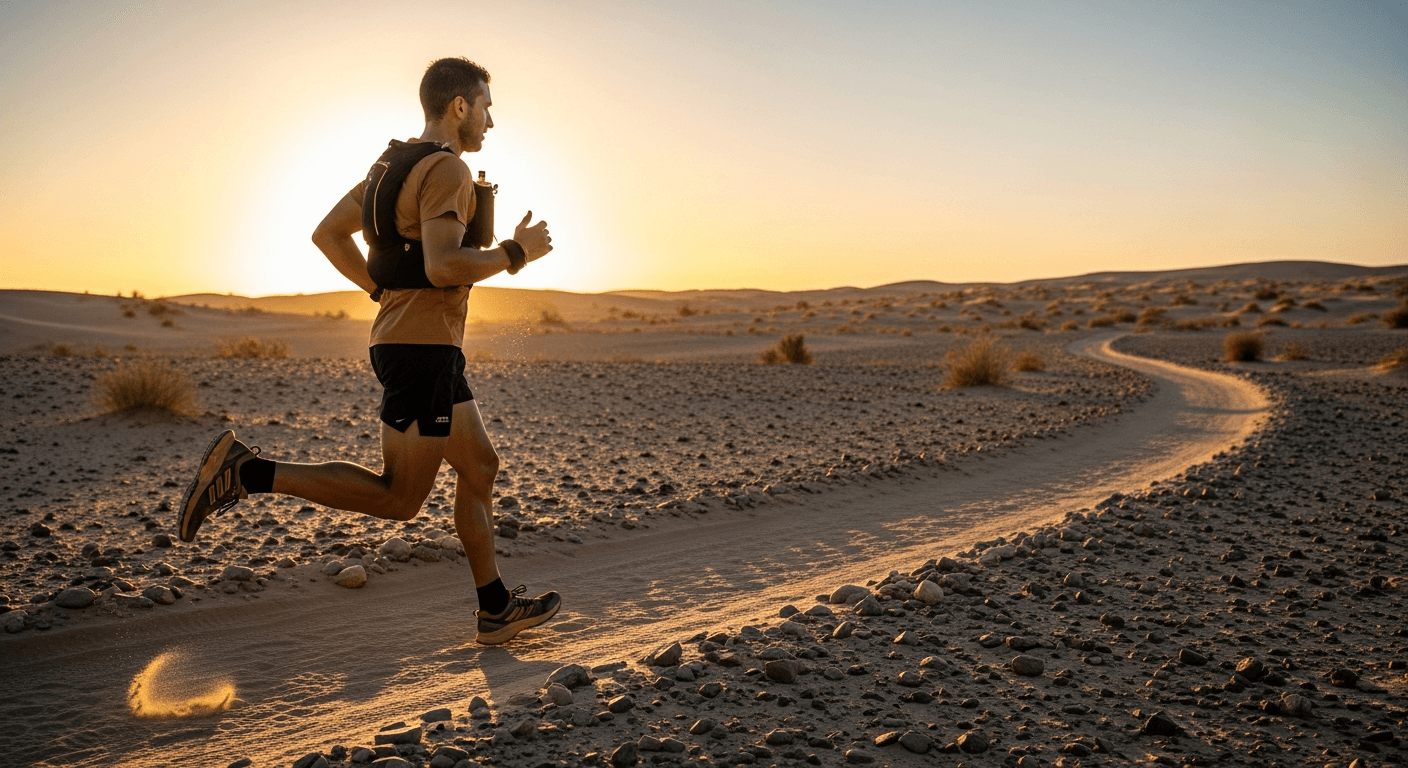
Right now, somewhere in the Moroccan Sahara, more than a thousand runners are carrying everything they need to survive on their backs. No hotel. No aid station handing out gels. Just sand, sun, and 252.8 kilometers of desert stretching to the horizon. The 40th edition of the Marathon des Sables is running from April 5 to 11, 2026, and it remains the most demanding footrace most people will ever attempt.
Forty years in, the race hasn't softened. If anything, its reputation has grown heavier with time. Here's what's happening out there, why this race is unlike anything else in endurance sport, and what it actually takes to get to the finish line.
What the 40th Edition Looks Like on the Ground
The 2026 edition covers 252.8 kilometers (roughly 157 miles) across six stages, run over seven days. Between 1,200 and 1,500 runners from dozens of countries are on the course this week, making it one of the largest self-supported ultramarathons on the planet.
The race follows its classic multi-stage format, with daily distances that vary deliberately to keep runners physically and psychologically off-balance. Stages typically range from around 20 to 42 kilometers, with the exception of the one day that defines every runner's experience: the long stage. In 2026, that stage stretches to approximately 80 kilometers, usually run through the night, and it separates the field more brutally than anything else on the course.
The final stage is a comparatively short charity stage, traditionally around 7 to 8 kilometers, run alongside UNICEF ambassadors. It functions less as a race and more as a collective exhale after days of pushing through heat, sand, and sleep deprivation.
The Stage Breakdown
Here's how the 2026 course is structured across its six stages:
- Stage 1: Approximately 30 to 35km. A controlled opener designed to let runners find their rhythm before the terrain escalates.
- Stage 2: Approximately 38 to 42km. Dunes begin to feature more prominently. Foot problems emerge for runners who got their shoe choice wrong.
- Stage 3: Approximately 30 to 35km. A mid-race stage that rewards pacing discipline from the first two days.
- Stage 4: Approximately 78 to 82km. The long stage. This is the race. Runners leave in the afternoon heat, run through the night, and many finish in the early hours of the following morning.
- Stage 5: Approximately 40km. Run on legs that have already covered 180-plus kilometers. Attrition peaks here.
- Stage 6 (charity stage): 7 to 8km. The finish line at Ouarzazate. The finish line that 40 years of runners have chased.
Total cut-off times are enforced at each stage. Miss a cut-off and you're out. The race operates on Berber time, the desert sets the schedule.
What Makes the Marathon des Sables Different
The distance alone doesn't explain the race's reputation. Plenty of ultras cover similar or greater mileage. What makes the MDS singular is the combination of factors that stack against you simultaneously.
Self-sufficiency. Every runner carries their own food for the entire week. Race rules mandate a minimum of 2,000 calories per day, typically met through freeze-dried meals, calorie-dense snacks, and obsessively calculated ration packs. Your pack weight at the start line is usually between 6.5 and 15 kilograms depending on how ruthlessly you've edited your kit. The only things provided by the race organization are water and a shared Berber tent each night.
Extreme heat. Daytime temperatures in the Moroccan Sahara during April regularly exceed 40°C (104°F). Runners deal with radiant heat from the sand surface that can push ground temperatures significantly higher. Hyponatremia, heat exhaustion, and severe blistering are common enough that the race operates a full field hospital. Approximately 30 to 40 runners are medically evacuated each year.
Terrain variety. The course moves through multiple desert ecosystems: rocky plateaus (called regs), dried river beds (oueds), loose sand dunes (ergs), and salt flats. Each surface demands something different from your legs and your footwear. If you want to understand what this does to your body at a physiological level, the breakdown in Marathon des Sables 2026: What Actually Happens to Your Body During 252km in the Sahara is worth reading before race week ends.
Navigation. Runners carry a roadbook and follow checkpoints, but the desert doesn't come with signage. Disorientation is a real risk, particularly during the long stage when darkness, fatigue, and sand all conspire against you.
Who Is Out There This Week
The MDS field is genuinely global. The 2026 edition includes runners from Europe, North America, Asia, and the Gulf states. Age ranges from the mid-twenties to runners in their sixties and beyond. The race has never been exclusively for elite athletes. Its finishing rate historically sits above 85 percent, which tells you two things: the selection process (including mandatory medical certification and mandatory gear checks) screens out underprepared entrants, and the race itself, while brutal, is completable with adequate preparation.
Elite runners target podium finishes with finish times for the overall race often under 20 hours of cumulative running time. Mid-pack runners aim to finish each stage before the cut-off and sleep enough to move the next morning. Both categories share the same camp, the same water rations, and the same sand in their shoes.
What It Takes to Prepare for This Race
Runners don't stumble into the Marathon des Sables. Most spend 12 to 18 months in structured preparation, and the process is expensive. Entry fees alone sit around $4,500 to $5,000 USD for most international runners when you include the mandatory insurance and travel from outside Europe. Gear, nutrition testing, and pre-race heat acclimatization training add several thousand dollars more.
Training centers on back-to-back long runs to simulate multi-day fatigue accumulation. Running 30km on Saturday and 25km on Sunday, week after week, teaches your body to move efficiently on tired legs. Building a strong aerobic base is non-negotiable. The research on VO2max and muscle strength as longevity and performance markers applies directly here: your aerobic ceiling determines how efficiently you burn through limited calories in desert heat.
Heat adaptation is equally critical. Runners who don't acclimatize suffer disproportionately in the first two stages, often before the race has really begun. Controlled heat exposure sessions, whether sauna protocols or training in hot environments for three to four weeks pre-race, measurably reduce core temperature response during exercise in the heat.
Footwear decisions are consequential. The majority of MDS runners use trail shoes with extra-wide toe boxes and gaiter attachments to keep sand out. The debate around carbon plate shoes is worth noting here: while the 2026 meta-analysis on carbon plate running shoes shows clear performance benefits on road surfaces, the evidence for loose sand and variable desert terrain is considerably weaker. Most experienced MDS runners prioritize cushioning and upper durability over propulsion geometry.
Nutrition strategy for the race itself is a separate discipline. You're managing calorie deficit across seven days, often eating on legs that don't want to stop moving. Recovery nutrition between stages matters more than most runners anticipate. The emerging research on omega-3 supplementation and muscle recovery is relevant for any athlete facing repeated-bout muscle damage across consecutive days.
Why the 40th Edition Matters
Four decades is a long time for any race to survive, let alone grow. The MDS was created in 1986 by Patrick Bauer, who crossed the Sahara alone on foot and returned with the idea that others should be able to experience that particular kind of suffering in an organized format. The race now routinely draws waiting lists that stretch years out.
The 40th edition isn't a nostalgia project. It's a live race, happening now, with real runners grinding through stages in real heat. If you're already thinking about 2027 or 2028 entry, that's not premature. Applications typically open immediately after each edition closes, and spots fill within months.
The Marathon des Sables occupies a specific place in running culture that no other race has managed to replicate. It's not the longest ultra. It's not the most technically difficult mountain race. What it is, consistently and verifiably, is the most complete test of human self-sufficiency in endurance sport. You carry your food. You carry your shelter. You carry your decisions. The desert decides the rest.